


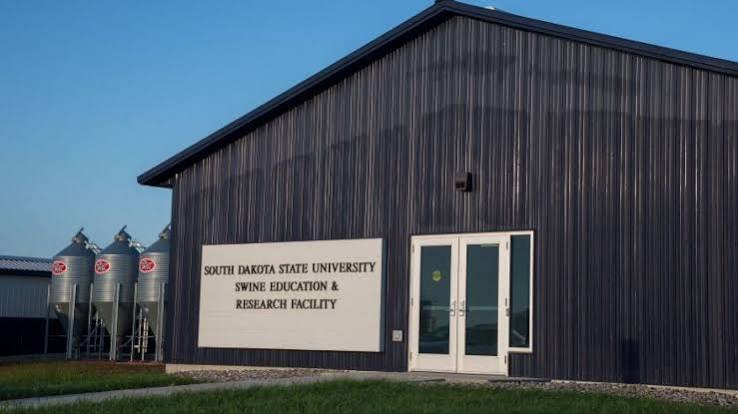
South Dakota State University’s 10th annual Swine Day recognised research on gilt development nutrition during a PRRSv outbreak and dietary copper strategies, alongside discussions on biosecurity and the economics of swine health.
South Dakota State University (SDSU) brought together swine producers, researchers, students and industry professionals for its 10th annual Swine Day on 29 September 2026 in Brookings, South Dakota. The event, organised by SDSU Extension in collaboration with the university’s Department of Animal Science and Department of Agricultural and Biosystems Engineering, highlighted applied research addressing pig health, nutrition, production efficiency and disease-related economic risk.
Among the leading student research presentations, Darcy Pamulaklakin won first place in the PhD poster competition for research titled “Nutrient-enriched gilt development diet improved growth efficiency and body composition during a confirmed PRRSv 1-4-4 L1C.5.32 outbreak.” Jessica Lira da Silva placed second with a study examining dietary copper sources in nursery and grow-finish pigs. The university’s event report confirms the awards and presentation titles.
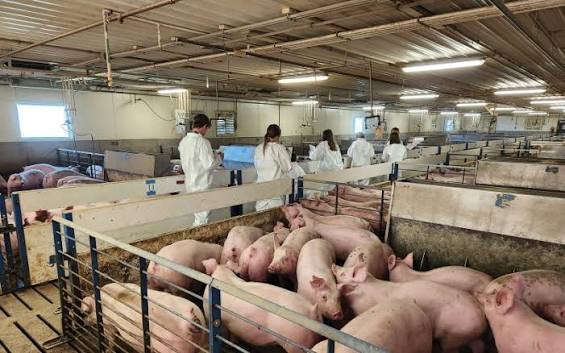
Gilt nutrition research examines performance during a PRRSv outbreak
The winning poster focused on gilt development under challenging disease conditions, specifically during a confirmed outbreak involving the PRRSv 1-4-4 L1C.5.32 strain.
Porcine reproductive and respiratory syndrome virus (PRRSV) remains an important health and economic challenge for the global swine industry. Depending on the animals affected and the production stage, outbreaks can disrupt reproductive performance, impair piglet health, increase mortality risk and reduce production efficiency.
Gilt development is particularly important because replacement females must reach appropriate growth, body composition and reproductive-readiness targets before entering the breeding herd. Nutritional programmes that support these objectives can be an important part of herd management, although their effectiveness depends on factors including genetics, health status, feed composition and farm conditions.
Pamulaklakin’s research title indicates that a nutrient-enriched development diet was associated with improved growth efficiency and body composition during the documented outbreak. However, the publicly available event report does not provide the experimental design, sample size, nutrient specifications, effect sizes or statistical results. It therefore does not support quantifying the improvement or concluding that the diet reduced viral infection, disease severity or transmission.
The finding is nevertheless relevant to a broader industry question: how can nutritional management support the performance and resilience of breeding animals when disease pressure compromises normal production conditions?
Further evaluation of the full research results would be needed to determine which nutritional components contributed to the reported outcomes and whether the benefits can be reproduced under different commercial herd conditions.
Dietary copper research targets nursery and grow-finish pig production
Jessica Lira da Silva’s second-place PhD poster, “Effects of dietary copper source in nursery and grow-finish pigs,” examined another important area of swine nutrition: how copper supplementation strategies influence pig performance and health.
Copper has established nutritional functions and has also been used at elevated dietary concentrations in commercial pig production to support growth performance. However, higher mineral inclusion rates raise questions about cost, nutrient utilisation and the environmental consequences of mineral excretion.
SDSU’s wider research programme has investigated ways to use dietary copper and other nutrients more efficiently. In a separate 2026 research report, a study involving 437 growing-finishing pigs evaluated added copper at 3.0 ppm and 16.5 ppm, with and without phytase, after an earlier feeding period involving 150 ppm copper. The researchers reported that copper level and phytase affected selected performance measures across different phases; phytase improved overall feed conversion, while the lower-copper treatment had reduced overall weight gain. These findings relate to that separate experiment and should not be attributed directly to Lira da Silva’s Swine Day poster.
The research area is commercially relevant because producers need to balance growth performance with mineral-use efficiency, feed costs and environmental management. The exact copper sources, experimental findings and gut-inflammation outcomes associated with the Swine Day presentation were not detailed in the university’s event announcement. Accordingly, the poster should not be described as proving that a specific copper source reduces intestinal inflammation without the underlying data.
Other research highlights precision nutrition and feed efficiency
The student poster competition also featured research on ingredient screening, amino-acid formulation and nutrient requirements.
The university reported the following award winners:
-
PhD division: First place, Darcy Pamulaklakin, on nutrient-enriched gilt development during a PRRSv outbreak; second place, Jessica Lira da Silva, on dietary copper sources.
-
Master’s division: First place, Kynna Crawford, on using a Plackett–Burman experimental design to screen ingredients affecting early feed intake; second place, Courtney Pohlen, on intact protein versus synthetic amino acids in early grower pigs.
-
Undergraduate division: First place, Karin Sweeter, on standardised ileal digestible histidine-to-lysine ratio requirements in nursery pigs weighing 18–50 lb.

