


India Animal Health Industry | Veterinary Pharmaceuticals | Public Health & Livestock Policy
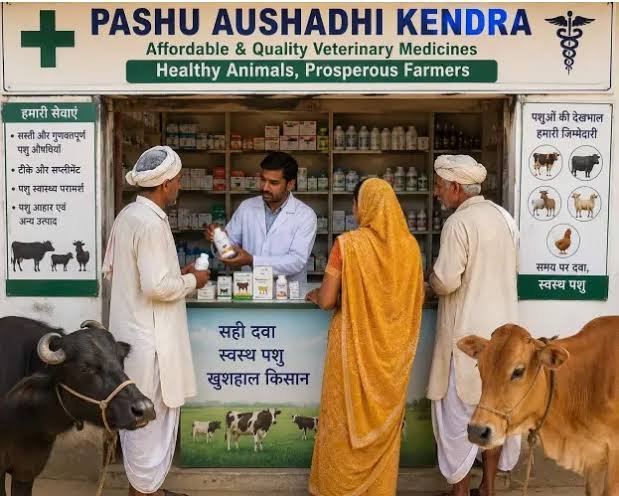
After huge success of affordable, generic medicines fair price shops for Human Health, India is experimenting with a similar approach for veterinary medicines which are purchased by small and marginal livestock and poultry farmers as well as low income pet owners.
West Bengal is planning to establish approximately 375 Pashu Aushadhi Vikray Kendras (PAVKs) to improve access to affordable veterinary medicines for pet owners, poultry farmers and livestock keepers across the state. The proposed network will comprise one state-level outlet in Kolkata, 30 district-level outlets and 344 block-level centres, according to a report published by The Times of India on 12 October 2026.
The proposed outlets will operate under the central government’s Livestock Health and Disease Control Programme (LHDCP) and are intended to make lower-cost veterinary medicines more accessible through a distribution model inspired by India’s Jan Aushadhi network for affordable human medicines.
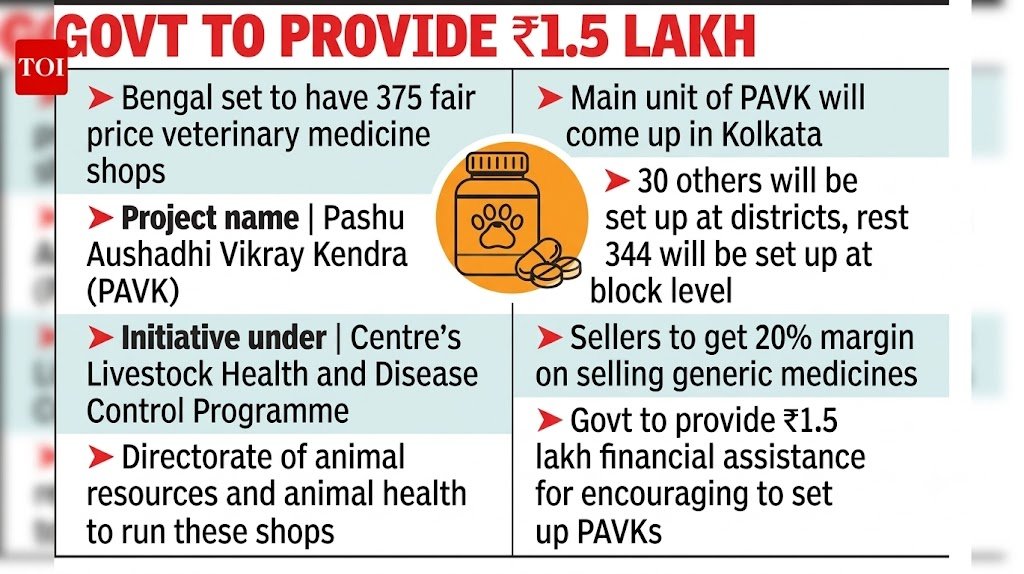
The initiative is expected to benefit animal owners who face high out-of-pocket costs for veterinary treatment, particularly where prescribed medicines must be purchased from private clinics or commercial pharmacies. State officials indicated that some outlets could begin operations after the Durga Puja period, although a confirmed opening schedule for the entire network has not been published.
The centres are expected to serve both companion-animal owners and commercial livestock sectors, including poultry farming. Their eventual impact will depend on implementation, medicine availability, pricing, distribution efficiency and appropriate veterinary oversight.
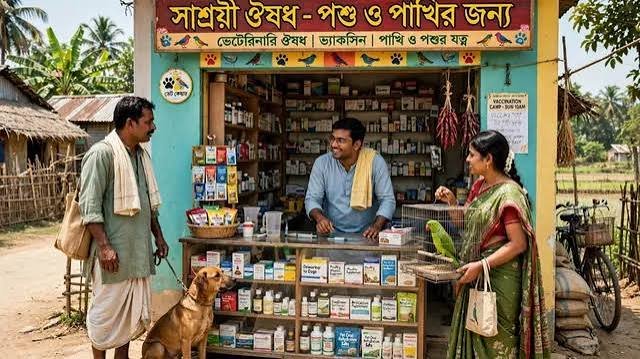
375 outlets: proposed distribution across West Bengal
The state government’s proposed network is designed to extend veterinary-medicine access beyond Kolkata and major urban centres into district and block-level locations.
Proposed outlet category |
Number of centres |
Share of network |
|---|---|---|
State-level outlet in Kolkata |
1 |
0.27% |
District-level outlets |
30 |
8.00% |
Block-level outlets |
344 |
91.73% |
Total planned network |
375 |
100% |
With approximately 92% of the planned outlets at block level, the proposed network places most of its distribution capacity outside the single state-level location. This could improve geographical access for livestock keepers in smaller towns and rural areas, provided the outlets are operational, adequately stocked and accessible to local customers.
The proposed 344 block-level centres are particularly relevant for poultry and livestock producers who may otherwise need to travel to larger towns to obtain veterinary medicines.
However, the announced distribution is a proposed network, not evidence that 375 centres are already operational.
Pashu Aushadhi: how the national programme works
The Pashu Aushadhi initiative is a component of the Department of Animal Husbandry and Dairying’s Livestock Health and Disease Control Programme. Its stated objective is to improve the availability of affordable generic veterinary medicines, including ethnoveterinary medicines, through designated distribution channels.
The central government published operational guidelines for the programme in July 2025. In a parliamentary response published on 17 December 2025, the Ministry of Fisheries, Animal Husbandry and Dairying reported that a list of 134 generic veterinary medicines, including ethnoveterinary medicines and consumables, had been provided to the Pharmaceuticals and Medical Devices Bureau of India (PMBI) for procurement action.
The guidelines also address eligibility, operating conditions, margins, incentives, training and awareness. The national programme envisages distribution through eligible Pradhan Mantri Kisan Samriddhi Kendras (PM-KSKs) and cooperative societies.
The 134-medicine figure relates to the national programme’s reported list, not a confirmed inventory for each proposed West Bengal outlet. The final range of medicines available locally will depend on procurement, distribution arrangements and implementation.
Official references:
-
Department of Animal Husbandry and Dairying: https://dahd.gov.in/pashu-aushadhi
-
Operational guidelines: https://www.dahd.gov.in/operational-guidelines-pashu-aushadhi
-
Parliamentary response on implementation: https://www.pib.gov.in/PressReleasePage.aspx?PRID=2205299&lang=1®=3
Why affordable veterinary medicines matter
Veterinary treatment costs can be a significant burden for households caring for companion animals and farmers managing productive livestock. Medicines, vaccines, diagnostic services and veterinary consultations all contribute to the cost of maintaining animal health.
The proposed PAVK network is intended to address the medicine-access component of this expenditure. Its relevance extends across several segments of West Bengal’s animal-health economy.
Companion animals: lower-cost access for pet owners
Pet owners may need to purchase medicines for infections, parasites, chronic conditions and other veterinary indications. The newspaper report describes concerns among pet owners about the cost of medicines obtained through private clinics.
Access to lower-cost generic alternatives could provide financial relief where an appropriate equivalent is available and prescribed for the animal’s condition.
However, generic medicines should not be assumed to be interchangeable in every situation without checking the active ingredient, strength, formulation, dosage and clinical suitability. Veterinary advice remains important, particularly for antibiotics, prescription-only products and medicines requiring careful dosing.
Poultry: implications for commercial producers
Poultry farmers operate in a production environment where flock health, disease prevention and treatment decisions affect mortality, growth, feed conversion and farm profitability.
Affordable access to appropriate veterinary medicines could help smaller producers manage some treatment costs. Block-level outlets may be particularly useful where commercial veterinary distribution is limited.
Nevertheless, medicine availability alone cannot replace vaccination programmes, biosecurity, diagnostic testing, disease surveillance, good husbandry or veterinary supervision. The initiative’s impact on poultry productivity and disease outcomes will need to be measured after implementation.
Dairy and other livestock: supporting rural animal health
Dairy cattle, buffaloes, goats, sheep and other livestock require access to suitable veterinary treatments throughout their productive lives. Medicine costs can influence the financial returns from livestock rearing, particularly for smallholders.
A more accessible distribution network could help reduce travel and procurement barriers. Its effectiveness will depend on the breadth of the product range, reliable replenishment, affordability and coordination with local veterinary services.
Could the initiative change veterinary pharmaceutical distribution?
The proposed centres could create a new public-supported channel for generic veterinary medicines alongside existing private veterinary pharmacies, distributors, clinics and manufacturer-led sales networks.
For the animal-health industry, several developments merit monitoring:
-
Generic veterinary medicines: potential growth in demand for quality-assured, lower-cost alternatives.
-
Distribution and procurement: opportunities for eligible suppliers and manufacturers to participate in procurement and replenishment arrangements.
-
Rural market access: greater reach into block-level locations where conventional commercial distribution may be less extensive.
-
Veterinary affordability: the potential to reduce some medicine-related out-of-pocket expenditure for animal owners and farmers.
-
Quality assurance: the need for appropriate storage, product traceability, reliable supply and adherence to applicable regulatory requirements.
-
Market competition: possible pressure on prices for products where suitable lower-cost alternatives become readily available.
These are potential implications rather than confirmed contracts, supplier appointments or quantified market changes. No verified procurement awards, sales forecasts or expected price reductions specific to the West Bengal network were established in the reports reviewed.
Implementation will determine the outcome
The success of the 375-centre proposal will depend on operational details that have yet to be fully established publicly.
Implementation measure |
Why it matters |
|---|---|
Number of centres actually opened |
Measures rollout against the proposed target of 375 |
Stock availability and replenishment |
Determines whether customers can obtain medicines when needed |
Product range |
Establishes whether common companion-animal and livestock requirements are covered |
Price comparisons |
Shows whether savings are achieved against comparable products |
Geographic accessibility |
Measures whether rural and underserved locations benefit |
Quality assurance and storage |
Supports medicine safety, integrity and appropriate handling |
Veterinary referral and oversight |
Helps ensure appropriate selection and use of medicines |
Supplier and procurement transparency |
Helps assess the sustainability and reliability of the supply chain |

