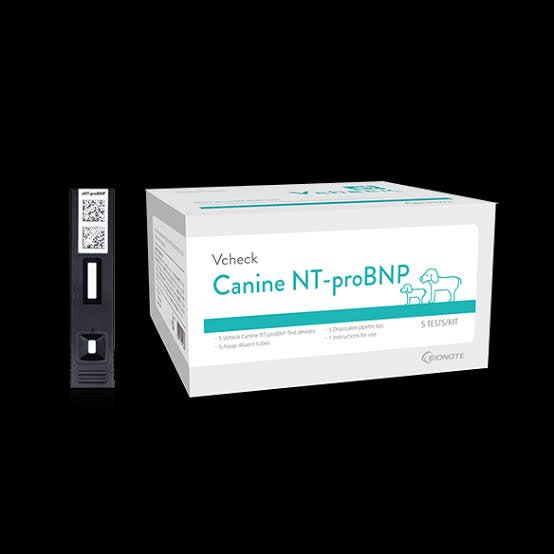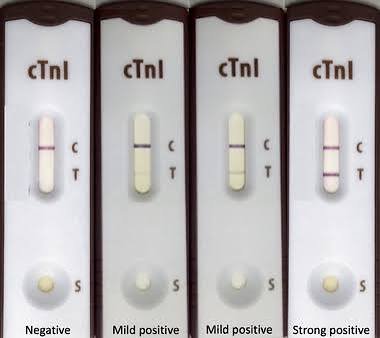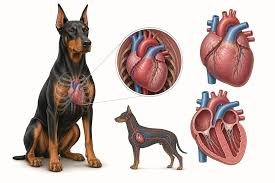
A 2026 study involving 345 Doberman Pinschers evaluated point-of-care Vcheck NT-proBNP and cardiac troponin I tests for detecting dilated cardiomyopathy. The findings support their potential role in accessible, in-clinic screening, but the study found better diagnostic performance with a laboratory-based cardiac troponin I assay, particularly for early-stage disease.
Dilated cardiomyopathy (DCM) is an important inherited cardiac disorder in Doberman Pinschers. The disease can develop before obvious clinical signs appear, making screening particularly important for a breed at risk of progressive heart dysfunction, arrhythmias and potentially sudden cardiac death.
A study published in Frontiers in Veterinary Science on 14 September 2026 evaluated the diagnostic performance of two point-of-care biomarkers measured using the Vcheck V200 system: N-terminal pro-B-type natriuretic peptide (NT-proBNP) and cardiac troponin I (cTnI). The researchers also compared Vcheck cTnI measurements with results from the laboratory-based IDEXX cTnI assay.
The research involved 453 serum samples from 345 privately owned, purebred Doberman Pinschers in Germany. Dogs were classified using echocardiographic and electrocardiographic findings, including 24-hour Holter monitoring, into five clinical categories: stage A, last normal, B1, B2 and C. Read the full research paper.
Key results: Vcheck biomarkers and diagnostic performance
Diagnostic measure |
Vcheck NT-proBNP |
Vcheck cardiac troponin I |
|---|---|---|
Reported study cut-off |
≥580 pmol/L |
≥0.21 ng/mL |
Sensitivity |
76.6% |
71.0% |
Specificity |
83.1% |
78.3% |
Area under the ROC curve (AUC) |
0.845 |
0.809 |
Source: Driessen, Friederich and Wess, Frontiers in Veterinary Science, 2026. These thresholds and performance estimates relate to the study’s evaluation and should not automatically be transferred to other populations or assay settings.
The AUC measures how well a test distinguishes dogs with the target condition from those without it. A value closer to 1.0 indicates stronger discrimination, although performance in practice also depends on the population tested, disease prevalence and the consequences of false-positive and false-negative results.
1. Why screening matters in Doberman Pinschers
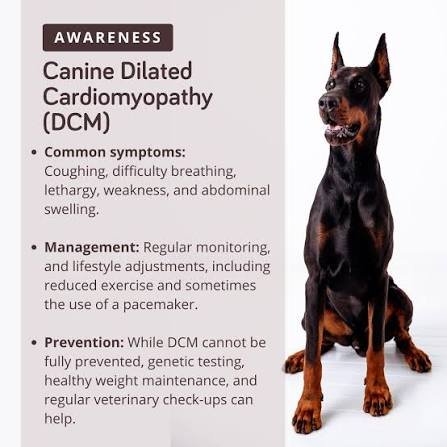
DCM is characterised by impaired cardiac muscle function and, in affected dogs, may be accompanied by enlargement of the heart and electrical abnormalities. In Dobermans, the disease can remain clinically silent during an early phase.
A dog may therefore appear healthy during a routine physical examination while already developing electrical or structural changes. Biomarkers can provide additional information about cardiac stress or myocardial injury, potentially helping veterinarians identify dogs that warrant further investigation.
The 2026 study evaluated the Vcheck assays against clinical classifications informed by echocardiography and electrocardiography. This is important because biomarker testing is intended to support—not replace—the assessment of cardiac structure and rhythm.
2. NT-proBNP: A marker of cardiac stress
NT-proBNP is released in response to cardiac wall stress. Its concentration can help identify dogs that may have underlying cardiac abnormalities.
In the study, a Vcheck NT-proBNP threshold of 580 pmol/L produced 76.6% sensitivity and 83.1% specificity, with an AUC of 0.845.
Sensitivity describes the proportion of affected dogs correctly identified by the test, while specificity describes the proportion of dogs without the target condition correctly classified as negative. These figures mean that the assay did not detect every affected dog at the selected threshold, and some dogs without the target condition could test positive.
NT-proBNP may therefore be useful as part of a structured screening pathway, particularly where accessible in-clinic testing helps determine which dogs need more comprehensive assessment. Interpretation must also consider concurrent disease and other factors that can influence biomarker concentrations.
3. Cardiac troponin I: A marker of myocardial injury
Cardiac troponin I is associated with injury to heart muscle cells. Increased concentrations can provide evidence of myocardial damage, including changes that may occur before overt clinical disease.
For Vcheck cTnI, the study reported a threshold of 0.21 ng/mL, sensitivity of 71.0%, specificity of 78.3% and an AUC of 0.809.
These findings indicate useful diagnostic information, but the assay’s performance was not sufficient to exclude DCM reliably on its own. A result below the study threshold should not be interpreted as definitive proof that a Doberman is free of disease.
4. The laboratory comparison: An important distinction
One of the study’s most consequential findings was that the laboratory-based IDEXX cTnI assay showed higher diagnostic accuracy than the Vcheck cTnI assay, particularly in early-stage disease.
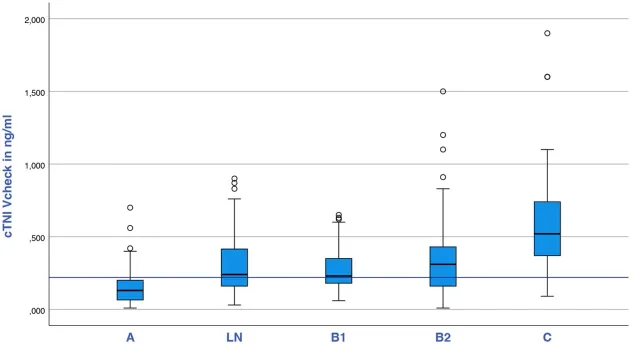
When the two Vcheck biomarkers were combined, overall discrimination improved: the combined AUC was 0.886. However, specificity was reduced, and the combined point-of-care approach still performed below IDEXX cTnI alone.
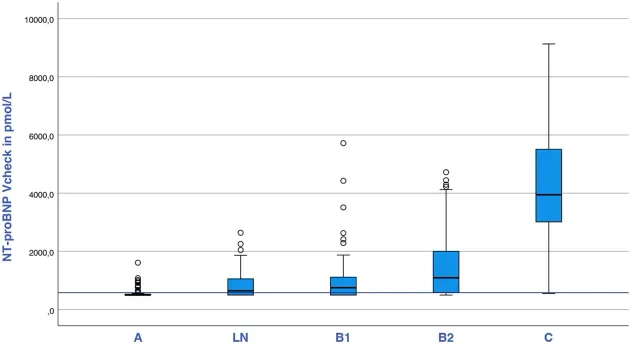
This trade-off matters in screening programmes. Combining tests can help identify more dogs that require further assessment, but it can also increase the number of dogs referred for additional testing despite not having the target disease.
For veterinary practices, the appropriate choice depends on the clinical question, the availability and turnaround time of laboratory testing, the cost of follow-up investigations and the need to avoid missed early disease.
Diagnostic comparison at a glance
Approach |
Main potential role |
Important limitation |
|---|---|---|
Vcheck NT-proBNP |
In-clinic assessment of cardiac stress |
Does not independently establish or exclude DCM |
Vcheck cTnI |
In-clinic assessment of myocardial injury |
Lower reported diagnostic performance than laboratory IDEXX cTnI |
Combined Vcheck biomarkers |
May improve sensitivity and overall discrimination |
Reduced specificity; still inferior to IDEXX cTnI alone in this study |
Echocardiography |
Assessment of cardiac structure and function |
Requires suitable equipment and expertise |
24-hour Holter monitoring |
Detection of intermittent arrhythmias |
Monitoring and interpretation add time and cost |
Laboratory-based IDEXX cTnI |
More accurate biomarker assessment, particularly in early-stage disease in this study |
Requires laboratory testing and appropriate clinical interpretation |
5. What the results mean for veterinary practices
The study supports the role of point-of-care biomarker testing as one element of a broader diagnostic pathway. It does not establish that the Vcheck system can replace echocardiography or Holter monitoring.
A practical screening pathway may involve:
-
Identify the at-risk dog. Review breed, age, family history, clinical signs and previous cardiac results.
-
Use biomarkers as adjuncts. Select appropriate tests based on clinical context, availability and veterinary judgement.
-
Investigate abnormal or concerning findings. Echocardiography and 24-hour Holter monitoring remain central to evaluating suspected DCM.
-
Plan repeat screening. A single normal result cannot rule out disease that develops later.
-
Interpret trends in context. Changes over time may be informative, but assay-specific thresholds and other medical conditions must be considered.
The European Society of Veterinary Cardiology’s published recommendations have advocated screening Doberman Pinschers from approximately three years of age using both Holter monitoring and echocardiography, with annual screening thereafter. The recommendations pre-date the 2026 Vcheck study and reinforce that biomarkers should complement established cardiac assessment rather than replace it. ESVC screening recommendations.
6. Implications for the veterinary diagnostics market
The research highlights a wider commercial and clinical opportunity for point-of-care veterinary diagnostics. In-clinic assays can potentially shorten the time between sample collection and a preliminary result, allowing veterinarians to discuss next steps during the same appointment.
However, market adoption will depend on more than convenience. Clinicians need evidence of accuracy in the intended population, reproducibility, appropriate thresholds, clear interpretation guidance and a sensible pathway for confirmatory testing.
The comparison with IDEXX is particularly relevant: point-of-care accessibility and laboratory diagnostic performance are distinct value propositions. Providers must communicate the intended use of each assay clearly, avoiding claims that a rapid test independently diagnoses or rules out inherited cardiomyopathy.
Conclusion
The 2026 study suggests that Vcheck NT-proBNP and cTnI assays can provide useful, accessible biomarker information when screening Doberman Pinschers for DCM. The combined tests improved overall discrimination, but the laboratory-based IDEXX cTnI assay performed better, particularly in early-stage disease.