


WASHINGTON, D.C. — In response to expanding transboundary disease threats and vector-borne agricultural risks, the U.S. Food and Drug Administration’s Center for Veterinary Medicine (CVM) has detailed a modernized regulatory framework designed to accelerate the approval, designation, and emergency deployment of critical animal drugs. Under its strategic goals and targeted regulatory authorities, the CVM is leveraging Priority Zoonotic Animal Drug (PZAD) designations alongside expanded Emergency Use Authorizations (EUAs) to mitigate animal and public health crises.
The initiative directly targets biological hazards that cross the animal-human interface—such as High Pathogenicity Avian Influenza (HPAI) and vector-borne threats like New World Screwworm (Cochliomyia hominivorax)—by granting drug sponsors priority review status, rolling application submissions, and emergency market access mechanisms.
Key Regulatory Pillars: PZAD & Emergency Use Authorizations (EUAs)
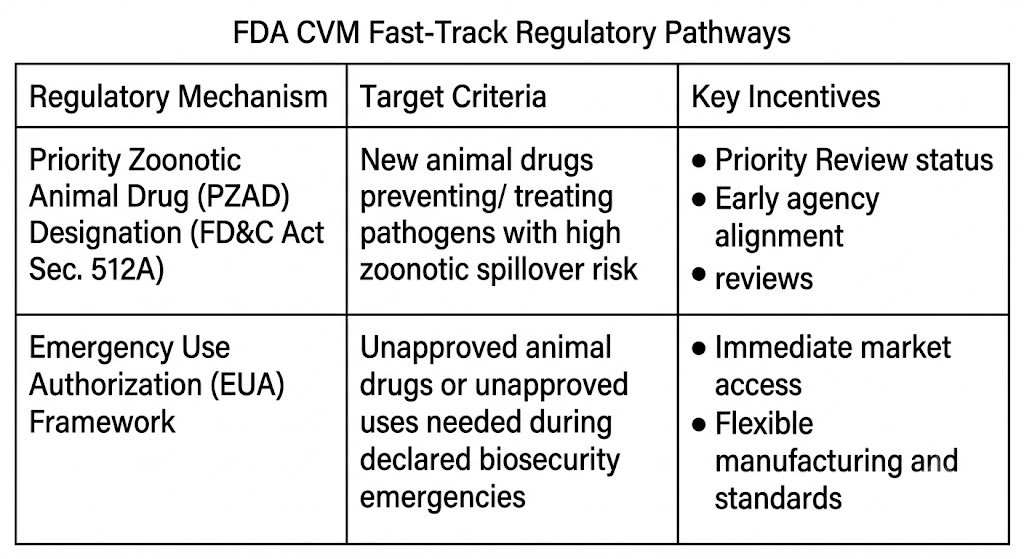
1. Priority Zoonotic Animal Drug (PZAD) Designation
Authorized under Section 512A of the Federal Food, Drug, and Cosmetic Act (added via the CARES Act), the PZAD designation provides a dedicated pathway for therapeutic candidates that address major public health concerns:
-
Eligibility Criteria: Candidates must be novel animal drugs designed to prevent, treat, or control diseases in animals that have a significant potential to infect humans or impact public health infrastructure.
-
Review Streamlining: Designated sponsors gain access to enhanced FDA scientific consultation, early protocol alignment, and prioritized review timelines through the Investigational New Animal Drug (INAD) and New Animal Drug Application (NADA) files.
2. Operationalizing Emergency Use Authorizations (EUAs) for Livestock Protection
To rapidly counter acute transboundary outbreaks, the FDA CVM has actively deployed EUAs for unapproved therapeutics or novel applications of existing drugs:
-
Immediate Deployment: EUAs allow livestock operations, wildlife managers, and veterinarians immediate access to critical treatments during active pest or pathogen incursions before formal full approvals are finalized.
-
Recent Case Studies: The CVM issued multiple EUAs for specialized topical sprays, ointments, and injectable formulations to control and treat New World Screwworm infestations in cattle, sheep, goats, horses, and exotic species across southern containment corridors.
Strategic Goals & One Health Synergy
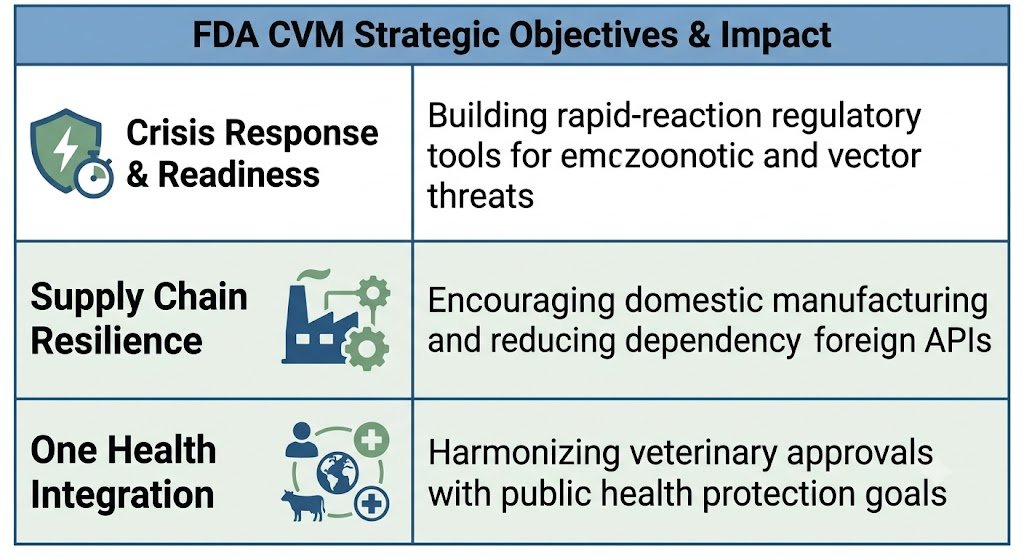
The fast-track pathways form a core pillar of CVM’s multi-year strategy, which focuses on expediting animal therapies, building crisis response infrastructure, and fostering international regulatory harmonization.
-
Mitigating Zoonotic Spillover: By accelerating the availability of veterinary therapeutics, the FDA aims to suppress pathogen loads at the animal source, reducing transmission risks to agricultural workers and consumers.
-
Protecting Global Supply Chains: Streamlined review processes reduce regulatory delays, encouraging biotech and pharmaceutical firms to invest in countermeasures against transboundary livestock diseases that threaten global trade stability.
Operational Roadmap for Pharmaceutical Sponsors
To leverage these fast-track mechanisms, prospective animal health drug developers should follow a structured pre-market roadmap:
-
Early Engagement: File a request for PZAD designation prior to or alongside the submission of an Investigational New Animal Drug (INAD) file.
-
Pre-Submission Conferences: Request formal alignment meetings with CVM technical divisions to confirm target animal safety, human food safety (for food-producing species), and efficacy endpoints.
-
EUA Readiness: For severe emergency threats (e.g., vector incursions), establish preliminary safety and quality data packages to allow rapid EUA clearance upon public health or agricultural emergency declarations.

