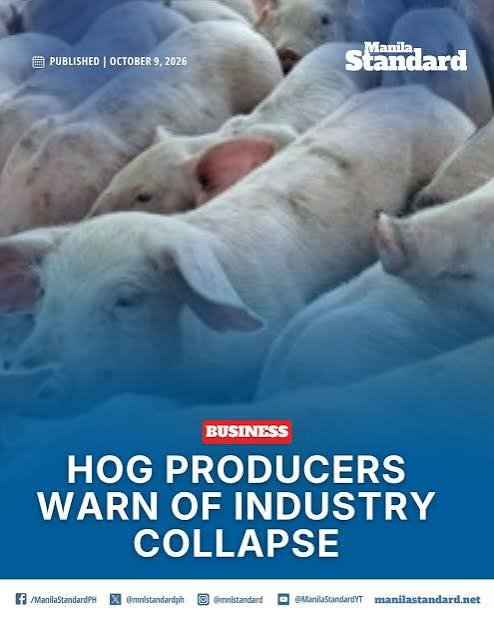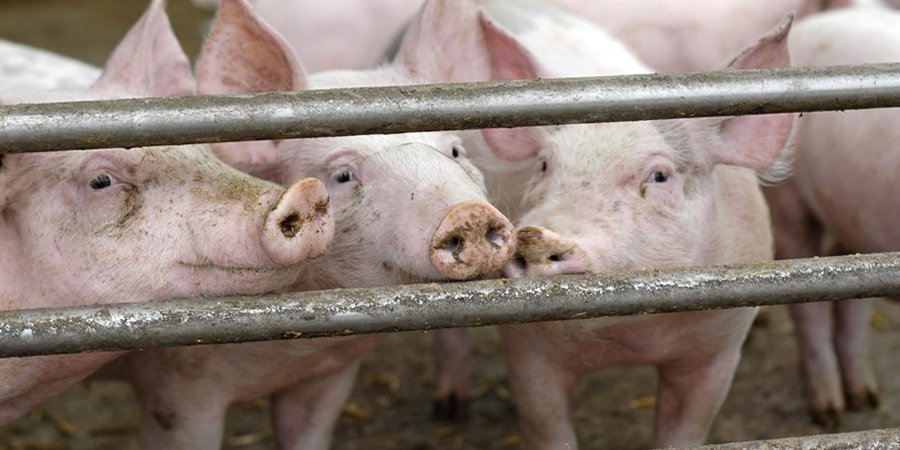
Philippine pig farmers are demanding an immediate increase in pork import tariffs and temporary restrictions on imported pork as collapsing farmgate prices, elevated production costs and competition from imported meat intensify pressure on the country’s domestic swine industry.
Producer groups said liveweight prices had fallen to approximately US$1.43/kg from US$1.91/kg, with reported losses reaching US$143.44 per pig.
They called for the restoration of tariffs to 30% for in-quota imports and 40% for out-quota imports, tighter import inspections and a freeze on the release of imported pork stocks.
The demands come amid a widening policy debate over how to balance farm profitability, food affordability and import competition. The Philippine Department of Agriculture (DA) has already proposed a phased tariff increase, while a separate preliminary safeguard investigation into pork imports was announced in October.
Farmgate prices fall below production costs
The latest producer demands reflect a sharp deterioration in farm economics. According to the DA, average farmgate hog prices declined from PHP 215/kg in June 2025 to PHP150/kg in August 2026—a reduction of approximately 30.2%.
Industry representatives have cited even lower prices in some locations. On 9 October, producer groups reportedly described farmgate prices of PHP 90–120/kg, with estimated losses of PHP5,000–9,000 per animal. A separate report cited prices of PHP130–140/kg against production costs of PHP180–190/kg. These are industry-reported ranges, not a single national average, and conditions can differ by region, production system and pig weight.
The economics are stark: when the sale price falls below the cost of raising an animal, farmers may struggle to purchase feed, maintain facilities, service debt or restock their farms. Prolonged losses can lead smaller producers to reduce herd sizes or leave production, potentially weakening domestic supply capacity over time. The numbers behind the tariff dispute
Indicator |
Reported figure |
Industry significance |
|---|---|---|
Liveweight price cited by Asian Agribiz |
US$1.43/kg, down from US$1.91/kg |
Approximately 25.1% lower |
DA farmgate price |
PHP215/kg in June 2025 → PHP150/kg in August 2026 |
Approximately 30.2% decline |
Reported losses per pig |
Up to US$143.44 |
Indicates severe pressure on producer margins |
Pork imports, January–August 2026 |
602,655 tonnes |
Up 5.16% from 573,091 tonnes a year earlier |
Current tariff rates cited by the DA |
15% in-quota; 25% out-quota |
Existing rates targeted for revision |
Proposed 2027 rates |
25% in-quota; 35% out-quota |
First phase of the government’s proposal |
Proposed 2028 rates |
30% in-quota; 40% out-quota |
Return to the higher rates sought by producers |
Sources: Philippine DA, BusinessMirror and Asian Agribiz. Price and loss figures reflect different reporting dates and industry estimates.
The import figures add context. Pork shipments increased by 5.16% in January–August 2026 compared with the same period in 2025, according to data cited by BusinessMirror. The DA has also reported a 6% increase in domestic hog production in the first half of 2026, alongside high pork imports and inventories. The resulting mismatch between recovering production and weak farmgate prices is central to the dispute.
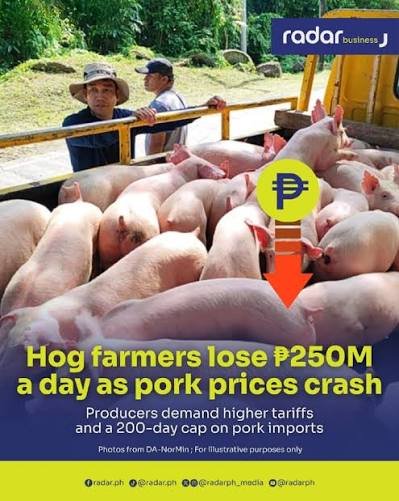
Farmers seek immediate intervention as government considers phased tariff increases
Producer groups want tariffs restored more quickly than the government’s proposed schedule. The DA’s plan is to raise in-quota tariffs from 15% to 25% and out-quota tariffs from 25% to 35% in 2027, followed by 30% and 40%, respectively, in 2028. Farmers are pressing for the higher rates sooner, alongside temporary limits on imports and tighter controls over frozen pork already held in cold storage.
The policy process has also advanced beyond industry lobbying. On 15 October, the DA published notice of a preliminary safeguard investigation into pork imports from various countries and customs territories. The investigation was initiated following a notice issued on 9 October and a finding of prima facie evidence that increased imports over the preceding three to five years may have caused, or threatened, serious injury to the domestic pork and hog industry. The preliminary investigation is expected to be completed within 30 days of publication, according to the DA.
The DA has also discussed possible time-bound quantitative restrictions under the country’s safeguard legislation. Agriculture Secretary Francisco Tiu Laurel Jr. has said that such restrictions could be considered if higher tariffs are insufficient to address serious injury, subject to the relevant legal procedures and assessment.
Why retail pork prices complicate the debate
One of the most important features of the current market is the disconnect between farmgate and retail prices. Data from the DA cited by Asian Agribiz put Metro Manila pork belly at approximately US$5.93/kg for domestic product versus US$4.87/kg for imported product—a difference of US$1.06/kg, or around 18% relative to the domestic price.
This price gap helps explain why imported pork remains attractive to processors, retailers and consumers even as domestic farmers report losses. Higher tariffs could narrow the import-price advantage, but they could also increase procurement costs for businesses and put upward pressure on consumer prices, depending on how much of the additional duty is passed through the supply chain.
The effect would not necessarily be uniform. Retail prices also depend on cut, grade, logistics, cold-chain costs, wholesale margins and retail mark-ups. A higher import tariff alone would not guarantee that farmers receive a remunerative price or that the difference between farmgate and retail prices is eliminated.