


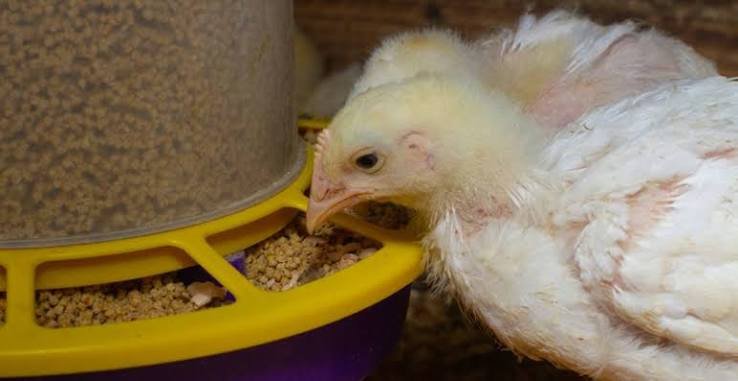
Feed wastage threatens broiler profitability as high feed costs intensify pressure on farm margins
Feed wastage is one of the most significant hidden costs in large-scale broiler integration, potentially draining over US$724,000 annually per operation according to an analysis by aviNews released today.
Physical feed wastage can become a significant and often overlooked source of financial loss in commercial broiler production, according to an analysis published by aviNews on 19 October 2026.
The report estimates that an integrator placing 100,000 broiler chicks per week across multiple farms could incur annual losses of approximately US$271,436 to US$724,882 if physical feed wastage ranges from 3% to 8%.
The calculations are illustrative scenarios rather than measured national averages. Nevertheless, they highlight the financial importance of monitoring feed deliveries, feeder settings, storage conditions, spillage and pest-related losses—particularly when feed is already absorbing a large share of poultry production expenditure.
Because feed represents roughly 60% to 70% of the total cost of poultry production, even minor inefficiencies at the feeder line compound into massive financial losses across millions of birds.
Why Feed Wastage Scaled to This Level
Indicator |
Scenario assumption or estimate |
|---|---|
Weekly chick placements |
100,000 |
Feed consumption per bird over the production cycle |
3.6 kg |
Assumed feed conversion ratio |
Approximately 1.65 |
Target live weight in the example |
2.2 kg |
Weekly feed requirement |
360 tonnes |
Assumed feed price |
US$0.48/kg |
Weekly feed expenditure |
Approximately US$174,645 |
Annual feed expenditure |
Approximately US$9.06 million |
Illustrative physical wastage range |
3–8% |
Estimated annual wastage cost |
Approximately US$271,436–724,882 |
In large integration models, small numbers scale rapidly. The aviNews estimate highlights how fractional losses become catastrophic when multiplied across thousands of houses:
- The “One Gram” Effect: If a single broiler wastes just 1 to 2 grams of feed per day, a mega-integrator processing 50 million birds a year loses hundreds of tons of feed annually.
- Marginal Erosion: With rising global ingredient costs (like corn and soybean meal), feed mill efficiency is easily neutralized by poor management at the farm level.
Primary Causes of Feed Loss in Broiler Houses
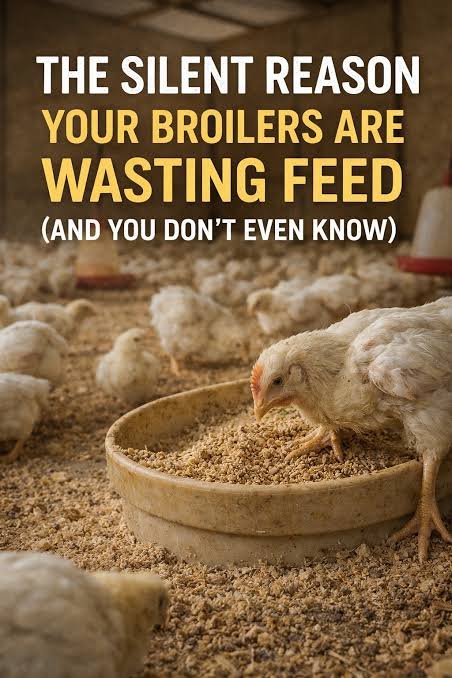
- Incorrect Feeder Height: If feeders are too low, birds easily scratch and bill the feed out onto the litter. If they are too high, birds struggle to eat, leading to head-shaking and spillage.
- High Feed Levels in Pans: Flooding the feed pans encourages selective eating and scratching, which pushes expensive pellets directly into the bedding.
- Poor Equipment Maintenance: Worn-out augers, damaged pans, and leaking feed hoppers create constant, unnoticed trickles of waste.
- Rodent and Wild Bird Infestations: Pests not only consume massive volumes of feed directly from silos and pans but also contaminate what remains.
How Integrators Can Mitigate the Losses
To reclaim these lost margins, large operations focus on precision management:
-
Automated Height Adjustments: Raising the feeder lines daily to match the birds’ growth (typically keeping the lip of the pan level with the bird’s breast).
-
Strict Feed Level Regulation: Maintaining low feed levels in the pans (e.g., keeping pans at 25% to 30% capacity once birds are past the brooding stage) to prevent billing.
-
Aggressive Biosecurity: Enforcing strict rodent-control programs to stop feed diversion.

