


Vetcare Innovations Tests AI-Assisted Veterinary Drug Assessment as Finland’s Veterinary Pharma Sector Pursues New Development Models
HELSINKI, Finland, 23 October 2026: Finnish veterinary pharmaceutical group Vetcare is advancing a more focused approach to drug development through its subsidiary Vetcare Innovations, which is testing the use of artificial intelligence to assess early-stage veterinary drug concepts.
The initiative brings together two related developments: the establishment of a dedicated drug-development company, announced in June 2025, and a more recent AI-assisted assessment project reported last week.
The AI project is reported to have a total funding envelope of approximately €240,000, including a €120,000 grant from Business Finland. Its purpose is to investigate whether AI can help assess prospective veterinary pharmaceutical projects more systematically by considering scientific evidence, medical need and commercial feasibility.
The initiative reflects a broader challenge for the animal health industry: how to identify promising drug-development opportunities, allocate limited R&D resources and build partnerships without taking on every development risk independently.
Vetcare Innovations: Dedicated Structure for Pharmaceutical Development
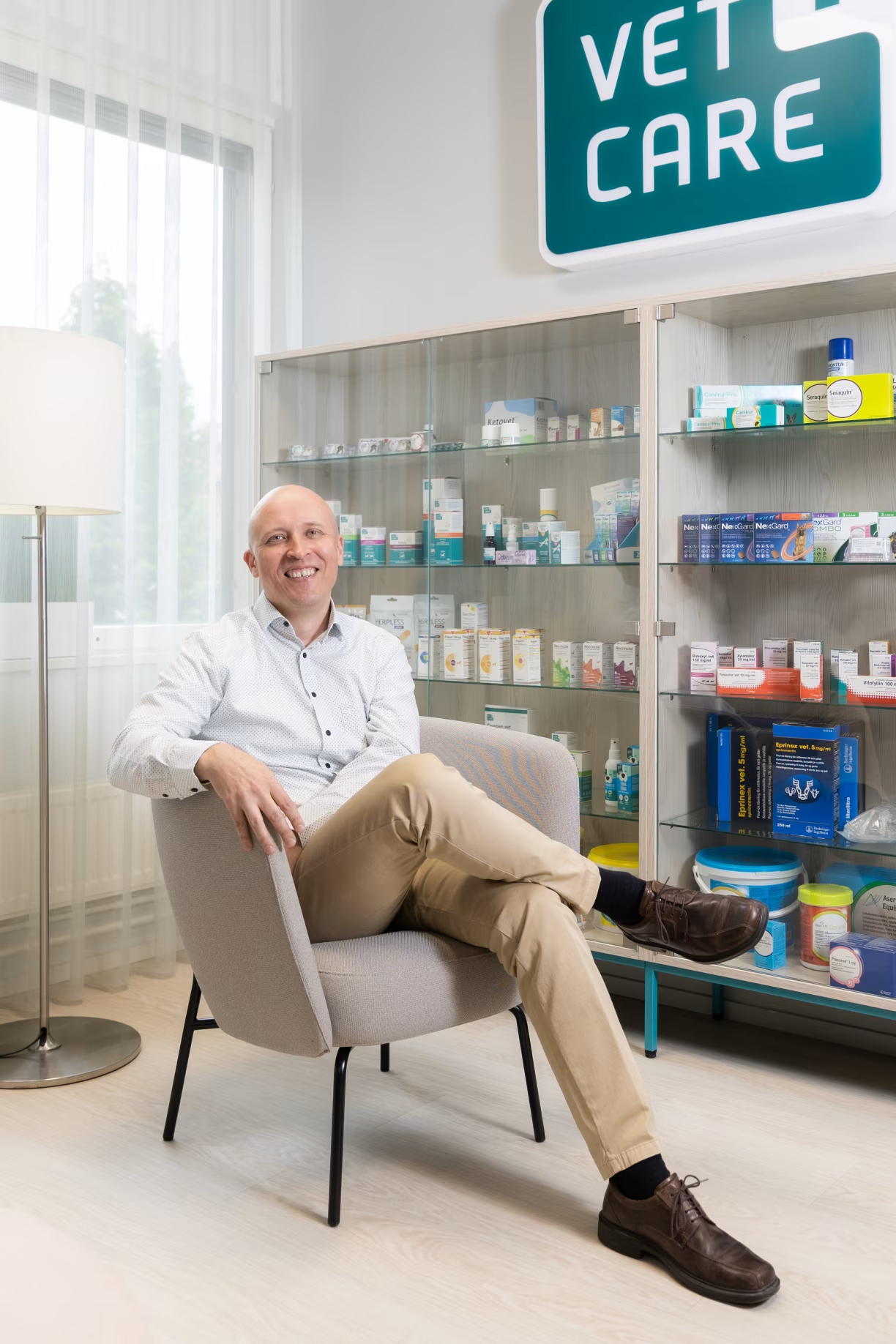
Vetcare announced in June 2025 that it would transition its drug-development activities into a separate company, Vetcare Innovations. The company remains wholly owned by Vetcare Group; the spin-out is therefore an internal corporate restructuring rather than a sale to an external investor.
Veli-Matti Riipinen was appointed CEO of Vetcare Innovations effective 1 June 2025. The organisational change was designed to accelerate the launch of development projects, increase transparency around commercial activities and financing, and support international expansion.
The new structure also gives drug development a more clearly defined management and partnership framework. Vetcare has described plans to engage potential pharmaceutical partners earlier in the development process, including before final clinical field trials, allowing the parties to explore joint investment, risk-sharing and commercialisation arrangements.
The distinction matters in veterinary pharmaceuticals, where a scientifically promising candidate may still require substantial investment in development, manufacturing, regulatory documentation and market access before it becomes a commercial product.

AI project: Tool for Prioritisation, not a substitute for scientific validation
The recent AI initiative is intended to test whether software-supported assessment can improve the early screening of veterinary drug ideas.
In principle, such systems can help organise scientific literature, compare candidate projects against defined criteria, identify evidence gaps and structure early commercial assessments. If validated, this could help a development organisation decide which projects merit additional investigation and which should be deferred or discontinued.
However, AI-assisted project evaluation is not equivalent to AI independently discovering a drug, demonstrating efficacy or securing regulatory approval.
The value of the approach will depend on the quality of its inputs, the relevance of its evaluation criteria and the degree to which its recommendations can be validated against expert assessment and subsequent project outcomes.
The reported funding supports a project to test the approach; it should not be interpreted as evidence that a specific AI-generated veterinary medicine has entered clinical development or reached the market.
Funding and development model
Item |
Reported position |
|---|---|
AI project funding |
Approximately €240,000 |
Business Finland grant |
€120,000 |
Dedicated development company |
Vetcare Innovations |
Parent-company ownership |
100% Vetcare Group |
CEO of Vetcare Innovations |
Veli-Matti Riipinen |
Corporate spin-out announcement |
13 June 2025 |
Recent AI project reporting |
16 October 2026 |

