HomeCompanion AnimalsCalifornia Confirms Equine Herpesvirus Myeloencephalopathy in Thoroughbred; 37 Horses Quarantined

California Confirms Equine Herpesvirus Myeloencephalopathy in Thoroughbred; 37 Horses Quarantined

24 October 2026 | Equine Health | United States

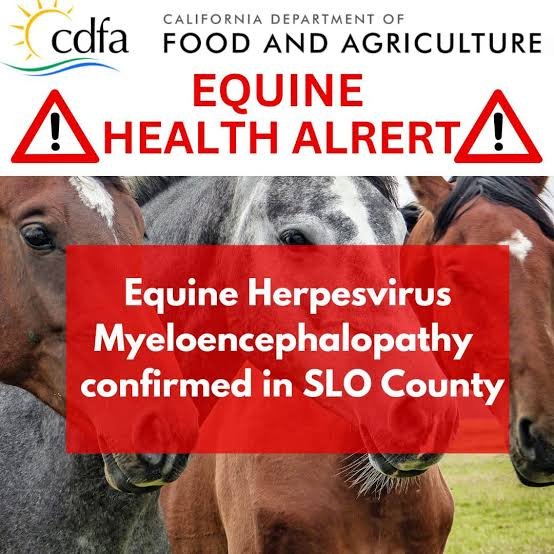
California animal-health authorities are responding to a confirmed case of equine herpesvirus myeloencephalopathy (EHM), the neurological form of equine herpesvirus-1 (EHV-1) infection, in Los Angeles County. An 18-year-old Thoroughbred gelding developed neurological signs and tested positive for EHV-1-associated EHM, according to an alert published by the Equine Disease Communication Center (EDCC) on 23 October.

The horse is isolated at its home premises and was reported to be alive and recovering. 37 potentially exposed horses at the premises have been quarantined, and enhanced biosecurity measures have been implemented. The California Department of Food and Agriculture (CDFA) has been onsite and is continuing to monitor the situation.

The alert identifies one confirmed case and 37 potentially exposed horses. It does not report that all exposed horses are infected, nor does it establish that additional cases have occurred.

Source: Equine Disease Communication Center — Los Angeles County EHM alert, 23 October 2026
Incident details at a glance

Parameter
Reported information
Location
Los Angeles County, California, United States
Date of alert
23 October 2026
Disease
Equine herpesvirus myeloencephalopathy (EHM)
Associated virus
Equine herpesvirus-1 (EHV-1)
Confirmed cases
1
Potentially exposed horses
37
Affected horse
18-year-old Thoroughbred gelding
Clinical sign reported
Ataxia, or impaired coordination
Status of affected horse
Alive and recovering at the time of the alert
Control measures
Isolation, quarantine of exposed horses and enhanced biosecurity
Veterinary authority
California Department of Food and Agriculture

What is EHM, and why is it important?

EHV-1 is a contagious virus in horses that can cause respiratory disease, abortion and, in some cases, neurological illness. When EHV-1 affects the nervous system, the resulting condition is known as equine herpesvirus myeloencephalopathy.

Neurological disease may involve ataxia, weakness, difficulty standing, impaired bladder function or paralysis. Severity varies, and serious cases can be life-threatening. The presence of neurological signs does not, by itself, establish EHM; veterinary examination and diagnostic testing are required.

The neurological form is particularly important to horse owners and equine businesses because infection can spread before all affected animals are recognised. Horses may be exposed through contact with infected horses, respiratory secretions and contaminated equipment or surfaces. People, clothing, footwear and shared equipment can also contribute to mechanical spread between groups of horses.

The American Association of Equine Practitioners (AAEP) identifies rapid isolation, veterinary assessment and appropriate premises-level biosecurity as central components of EHM response.

Reference: AAEP — Equine Herpesvirus 1 and 4 Infectious Disease Guidelines

Why the 37-horse exposure figure matters

The 37 horses are classified as potentially exposed, not as confirmed EHV-1-positive cases. The distinction matters when communicating outbreak risk and evaluating the possible scale of an incident.

A single confirmed case may prompt a broader response because horses sharing a stable, handling area, transport vehicle or equipment may have been exposed before the diagnosis was made. The extent of exposure depends on contact patterns, timing, facility layout and the measures implemented once infection is suspected.

Quarantine reduces the risk of moving potentially infected horses to other premises or events while veterinary authorities assess the situation. It also provides a framework for monitoring exposed animals and identifying any additional horses that develop compatible signs.

At the time of the EDCC alert, the published information did not establish a wider outbreak beyond the reported premises. The situation should therefore be described as a confirmed EHM case with 37 potentially exposed horses under quarantine—not as 38 confirmed infections.

Biosecurity priorities for affected and potentially exposed premises

Response decisions should be directed by the attending veterinarian and the relevant animal-health authority. General measures in professional equine guidance include:

1. Maintain strict isolation

The clinically affected horse should remain isolated in accordance with official instructions. Direct contact with other horses should be prevented, and movement onto or off the affected premises should follow the applicable quarantine requirements.

2. Monitor exposed horses closely

Veterinarians and horse managers should monitor exposed animals for fever, nasal discharge, lethargy and neurological abnormalities. Temperature monitoring and the duration of observation should follow veterinary and official guidance. Any horse showing compatible signs should be promptly isolated and assessed.

3. Separate equipment and personnel workflows

Feed and water equipment, grooming tools, tack, buckets and other shared items should not move between isolated and unaffected groups without appropriate cleaning and disinfection. Staff should follow a defined sequence for handling horses, with hygiene and protective measures appropriate to the risk.

4. Review movement and event participation

Horse shows, training facilities, breeding operations, boarding stables and transport providers should consult veterinary authorities before moving horses linked to an affected premises. Decisions should be based on exposure history, clinical monitoring, diagnostic findings and official restrictions—not solely on whether a horse appears healthy.

5. Follow official instructions on testing and release

Testing strategies and quarantine-release criteria should be set with veterinary authorities. A single negative test or the absence of visible clinical signs should not automatically be taken as proof that a potentially exposed horse can safely return to unrestricted movement.

Professional guidance: AAEP — EHM guidance for state animal-health officials

Vaccination: an important distinction

Vaccines are available for certain EHV-1 disease outcomes, including respiratory disease and abortion, but there is no licensed vaccine with a label claim specifically for preventing or controlling EHM in the AAEP guidance cited here.

Some EHV-1 vaccines may reduce viral shedding or viraemia in particular contexts. However, this should not be interpreted as proof that vaccination will prevent neurological disease or stop transmission during an active outbreak. Vaccination decisions during an incident should be made with the attending veterinarian and animal-health authorities.

This distinction is important for accurate communication: a vaccination programme may form part of broader equine health management, but it is not a substitute for isolation, surveillance and biosecurity during an EHM incident.

Commercial and industry implications

Equine events and boarding facilities – A confirmed neurological EHV-1 case can prompt temporary movement restrictions, increased monitoring and changes to event participation. Organisers may need clear protocols for communicating exposure notifications, maintaining records and coordinating with veterinary authorities.

Thoroughbred and breeding operations – Breeding farms, training yards and racehorse operations should consider how horse movement, shared personnel and equipment affect exposure pathways. The operational impact of an incident depends on the number of horses at risk, the duration of restrictions and the findings of the epidemiological investigation.

Veterinary practices and diagnostic services – Timely veterinary assessment and appropriate diagnostic sampling are essential when EHV-1 is suspected. Equine practices should have protocols for managing potentially infectious neurological cases, protecting staff and clients, and notifying the relevant authority where required.

Equine transport and service providers

Transport vehicles, equipment and shared facilities can connect otherwise separate horse populations. Providers should have practical cleaning, disinfection and communication procedures for incidents involving potentially exposed horses.

These are general sector implications of an EHM incident; the published alert does not quantify financial losses, identify a commercial event affected by this case or establish transmission beyond the reported premises.

What to watch next

Further updates should clarify whether any additional horses develop clinical signs, whether diagnostic testing identifies further infections, how long the quarantine remains in force and when authorities determine that restrictions can be lifted.

For horse owners, the immediate priority is to follow official advice, avoid unnecessary horse movements linked to the affected premises and seek prompt veterinary assessment if compatible signs emerge.

Conclusion

California’s 23 October EHM alert confirms one EHV-1-associated neurological case in an 18-year-old Thoroughbred gelding in Los Angeles County. The horse was reported to be recovering, while 37 potentially exposed horses were quarantined under enhanced biosecurity measures.

The exposure figure indicates the scope of precautionary control measures, not the number of confirmed infections. Continued veterinary monitoring, strict isolation, appropriate hygiene and compliance with official movement restrictions will be important in determining whether the incident remains limited to the reported premises.

Animal Health India Editorial Team
Animal Health India Editorial Teamhttps://animalhealthindia.com
Animal Health India (AHI) is an independent news and intelligence platform covering the global animal health, veterinary, livestock, poultry, companion animal and pet food sectors. Our editorial team comprises veterinary journalists, animal health professionals, regulatory affairs specialists and industry analysts with over 30 years of combined experience covering India, Asia, Europe and North America. AHI publishes news, regulatory updates, market intelligence and company news drawn from primary sources including DAHD, EMA, USDA, AVMA and leading veterinary publications worldwide.
RELATED ARTICLES