HomeCorporateGlobal Animal Health Updates FMD Strategy (2026–2030) Following Swine Outbreaks in Cyprus...

Global Animal Health Updates FMD Strategy (2026–2030) Following Swine Outbreaks in Cyprus and Namibia

ROME, Italy and WINDHOEK, Namibia — The Food and Agriculture Organization of the United Nations (FAO), in joint technical coordination with the World Organisation for Animal Health (WOAH) and the European Commission for the Control of Foot-and-Mouth Disease (EuFMD), has released updated global guidelines under the Global Strategy for the Control of Foot-and-Mouth Disease (2026–2030).

The updated strategy introduces heightened biosecurity protocols, transboundary surveillance frameworks, and targeted vaccination mandates across both swine (Sus scrofa domesticus) and cloven-hoofed ruminant populations. This global intervention follows recent epidemiological detections of Foot-and-Mouth Disease Virus (FMDV) within commercial swine herds in Cyprus and smallholder livestock zones in northern Namibia.

Background & Epidemiological Context

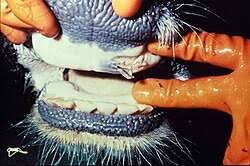
Foot-and-Mouth Disease is a highly contagious aphthovirus belonging to the Picornaviridae family. It affects cloven-hoofed animals—including cattle, swine, sheep, goats, and wild ruminants. While adult mortality from FMDV is generally low (under 5%), the virus causes severe morbidity characterized by high fever, painful vesicular lesions on the mouth, snout, teats, and feet, leading to acute lameness, emaciation, and drastic drops in milk and meat productivity.

Historically, cattle have been viewed as the primary indicator species due to obvious clinical signs. However, pigs act as “amplifying hosts” capable of excreting up to 1,000 times more airborne virus particles per day via respiratory aerosol emissions compared to cattle or sheep.
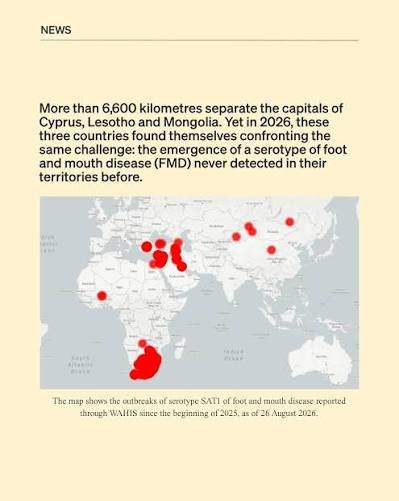
The confirmation of FMDV serotypes in domestic swine populations across Cyprus (European Union border region) and the Zambezi region of Namibia has raised alarms regarding cross-species viral spillover, potential trade disruptions, and transboundary spread through swine transport corridors.

Parameter
Swine (Amplifying Host)
Cattle (Indicator Host)
Sheep/Goats (Maintenance Host)
Clinical Severity
Severe foot/snout lesions, hoof sloughing
High fever, oral vesicles, milk drop
Often mild or subclinical
Viral Excretion (Aerosol)
Up to $10^9 TCID50/day
$10^5 – 10^6 TCID50/day
Low aerosol output
Primary Route of Infection
Ingestion of contaminated feed/swill
Inhalation of airborne virus
Inhalation / direct contact
Carrier State
No long-term carrier state
Long-term carrier (>28 days)

Key Pillars of the 2026–2030 FAO-WOAH FMD Strategy

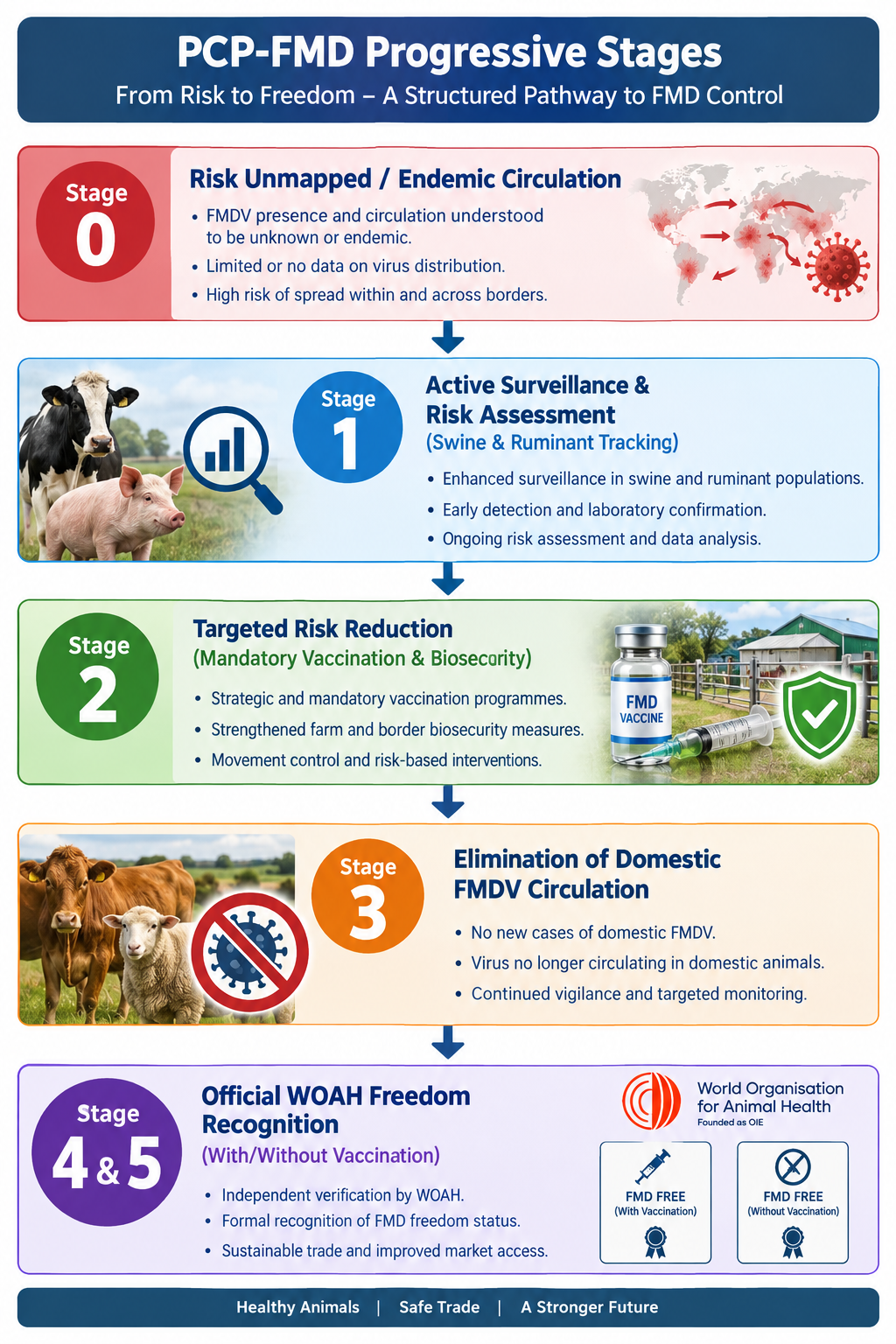
The updated 2026–2030 Global FMD Strategy expands upon the Progressive Control Pathway for Foot-and-Mouth Disease (PCP-FMD), placing enhanced emphasis on pig production systems and informal swine trade routes.

1. Swill Feeding Bans and Swine Biosecurity Enforcement

Unprocessed catering waste and swill feeding remain the highest risk vector for introducing FMDV into domestic swine herds. The new FAO directives mandate strict regulatory bans or high-temperature heat treatment (>100° C for at least 30 minutes) on all food scraps fed to pigs.

2. High-Matching Multivalent Vaccine Banking

The strategy reinforces emergency vaccine bank reserves, ensuring rapid deployment of serotype-specific vaccines matching circulating strains—specifically Serotypes O, A, and SAT 2, which pose elevated risks in Southern Africa and the Mediterranean basin.

3. Molecular Diagnostic and Pen-Side Surveillance

Expansion of rapid point-of-care Reverse Transcription Polymerase Chain Reaction (RT-PCR) and lateral flow antigen detection kits to enable local veterinary officers in rural zones (such as Namibia’s Red Line veterinary cordon fence) to confirm FMDV within 2 hours, eliminating multiday transport delays to central laboratories.

4. Transboundary Corridor Tracking

Implementation of digital livestock movement permits, vehicle disinfection checkpoints at regional borders, and real-time GIS mapping of wild suid (wild boar and warthog) movements along regional frontiers.

Economic and Trade Implications

An uncontained FMD outbreak carries catastrophic socio-economic consequences. The loss of official “FMD-Free” status immediately triggers international trade embargos under World Trade Organization (WTO) Sanitary and Phytosanitary (SPS) rules, blocking exports of live animals, fresh pork, beef, and unpasteurized dairy products.

Economic modeling by agricultural economists indicates that an uncontrolled multi-country outbreak across European or African livestock hubs could result in direct and indirect global losses exceeding $6.5 billion to $10 billion annually in lost exports, stamping-out culling costs, vaccination campaigns, and supply chain disruptions.

Expert Commentary & Industry Outlook

Speaking during the strategy rollout, animal health officials emphasized that protecting swine herds is central to safeguarding global protein security.

“Swine amplification is the silent driver of explosive FMD epizootics,” noted a senior FAO Animal Health Officer. “When FMD enters an intensive pig production unit, the sheer volume of viral shedding can carry the virus miles downwind, infecting neighboring dairy and beef operations. Controlling the disease in pigs is not just a swine industry issue—it is a mandatory biosecurity requirement for the entire global livestock sector.”

Countries operating in PCP-FMD Stages 1 and 2 are urged to update their national emergency response plans immediately and submit updated serological surveillance surveys to WOAH ahead of the upcoming annual animal health assembly.

Animal Health India Editorial Team
Animal Health India Editorial Teamhttps://animalhealthindia.com
Animal Health India (AHI) is an independent news and intelligence platform covering the global animal health, veterinary, livestock, poultry, companion animal and pet food sectors. Our editorial team comprises veterinary journalists, animal health professionals, regulatory affairs specialists and industry analysts with over 30 years of combined experience covering India, Asia, Europe and North America. AHI publishes news, regulatory updates, market intelligence and company news drawn from primary sources including DAHD, EMA, USDA, AVMA and leading veterinary publications worldwide.
RELATED ARTICLES