


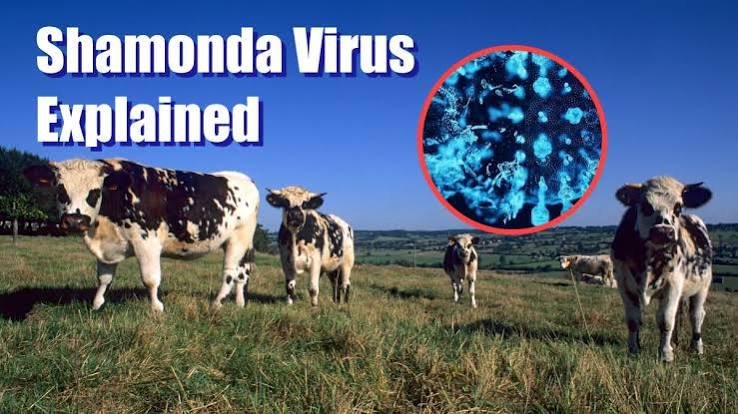
Europe’s emerging Shamonda virus situation has entered a new phase, with infections reported across multiple countries, two genetically distinct viral lineages identified in Germany, reproductive concerns in livestock and the first documented human infection in France. Authorities are strengthening surveillance while the disease’s long-term impact remains uncertain.
Shamonda virus (SHAV), a midge-borne orthobunyavirus previously identified in Africa and Asia, emerged in European livestock during summer 2026. The situation has since developed from an animal-health investigation into a wider One Health surveillance priority following the identification of the first documented human infection in France.
As of 26 October, the principal developments are:
-
Geographic spread: ECDC reported detections in farm animals across 12 European countries—Austria, Belgium, France, Germany, Ireland, Italy, Liechtenstein, Luxembourg, the Netherlands, Portugal, Spain and Switzerland—plus Jersey
-
Two distinct viral lineages: A peer-reviewed study published in Eurosurveillance on 1 October identified SHAV-Europe 1 (SHAV-EU1) and SHAV-Europe 2 (SHAV-EU2), indicating two independent introductions into Germany
-
French livestock surveillance: French public-health reporting recorded detections in cattle across 52 departments as of 20 October, alongside sheep detections in two departments and a reported equine case. A French livestock-sector update published on 23 October reported cattle detections across 53 departments
-
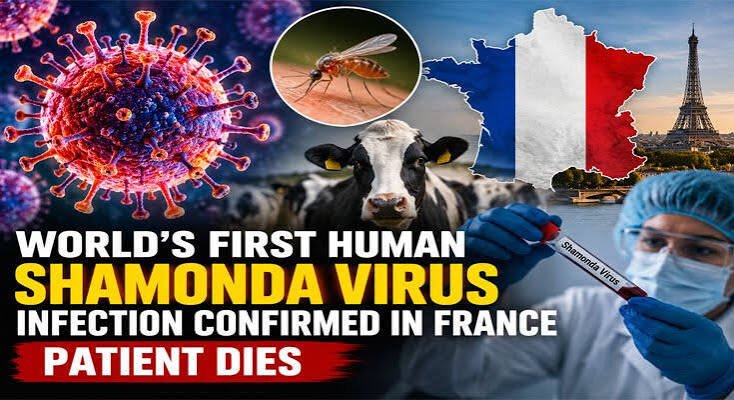
First human infection: France notified authorities of a human infection in a severely immunocompromised patient in early October. The patient subsequently died. Investigations into the infection route and the virus’s contribution to the death are ongoing
-
No established general-population risk: French authorities and ECDC have reported no evidence of human-to-human transmission or an identified health risk to the general population at this stage
-
No commercial vaccine: WOAH reports that no commercially available Shamonda virus vaccine is currently available. Diagnosis relies on laboratory testing because clinical signs overlap with other livestock diseases
What is Shamonda virus?
Shamonda virus belongs to the genus Orthobunyavirus, family Peribunyaviridae, and the Simbu serogroup. It is related to Schmallenberg virus and other midge-borne viruses that can affect livestock reproduction.
The virus was first isolated from cattle in Nigeria in 1965 and has subsequently been detected in parts of Africa and Asia, including Japan. Its detection in European cattle during 2026 represents a new epidemiological development for the region.
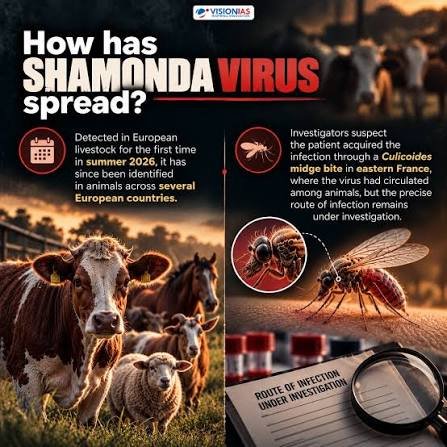
Transmission between animals is understood to occur primarily through bites from infected Culicoides biting midges. The exact midge species responsible for transmission of the European variants has not yet been established.
WOAH notes that the European viruses include two distinct variants, provisionally designated SHAV-EU1 and SHAV-EU2. Their epidemiology, pathogenicity, host range and long-term impact remain incompletely characterised.
European spread: current surveillance picture
ECDC reported that clinical signs in animals were observed from June 2026, with the virus identified later in July. By October, detections had been reported across a broad area of western, central and southern Europe.
Geographic status
Country or territory |
Reported status as of the latest available updates |
Important qualification |
|---|---|---|
France |
Widespread cattle detections; sheep and equine cases also reported |
52 departments in official public-health reporting as of 20 October; a sector update reported 53 on 23 October |
Germany |
Cattle detections involving two distinct viral lineages |
SHAV-EU1 was identified in southern Germany; SHAV-EU2 was identified in north-western Germany |
Switzerland |
Early European detections in cattle |
Part of the initial European emergence |
Austria |
Farm-animal detections reported |
Publicly available updates do not provide a comparable national case total |
Belgium |
Farm-animal detections reported |
National totals are not directly comparable across countries |
Ireland |
Farm-animal detections reported by ECDC |
Additional detail is needed to quantify the extent of circulation |
Italy |
Farm-animal detections reported by ECDC |
No comparable cumulative national total cited here |
Liechtenstein |
Farm-animal detections reported by ECDC |
No comparable cumulative national total cited here |
Luxembourg |
Farm-animal detections reported by ECDC |
No comparable cumulative national total cited here |
Netherlands |
Farm-animal detections reported by ECDC |
No comparable cumulative national total cited here |
Portugal |
Farm-animal detections reported by ECDC |
No comparable cumulative national total cited here |
Spain |
Farm-animal detections reported by ECDC |
No comparable cumulative national total cited here |
Jersey |
Cattle detections reported by the UK Animal and Plant Health Agency |
Jersey is a Crown Dependency, not part of the United Kingdom |
Two Viral Lineages: Why the German findings matter
A study published in Eurosurveillance on 1 October 2026 identified a second genetically distinct Shamonda virus lineage in German cattle. The authors designated the two European lineages SHAV-EU1 and SHAV-EU2.
The study used metagenomic sequencing and phylogenetic analysis of the virus’s three genome segments—S, M and L—to investigate unusual molecular diagnostic results in symptomatic cattle.
SHAV-EU1 and SHAV-EU2 compared
Feature |
SHAV-EU1 |
SHAV-EU2 |
|---|---|---|
Initial geographic pattern |
Southern Germany, Switzerland and France |
North-western Germany |
Genetic findings |
First characterised European lineage |
Distinct lineage across all three genome segments |
Interpretation |
One introduction into Europe |
Findings indicate a separate introduction |
Surveillance implication |
Continue lineage-specific detection and monitoring |
Ensure diagnostic methods can identify and distinguish the second lineage |
Economic implications for dairy, livestock and animal-health businesses
The economic impact cannot yet be quantified reliably across Europe. However, several potential cost pathways warrant monitoring.
Potential impact |
How it could affect producers |
Data needed to quantify the impact |
|---|---|---|
Reduced milk yield |
Lower daily milk output and potential disruption to production schedules |
Baseline and post-infection yield, duration and proportion of affected cows |
Reproductive losses |
Abortion, stillbirth or congenital abnormalities may increase replacement and breeding costs |
Pregnancy outcomes by gestational stage and confirmed infection status |
Veterinary diagnostics |
Additional sampling, testing and herd investigations |
Test costs, number of investigations and repeat-testing requirements |
Vector management |
Additional expenditure on screening, housing changes or approved control measures |
Farm-level costs and demonstrated reduction in vector exposure |
Herd-management disruption |
Additional labour and monitoring requirements |
Time spent on surveillance, treatment and animal handling |
Trade and movement management |
Potential changes in movement advice or risk assessments |
Official measures and market-specific trade data |
Conclusion: a Significant One Health Development, with Major Evidence Gaps Remaining
As of 26 October 2026, Shamonda virus is an important emerging animal-health concern in Europe. The virus has been detected across numerous European countries, the identification of two distinct lineages indicates separate introductions, and clinical reports have raised concerns about dairy production and reproductive outcomes.
The first documented human infection in France adds a new dimension to the investigation. However, the patient was severely immunocompromised, the exact route of infection remains under investigation, and authorities have not identified evidence of human-to-human transmission or a risk to the general population based on current knowledge.
For livestock producers and veterinary professionals, priorities are laboratory confirmation, surveillance of reproductive outcomes, monitoring of milk production and sensible reduction of vector exposure. For the wider animal-health industry, the most important near-term developments will be better epidemiological data, diagnostic refinement and evidence on the clinical significance of the two European lineages.
The key conclusion is that the virus’s geographic spread is established, but its full clinical, reproductive, economic and zoonotic significance is not yet quantified. Continued reporting should preserve that distinction as new evidence emerges.
References and Primary Sources
-
World Organisation for Animal Health (WOAH). Shamonda virus: disease information, diagnostic approaches, prevention and frequently asked questions. Official source.
-
European Centre for Disease Prevention and Control (ECDC). First documented human infection with Shamonda virus in France, 22 October 2026. Official source.
-
World Health Organization (WHO). Shamonda virus: questions and answers, 22 October 2026. Official source.
-
Santé publique France. Shamonda virus: first human case detected in France, 23 October 2026. Official source.
-
Wernike K, Pfaff F, Zeiske S, Höper D, Beer M. Two incursions, two viruses: emergence of a second novel Shamonda virus clade, Germany, 2026. Eurosurveillance. 2026;31(39):2600756. Full scientific article.
-
Friedrich-Loeffler-Institut (FLI). Shamonda virus surveillance and German animal-health updates. Official source.
-
UK Animal and Plant Health Agency (APHA). Emerging Shamonda virus detected in Jersey, 24 September 2026. Official source.
-
INRAE / National Veterinary School of Toulouse. Detection of a novel Orthobunyavirus associated with acute fever, lethargy, reduced milk yield and diarrhoea in cows, 22 August 2026. Research summary.

