



Eko Vet+ | CANINEBEAT AI combines digital auscultation and artificial intelligence to help veterinarians identify heart murmurs associated with structural heart disease and facilitate earlier cardiac investigation in dogs.
Boehringer Ingelheim Animal Health has launched an artificial intelligence-powered cardiac screening solution across the Italian veterinary market, introducing a digital tool designed to help veterinarians detect, visualise and classify heart murmurs in dogs. Developed in collaboration with US-based digital health technology company Eko Health, the platform combines a digital stethoscope attachment, a dedicated mobile application and the CANINEBEAT AI algorithm.
The integrated solution, marketed as Eko Vet+ | CANINEBEAT AI, aims to support earlier identification of cardiac abnormalities during routine veterinary examinations. It is particularly relevant to canine myxomatous mitral valve disease (MMVD), a common progressive heart condition that can remain clinically silent during its early stages.
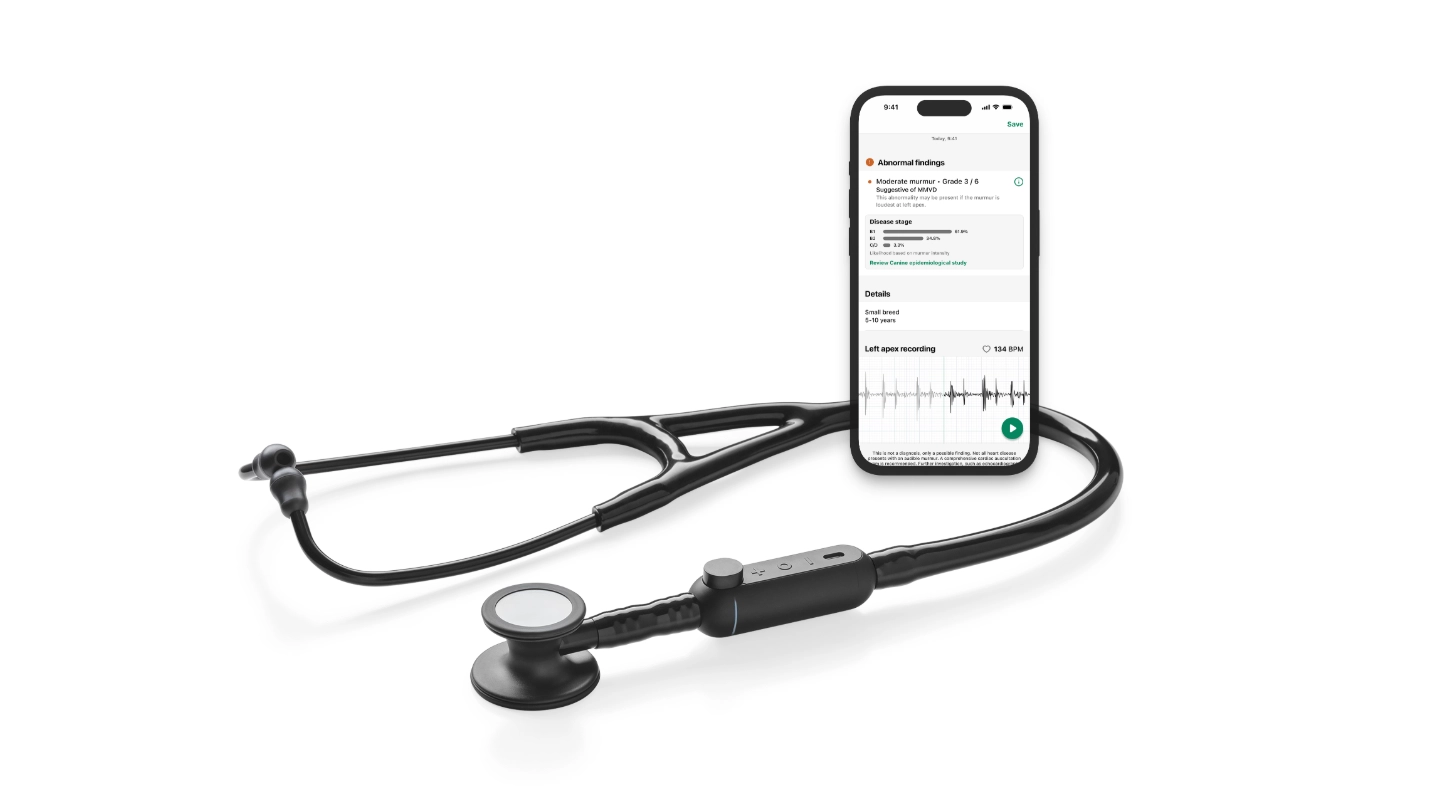
According to Boehringer Ingelheim, the AI algorithm has demonstrated sensitivity and specificity exceeding 95% for detecting heart murmurs associated with structural heart disease in dogs. The company says the technology is intended to support veterinary assessment, facilitate communication with pet owners and help guide decisions about further diagnostic investigation.
The Italian launch follows the introduction of the solution in the United States, the United Kingdom and Germany earlier in 2026.
Primary source: Boehringer Ingelheim Italy — official announcement
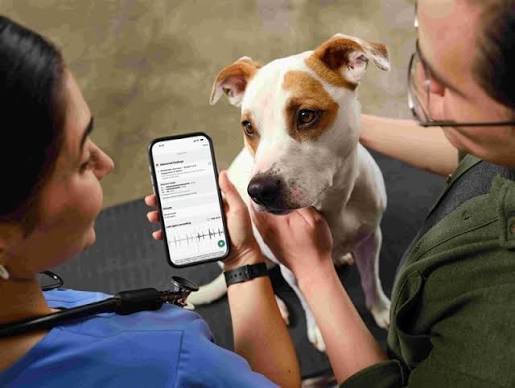
How the technology works
The platform integrates three components designed to bring digital cardiac assessment into the general veterinary consultation.
1. Eko CORE digital attachment
The hardware attachment connects to most existing stethoscopes and converts acoustic heart sounds into digital recordings. The system also provides sound amplification of up to 40 times, alongside noise-cancellation and cardiac-sound filtering capabilities.
These features are intended to help veterinarians hear subtle abnormalities that may be difficult to distinguish during conventional auscultation, particularly in noisy clinical environments.
2. Eko Vet+ application
The companion application displays information generated by the AI algorithm, including visual representations of detected murmurs, audio recordings and reports that can be shared with pet owners.
By making the findings more tangible, the application may help veterinarians explain why additional cardiac investigations are being recommended, potentially improving owner understanding and follow-through.
3. CANINEBEAT AI algorithm
The AI component analyses digitised heart sounds to identify and classify murmurs associated with structural cardiac disease.
Boehringer Ingelheim reports that the algorithm was developed and validated using more than 4,000 annotated canine heart-sound recordings collected from over 3,400 dogs, with contributions from almost 50 veterinary cardiology experts worldwide.
The company reports sensitivity and specificity above 95%. However, the detailed study results were still awaiting presentation and publication in peer-reviewed scientific venues at the time of the announcement. The reported performance should therefore be interpreted as company-reported evidence pending scrutiny of the full methodology, validation population and independent replication.
Why early detection of canine mitral valve disease matters
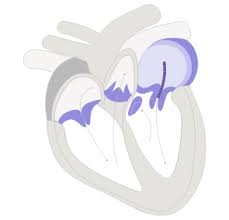
Myxomatous mitral valve disease is a progressive degenerative condition affecting the mitral valve. As the valve deteriorates, it may fail to close properly, allowing blood to leak backwards into the left atrium. Over time, some affected dogs develop cardiac enlargement and may progress to congestive heart failure.
Dogs can remain outwardly healthy for considerable periods despite underlying disease. A heart murmur may be one of the earliest clinical findings that prompts further evaluation.
The American College of Veterinary Internal Medicine (ACVIM) consensus guidelines emphasise the importance of appropriate diagnosis, staging and monitoring in dogs with MMVD. Detection of a murmur is an important clinical clue, but it does not independently establish disease severity or determine whether a dog requires treatment.
For general veterinary practices, AI-assisted auscultation could offer a means of standardising aspects of cardiac screening and supporting the identification of patients who may benefit from echocardiography or other diagnostic assessment.
The distinction is important: the platform detects and characterises heart murmurs; it does not independently confirm MMVD, quantify valve damage or replace a complete cardiac examination.
Reference: Keene BW et al. ACVIM consensus guidelines for the diagnosis and treatment of myxomatous mitral valve disease in dogs. Journal of Veterinary Internal Medicine. 2019;33:1127–1140.
Clinical and commercial significance
Potential benefits for veterinary practices
Earlier investigation: AI-assisted detection may help flag murmurs that warrant further evaluation, particularly when clinical signs are absent or subtle.
More consistent documentation: Digital recordings and visual outputs can support record-keeping and comparison during follow-up consultations.
Improved owner communication: Shareable audio and visual reports may help explain the rationale for referral, echocardiography or monitoring.
Integration into routine practice: Compatibility with most existing stethoscopes could reduce the need to replace an entire auscultation setup, although actual compatibility, subscription costs and workflow requirements should be confirmed with the supplier.
Implications for Boehringer Ingelheim
The launch extends Boehringer Ingelheim’s companion-animal cardiology strategy into AI-assisted diagnostics. Its existing canine cardiac portfolio includes VETMEDIN, a pimobendan-based treatment used in specified canine cardiac indications.
The combination of diagnostic support and established therapeutic expertise could strengthen the company’s engagement with veterinarians across the canine cardiac-care pathway. Earlier identification of potential disease may also increase demand for confirmatory diagnostics, monitoring and appropriately indicated treatment.

