


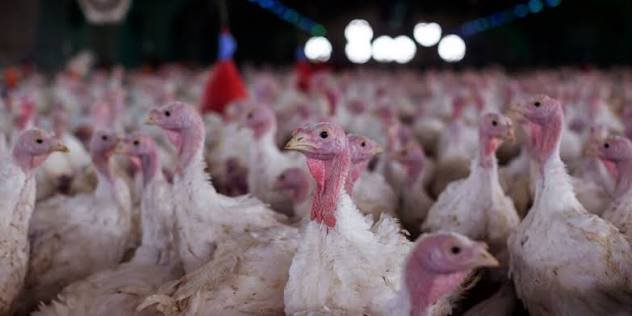
Brazilian veterinary authorities have confirmed a second commercial outbreak of Newcastle disease in western Santa Catarina, increasing the operational complexity of an outbreak response that began earlier in October. The new detection was identified between 23 and 24 October in a commercial meat-turkey unit in Coronel Freitas and confirmed by genetic sequencing, according to reporting by Oeste Mais and the state animal-health agency, Cidasc.
The first commercial outbreak was reported on 18 October in Nova Itaberaba. More than 70% of the surveillance zone around the newly affected establishment overlaps the area already monitored following the first detection. This overlap allows authorities to use existing property maps and inspection work, but it does not remove the need for targeted surveillance and movement controls.
At the time of the 26th of October report, 15 commercial farms had tested negative, more than 160 commercial chicken and turkey properties had been monitored, and 317 backyard or subsistence poultry properties had been inspected. Authorities also reported 78 sampling operations and four fixed or mobile sanitary barriers operating around the clock. Source: Oeste Mais, 25 October 2026.

Second Detection adds Pressure to Containment Operations
The Coronel Freitas focus is significant because it establishes a second commercial detection within the same wider emergency response. The affected production unit raises concerns about potential transmission between commercial premises, contact with free-living birds and the effectiveness of farm-level biosecurity.
The Brazilian Ministry of Agriculture and Livestock (MAPA) had declared a 60-day zoosanitary emergency covering Nova Itaberaba, Águas Frias, Coronel Freitas and Nova Erechim following the initial outbreak. The ministry also reported that the first event had been notified to the World Organisation for Animal Health (WOAH) and communicated to bilateral trading partners. MAPA official update.
The second focus therefore needs to be interpreted within an active regional emergency, not as an isolated farm-level incident.
Surveillance dashboard: reported position as of 24–25 October
Indicator |
Reported status |
|---|---|
Commercial Newcastle disease focuses |
2 |
New focus |
Meat-turkey unit in Coronel Freitas |
First focus |
Nova Itaberaba, reported 18 October |
Commercial chicken and turkey properties monitored |
More than 160 |
Commercial farms with negative results |
15 |
Backyard/subsistence poultry properties inspected |
317 |
Sampling operations reported |
78 |
Fixed and mobile sanitary barriers |
4, operating 24 hours a day |
Overlap between the new and existing surveillance zones |
More than 70% |
These figures describe the response reported on 25 October, not a final count of all properties at risk or a declaration that the outbreak has been eradicated.
Free-living Pigeons Identified as a Potential Epidemiological Link
Authorities also reported Newcastle virus detection in free-living pigeons in Marema, outside the initially defined emergency area. Cidasc was reported as linking the Coronel Freitas focus to a pigeon-associated virus.
This is an important epidemiological lead, but it should not be treated as proof of the precise transmission pathway between individual premises. The publicly available news report does not provide the full sequencing dataset, tracing report or underlying laboratory documentation needed to independently evaluate that attribution.
The finding reinforces the need to reduce contact between wild birds and commercial flocks. Recommended operational priorities include maintaining intact poultry-house screens, preventing access by free-living birds, controlling pests, disinfecting vehicles and footwear, and reviewing the movement of people, equipment and materials between farms.
Negative Results Allow Selective Continuation of Production
Fifteen commercial farms reportedly tested negative. A neighbouring poultry unit also returned negative results and was authorised by the Official Veterinary Service to proceed with normal commercial slaughter.
This demonstrates how surveillance can differentiate premises with negative test results from those requiring more restrictive controls. It does not mean the wider emergency has ended, nor does it automatically restore unrestricted movement or export eligibility across the region. Individual permissions remain subject to official veterinary decisions and applicable market requirements.
The first affected establishment had completed cleaning and disinfection and entered its sanitary downtime period. A sanitary barrier associated with that first focus was also reported to have been deactivated. These are steps in the response process, not evidence that the second focus has been resolved.

What Newcastle Disease Means for Poultry Producers
Newcastle disease is caused by virulent avian paramyxovirus type 1 (APMV-1). Depending on the strain and the affected bird population, disease can involve respiratory, digestive and neurological signs, with potentially severe mortality and production losses. The virulent virus identified in commercial poultry requires official disease-control action and notification under applicable international reporting arrangements.
For integrated poultry companies, the immediate priorities are to:
-
Review farm biosecurity and access-control procedures.
-
Maintain accurate records of flock movements, visitors, vehicles and equipment.
-
Follow official sampling, reporting and movement instructions.
-
Separate commercial poultry from wild and backyard birds wherever feasible.
-
Review contingency plans for slaughter scheduling, transport and customer commitments.

