



Zoetis has highlighted growing affordability pressures in the US companion-animal market, reporting that veterinary clinic visits declined 3% during the first nine months of 2026. The company said rising veterinary service costs, tighter household budgets and changing pet-owner spending patterns are influencing decisions about veterinary treatment.
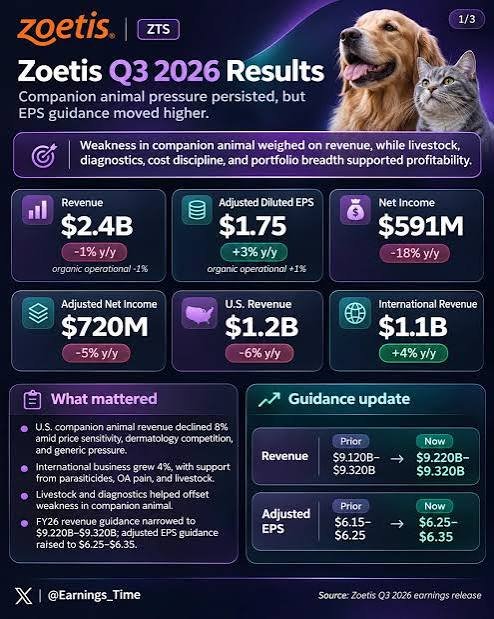
The comments, made during the company’s third-quarter 2026 earnings call, provide further insight into the challenges behind the decline in its US companion-animal business. Zoetis reported an 8% year-on-year fall in US companion-animal revenue during the quarter, with dermatology competition, generic alternatives and lower veterinary clinic traffic contributing to the weakness.
Chief Executive Officer Kristin Peck said pet owners were becoming more value-conscious and more deliberate about treatment decisions. Management also indicated that its planning assumptions for 2027 do not rely on an immediate recovery in consumer spending or competitive conditions.
US veterinary clinic visits down 3% year to date
The decline in veterinary clinic visits is an important indicator for the companion-animal pharmaceutical market because veterinary consultations are a major route through which many prescription medicines, diagnostics and preventive treatments are recommended and administered.
Zoetis reported that US clinic visits were down 3% year to date. Canine visits were particularly weak, falling approximately 5% in Q3, according to the earnings-call transcript. Management also highlighted the effect of fewer pruritus-related visits on demand for dermatology products.
This matters for companies selling treatments for chronic and recurring conditions. Reduced veterinary attendance can delay diagnosis, postpone treatment initiation and affect the continuity of long-term therapy.
The pressure is not necessarily a sign that pet owners have become less attached to their animals. Rather, it indicates that the cost of maintaining pet health is increasingly influencing how and when owners seek care.
Veterinary service costs have risen approximately 50% since 2022
Zoetis management said veterinary service costs in developed pet-care markets have risen approximately 50% since 2022, significantly outpacing general inflation.
The company linked this increase, alongside softer consumer confidence, to more cautious spending decisions by pet owners. The economic pressure can affect veterinary care in several ways:
-
Owners may postpone consultations for conditions that do not appear immediately serious.
-
Treatment decisions may increasingly favour lower-cost alternatives.
-
Some owners may delay diagnostics or follow-up visits.
-
Chronic conditions may be managed less consistently when ongoing treatment costs become difficult to sustain.
-
Veterinary practices may face pressure to explain treatment value and offer more flexible care options.
These are potential consequences of affordability pressure rather than quantified outcomes for every pet owner. Nevertheless, the decline in clinic visits suggests that the market is experiencing a measurable reduction in veterinary service utilisation.
Dermatology franchise faces a combination of competitive and affordability challenges
The pressure on veterinary visits is occurring alongside competition in key Zoetis companion-animal franchises.
Dermatology was a particularly weak category in Q3. According to the earnings-call transcript, global dermatology revenue declined 16%, with US dermatology revenue falling 13%.
The company’s performance was affected by competitive pressure and pricing actions, including share losses in the Apoquel franchise. Zoetis said promotional investment had slowed share losses, while the chewable formulation of Apoquel represented approximately half of its US product volume.
Cytopoint sales were also affected by lower canine clinic traffic and fewer pruritus-related visits.
These developments demonstrate how market conditions and product competition can reinforce each other. When fewer pets visit clinics, the number of opportunities to initiate or renew treatment may decline. At the same time, competitors and generic alternatives can put pressure on market share and pricing.
Changing pet ownership patterns add another demand-side challenge
Zoetis also pointed to a change in the composition of pet ownership in the US. Management said high housing costs were affecting home ownership and pet adoption, with fewer dogs joining households as cat ownership continued to grow.
The distinction matters commercially because dogs are generally more heavily medicalised than cats, according to the company’s commentary. A change in the species mix of the pet population can therefore influence the underlying demand for veterinary services and medicines.
The company also highlighted the cost of pet ownership as a concern for prospective owners. In the earnings-call discussion, it cited survey findings that 37% of people planning to acquire a pet identified ownership costs as a concern.
What the affordability trend means for veterinary pharmaceutical companies
The implications extend beyond Zoetis. Pharmaceutical manufacturers, veterinary clinic groups, diagnostic providers and pet-care service companies are exposed to the economics of veterinary visits. The market may increasingly reward companies that can demonstrate clear clinical value while helping veterinary practices manage treatment affordability.
Potential industry responses include:
-
More flexible treatment pathways: Supporting veterinarians with appropriate options across different price points.
-
Improved client communication: Explaining the clinical and economic consequences of delaying treatment.
-
Longer-acting therapies: Where clinically appropriate, reducing the frequency of administration and associated visits.
-
Preventive-care programmes: Encouraging early intervention before conditions become more complicated and expensive.
-
Practice-level support: Helping veterinary clinics improve client retention, operational efficiency and treatment compliance.

