


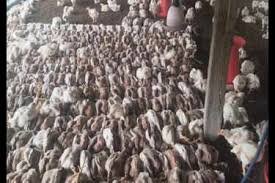
Tamil Nadu Culls 25,000 Chickens in Cuddalore After Fresh Avian Influenza Confirmation
Animal husbandry and district administration officials in Tamil Nadu have initiated emergency culling operations across poultry farms in Cuddalore district following laboratory confirmation of a fresh avian influenza outbreak. Over the past 24 hours, veterinary rapid-response teams began the humane culling and deep-pit burial of approximately 25,000 chickens to prevent viral spillover into neighbouring commercial layer and broiler belts.
Under standard national avian influenza containment protocols enforced by the Department of Animal Husbandry and Dairying, the affected poultry premises have been immediately sealed and placed under a strict 90-day restocking ban. Joint revenue, police, and veterinary monitoring committees have established movement restrictions within a one-kilometre infected zone and intensified active clinical surveillance across a ten-kilometre surveillance radius.
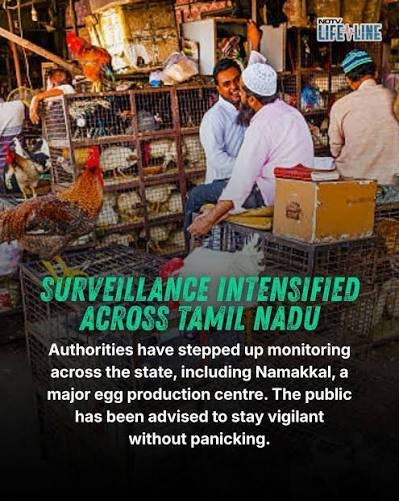
The latest outbreak extends a troubling month-long wave of avian influenza detections across Cuddalore district. Earlier clusters identified in rural poultry pockets—including Krishnankuppam, Naduthittu, and Thyagavalli—have already forced state veterinary authorities to cull more than 100,000 birds over the past four weeks. Despite extensive disinfection drives, vehicle movement controls, and farmer awareness campaigns, the persistence of seasonal migratory waterfowl along coastal wetlands continues to challenge farm-level biosecurity.
To safeguard public health alongside poultry livelihoods, state health officials have deployed medical screening teams to monitor farm workers, cullers, and residents living within the containment perimeter for influenza-like symptoms, distributing oseltamivir prophylaxis and personal protective equipment where required. Poultry and egg retail movements out of the restricted zone remain temporarily suspended until sentinel sampling confirms viral clearance.
For southern India’s poultry industry, the recurring Cuddalore outbreaks underscore the urgency of transitioning from reactive stamping-out measures toward preventive flock immunity. With the Indian Council of Agricultural Research–National Institute of High Security Animal Diseases (ICAR-NIHSAD) having recently unveiled India’s first indigenous inactivated H5N1 (Clade 2.3.2.1a) chicken vaccine, commercial integrators and state animal husbandry departments are closely evaluating targeted vaccination frameworks to protect high-density production zones from catastrophic recurring losses.

