



IMAQUA Introduces Standardized Commercial EHP Disease Challenge Model for Shrimp Health
Specialized aquatic health contract research organization IMAQUA has launched a standardized, commercial Enterocytozoon hepatopenaei (EHP) disease challenge model, giving aquafeed manufacturers, functional additive developers, and biosecurity companies a controlled laboratory platform to test interventions against one of global shrimp farming’s most costly pathogens.
First characterized in black tiger shrimp (Penaeus monodon) and now endemic across major Pacific whiteleg shrimp (Litopenaeus vannamei) producing regions in India, Vietnam, Thailand, China, and Ecuador, EHP is an intracellular microsporidian parasite that infects the epithelial cells of the shrimp hepatopancreas. Unlike White Spot Syndrome Virus (WSSV), which causes rapid mass mortality within days, EHP acts as a chronic, insidious “silent profit killer.”
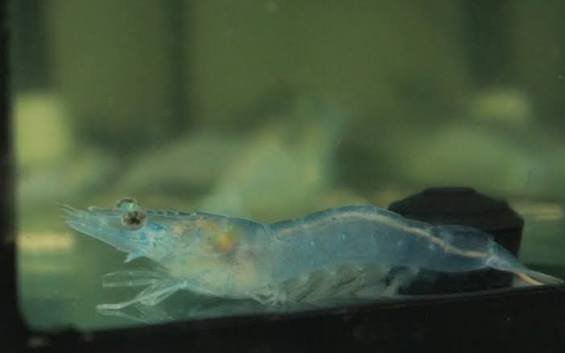
By destroying hepatopancreatic absorptive cells and hijacking host cellular energy, EHP triggers severe size variation, stunted growth, elevated feed conversion ratios (FCR), and heightened susceptibility to secondary bacterial infections such as Vibrio species (White Feces Syndrome).
Importance of EHV Control
Because EHP produces thick-walled spores that resist standard pond disinfection and cannot be eradicated from infected shrimp once established, the global shrimp industry relies heavily on preventive functional feeds, spore-binding additives, gut-health modulators, and genetic selection. Until now, however, validating product efficacy in commercial ponds has been notoriously difficult due to uneven natural spore loads and confounding environmental variables.
New Model
IMAQUA’s newly validated challenge model overcomes these hurdles by reproducing controlled, quantifiable EHP infection dynamics under biosecure tank conditions—measuring hepatopancreatic spore copy numbers via quantitative PCR (qPCR), histopathological lesion scores, growth trajectory retardation, and feed efficiency metrics.
For Indian and Asian shrimp feed formulators battling rising fishmeal costs and tight farm margins, access to reproducible preclinical challenge data promises to accelerate the commercialization of proven anti-EHP nutritional and biosecurity solutions.

 challenge model to test functional feeds and additives for shrimp farming)