


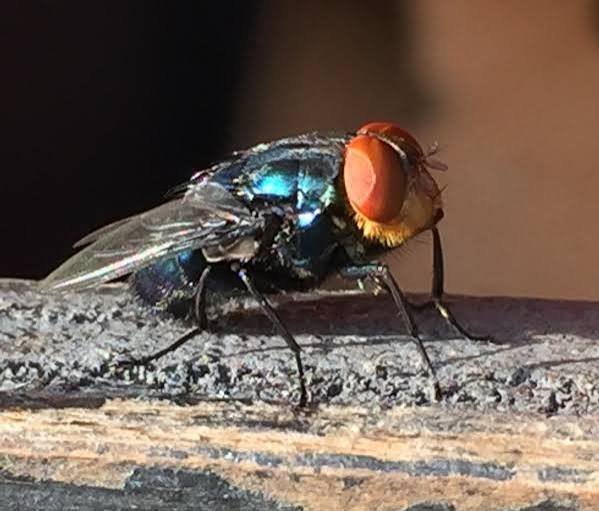
Veterinary Officials Warn of Expanding New World Screwworm Threat Across U.S. Livestock and Pets
Veterinary and agricultural extension officials across the southern United States have issued urgent biosecurity warnings regarding the expanding biological threat of New World Screwworm (Cochliomyia hominivorax) following confirmed November detections in Texas livestock, including infected calves in Hidalgo County. Authorities are urging livestock producers, equine owners, wildlife managers, and small-animal veterinarians to inspect animals daily for myiasis as warm southern temperatures accelerate the parasite’s reproductive cycle.
Unlike common blowfly maggots that feed solely on necrotic, decaying tissue, female New World Screwworm flies lay hundreds of eggs directly on the edges of fresh, superficial wounds—including navel cords of newborn calves, tick bites, branding or dehorning sites, wire cuts, and surgical incisions.
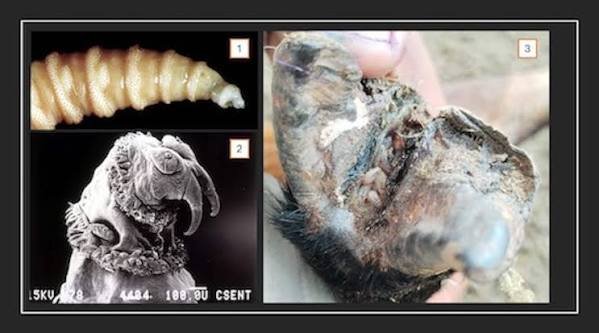
Within 12 to 24 hours, emerging larvae burrow deep into living flesh using sharp mouth hooks, tearing tissue apart and enlarging the wound. Left untreated, secondary bacterial infections and toxicosis can kill an adult cow or horse within one to two weeks.
Crucially, Cochliomyia hominivorax is non-selective across warm-blooded hosts: cattle, swine, sheep, goats, horses, dogs, cats, white-tailed deer, and humans are all susceptible. Furthermore, veterinary entomologists emphasize the parasite’s rapid lifecycle—once mature larvae drop from an animal’s wound into warm soil, they pupate and emerge as adult flies in as little as 7 to 10 days, enabling explosive population expansion if early cases go undetected.
For decades, North America kept New World Screwworm eradicated north of the Darién Gap through the Sterile Insect Technique (SIT)—releasing millions of radiation-sterilized male flies to collapse wild reproduction.
However, recent northward breaches through Central America and Mexico into southern U.S. border counties have forced USDA-APHIS and state animal health commissions to reinstate strict quarantine zones, livestock movement inspections, and prophylactic wound treatments.
Producers and pet owners discovering suspicious, foul-smelling, draining wounds containing deep-burrowing larvae are instructed never to discard maggots onto soil, but to collect specimens in alcohol and alert state veterinary authorities immediately.

