


HomeCorporateAustralia: CSIRO Unveils 'FlockMate' AI-Powered Sheep Monitoring System at LambEx 2026

Australia: CSIRO Unveils ‘FlockMate’ AI-Powered Sheep Monitoring System at LambEx 2026

Australia’s national science agency introduces non-invasive digital livestock monitoring technology capable of estimating liveweight and fleece weight in real time.

Australia’s national science agency, the Commonwealth Scientific and Industrial Research Organisation (CSIRO), has unveiled FlockMate, an advanced digital livestock monitoring platform designed to measure sheep liveweight, fleece weight and health indicators without the need for manual handling.

The technology was introduced during LambEx 2026, Australia’s premier sheep and lamb industry conference, where researchers demonstrated how computer vision and multimodal sensing technologies can improve flock management while reducing labour requirements and animal stress.

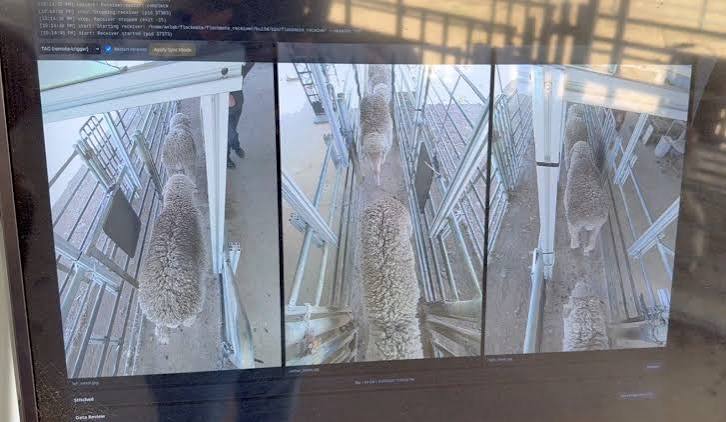
Developed as part of CSIRO’s ongoing precision livestock farming programme, FlockMate combines high-resolution three-dimensional imaging, artificial intelligence-driven computer vision and electronic animal identification to provide continuous, automated monitoring of sheep in commercial grazing systems.
Precision Livestock Monitoring Without Animal Handling

Traditional methods of monitoring sheep performance typically require producers to physically gather animals, move them through weighing facilities and manually assess body condition or fleece characteristics. These procedures are labour-intensive, increase production costs and can temporarily elevate stress levels in animals. CSIRO’s FlockMate system aims to eliminate much of this manual intervention.

Instead of requiring sheep to enter handling facilities, the platform uses strategically positioned multimodal sensor rigs capable of capturing detailed three-dimensional images as animals move naturally through paddocks, laneways or watering points during their normal daily activities.

The technology continuously observes individual animals without disrupting grazing behaviour, creating a more representative picture of flock performance under commercial production conditions.

Computer Vision Estimates Liveweight and Fleece Production

At the core of the platform are advanced computer vision algorithms that reconstruct each animal’s body dimensions from high-resolution 3D imagery.

Using these measurements, the software estimates liveweight and fleece weight in near real time, providing producers with regular updates on growth performance and wool production without requiring physical weighing.

According to CSIRO researchers, continuous monitoring enables producers to identify gradual changes that might otherwise remain unnoticed between routine handling events.

These measurements can support decisions related to nutrition management, pasture allocation, supplementary feeding and marketing strategies.
RFID Integration Creates Individual Animal Histories

One of FlockMate’s distinguishing features is its integration with Australia’s electronic sheep identification system.

Each set of sensor measurements is automatically linked to the animal’s Radio Frequency Identification (RFID) tag, allowing producers to build comprehensive lifetime records for individual sheep. The resulting database enables farmers to monitor:

  • liveweight trends;

  • fleece growth;

  • body condition changes;

  • nutritional responses;

  • reproductive readiness;

  • flock health indicators; and

  • long-term production performance.

By analysing changes over time rather than relying on isolated measurements, producers can identify subtle deviations that may indicate disease, nutritional deficiencies or management issues before obvious clinical signs develop.

Supporting Earlier Health Interventions

Precision livestock technologies are increasingly being adopted across global sheep industries to improve animal welfare while enhancing production efficiency.

Researchers believe automated monitoring systems such as FlockMate could enable earlier identification of animals experiencing health or nutritional challenges.

Unexpected reductions in weight gain, changes in body volume or altered movement patterns may provide early indicators of conditions requiring veterinary investigation or management intervention.

Earlier detection allows producers to respond before production losses become significant, potentially improving animal welfare outcomes while reducing treatment costs.

Labour Efficiency Addresses Industry Challenges

Australia’s sheep industry continues to face labour shortages, increasing production costs and growing demands for improved animal welfare documentation.

Automated monitoring technologies offer an opportunity to reduce routine manual handling while generating larger volumes of objective production data.

By replacing periodic manual measurements with continuous digital monitoring, producers can spend less time gathering livestock and more time making management decisions based on real-time performance information.

The system may prove particularly valuable for large extensive grazing enterprises where routine weighing of entire flocks can be both time-consuming and expensive.

Precision Agriculture Expands Across Livestock Production

FlockMate reflects the broader transition towards precision livestock farming, where digital technologies are increasingly supporting management decisions across animal agriculture.

Advances in computer vision, artificial intelligence, remote sensing and electronic animal identification are enabling producers to collect significantly more information than traditional management systems.

These technologies are helping livestock enterprises optimise feed efficiency, improve reproductive performance, monitor animal welfare and strengthen sustainability reporting.

Industry analysts expect investment in precision livestock farming to continue accelerating as producers seek technologies capable of improving productivity while addressing labour constraints and environmental challenges.

Potential Applications Beyond Sheep

Although FlockMate has been developed specifically for sheep production, the underlying computer vision and sensor technologies could have wider applications across other grazing livestock industries.

Similar approaches are already being investigated for cattle and other ruminants to automate body condition scoring, growth monitoring and behavioural assessment.

The integration of digital imaging with electronic animal identification also supports broader traceability initiatives, providing producers with more detailed production records throughout an animal’s lifetime.

Outlook

CSIRO’s launch of FlockMate at LambEx 2026 highlights the rapid evolution of precision livestock technologies within Australia’s sheep sector. By combining three-dimensional imaging, computer vision and RFID-based identification, the platform offers producers a non-invasive approach to monitoring liveweight, fleece production and animal health in real time.

As commercial livestock enterprises increasingly adopt digital management tools, technologies such as FlockMate are expected to play an important role in improving production efficiency, reducing labour requirements and supporting data-driven decision-making. Continued field validation and commercial deployment will determine how widely these systems are adopted across Australia’s sheep industry and potentially in other global livestock production systems.

Animal Health India Editorial Team
Animal Health India Editorial Teamhttps://animalhealthindia.com
Animal Health India (AHI) is an independent news and intelligence platform covering the global animal health, veterinary, livestock, poultry, companion animal and pet food sectors. Our editorial team comprises veterinary journalists, animal health professionals, regulatory affairs specialists and industry analysts with over 30 years of combined experience covering India, Asia, Europe and North America. AHI publishes news, regulatory updates, market intelligence and company news drawn from primary sources including DAHD, EMA, USDA, AVMA and leading veterinary publications worldwide.
RELATED ARTICLES