



Covetrus–MWI transaction puts U.S. veterinary distribution, product access and practice-management technology under the antitrust microscope
October 1, 2026 | AnimalHealthIndia.com
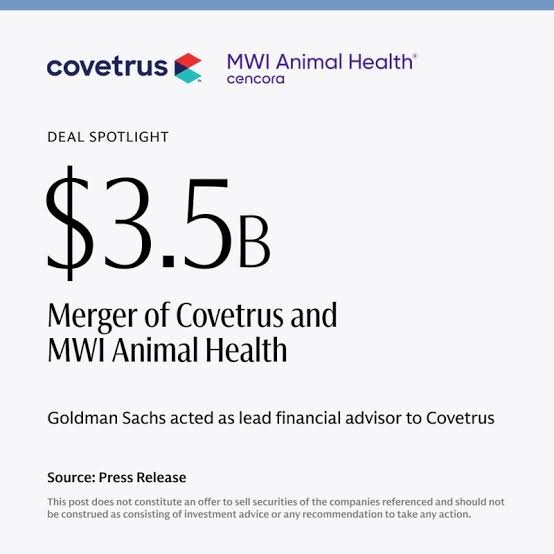
The proposed combination of Covetrus and MWI Animal Health, announced in February 2026 and valued at $3.5 billion at the enterprise-value level for MWI, is facing substantially deeper U.S. regulatory scrutiny.
The transaction would combine two of the most important national veterinary-distribution platforms in the United States. Covetrus brings companion-animal distribution, pharmacy, technology and practice-management capabilities, while MWI contributes a large national distribution platform serving companion and production-animal customers.
The U.S. Federal Trade Commission (FTC) has requested additional information and documentary materials from the transaction parties and, according to reporting by Bloomberg and Reuters, subsequently sought information from customers and competitors concerning the potential effects of the transaction on veterinary-product availability and practice-management software.
The regulatory significance is substantial because this is not simply a warehouse-and-logistics transaction. The proposed combination potentially brings together distribution, purchasing relationships, pharmacy, inventory management, practice-management software, electronic medical records, prescription workflows, payments and other technology-enabled veterinary services.
An RBC Capital Markets analysis cited in September estimated that the combined business could represent approximately 67%–75% of U.S. veterinary distribution, depending on how the relevant market is defined. That is an analyst estimate—not an FTC finding—and the range illustrates why market definition is likely to be central to the regulatory analysis.
For independent veterinary practices, the critical issue is therefore broader than drug prices alone: it potentially encompasses product availability, purchasing leverage, rebates, distribution economics, software switching costs and the ability of smaller practices to maintain negotiating power.
At present, however, the transaction has not been blocked, abandoned or publicly found unlawful. The FTC’s information requests represent an important stage of investigation, not a final enforcement decision.
The Transaction: What Exactly Is Being Combined?
On February 18, 2026, Cencora and Covetrus announced a definitive agreement under which MWI Animal Health would merge with Covetrus.
The transaction assigns MWI an enterprise value of $3.5 billion. At closing, Cencora is scheduled to receive:
Transaction component |
Value |
|---|---|
Upfront cash to Cencora |
$1.25 billion |
Preferred equity |
$800 million |
Common equity |
$1.45 billion |
Cencora retained common-equity stake |
34.3% |
Implied enterprise value of MWI |
$3.5 billion |
These figures come directly from the transaction announcement. The $3.5 billion should therefore be described as the enterprise value assigned to MWI, rather than as the purchase price of the combined Covetrus-MWI company.
Cencora described the divestiture as part of its strategy to sharpen its focus on pharmaceutical distribution and other core businesses, while Covetrus positioned the transaction as a way to combine MWI’s distribution capabilities with its technology-enabled veterinary platform.
Why the FTC Is Looking More Closely
The regulatory review moved beyond a routine transaction review during 2026. Cencora’s SEC filing states that on May 20, 2026, the company received a request from the FTC for additional information and documentary materials concerning the proposed MWI-Covetrus merger.
Cencora said it was continuing to cooperate with FTC staff. The filing classified MWI as a business held for sale. Then, in July, the FTC reportedly expanded its information gathering to customers and competitors of both Covetrus and MWI.
Reuters, citing Bloomberg News, reported that the FTC was seeking information concerning:
-
availability of veterinary products;
-
the competitive effects of combining two major national distributors;
-
veterinary practice-management software;
-
systems used for patient records;
-
prescriptions; and
-
payments.
This is significant because the transaction potentially affects multiple layers of the veterinary value chain simultaneously. The regulatory question is therefore not simply: “Will two distributors become one?”
It is closer to: “Will the combination materially increase control over the products, purchasing relationships and technology infrastructure that independent veterinary practices rely upon to operate?”
That distinction explains why the software component has attracted regulatory attention alongside physical distribution.
Veterinary Distribution Is Already Highly Concentrated
The U.S. veterinary-distribution market has historically been dominated by a small group of national players.
A recent SEC filing from an animal-health company states that more than 75% of veterinarians identify Covetrus/Butler Schein Animal Health, Patterson Veterinary, MWI, Midwest Veterinary Supply or Victor Medical Company as their preferred distributor.
The same filing states that these top-tier distributors account for more than 85% of companion-animal veterinary-product revenue, while identifying Covetrus, Patterson and MWI as the three pre-eminent national companion-animal distributors. The filing attributes the underlying data to an FTC file.
This historical market structure matters because Covetrus and MWI are not peripheral competitors. They are two of the principal national platforms through which veterinary practices obtain medicines, vaccines, supplies and equipment.
Consequently, combining them can remove an important competitive relationship for manufacturers and veterinary practices simultaneously.
The 67%–75% Market-Share Estimate
The most striking recent estimate comes from RBC Capital Markets. In September 2026, RBC said its analysis indicated that the combined company could represent approximately 67%–75% of U.S. veterinary distribution, depending on whether the relevant market is defined around:
-
companion animals;
-
production animals; or
-
a broader veterinary-distribution market.
This distinction is extremely important. Illustrative concentration framework:
Market definition |
Regulatory implication |
|---|---|
Broad veterinary distribution |
Larger combined share, but more competitors may be included |
Companion-animal distribution |
Potentially much higher concentration |
Production-animal distribution |
MWI’s role becomes particularly important |
Distribution + software |
Adds a separate technology dimension |
Individual product categories |
Competitive effects could vary substantially by product |
Why Practice-Management Software Changes the Regulatory Equation
Covetrus is not simply a conventional pharmaceutical distributor. Its platform includes technology and services that help veterinary practices manage operations.
The company describes its offering as spanning products, software and services, while its independent-practice program, VetSuite, integrates purchasing benefits with e-commerce, practice-management technology, pharmacy integration, client communications and other tools.
The FTC’s reported questions concerning practice-management software are therefore particularly relevant. A veterinary hospital may use software to manage:
-
patient records;
-
inventory;
-
prescriptions;
-
ordering;
-
pharmacy;
-
billing;
-
payments;
-
client communications;
-
online purchasing; and
-
practice analytics.
When distribution and software are integrated, the competitive issue becomes more complex. A distributor may potentially know:
what a practice buys → how much it buys → which products it substitutes → when it orders → what inventory it carries → how prescriptions are processed → and how the practice interacts with clients.
That creates a potentially powerful commercial ecosystem. The regulatory question is whether integration creates efficiencies for clinics—or increases switching costs and bargaining leverage. The FTC has not publicly concluded that such harms will occur.
The Independent Veterinary Practice Margin Question
The proposed transaction arrives at a difficult period for independent veterinary practices. Covetrus itself has highlighted financial pressure on independent clinics.
In a 2026 company white paper, Covetrus said independent veterinary practices were experiencing:
-
declining visit volumes;
-
rising labour costs;
-
increasing competition from online retailers;
-
margin pressure; and
-
increasing complexity.
The company reported that its VetSuite members had generated approximately $150 million in cumulative benefits, with members averaging approximately $30,000 in annual savings, although these are Covetrus-reported figures and should not be treated as independent industry estimates.
Covetrus also reported that VetSuite had exceeded 4,000 member practices by May 2026. The company said members had generated:
-
more than $60 million in rebates;
-
approximately $30,000 average annual savings per member;
-
and 27% higher online-pharmacy revenue per DVM in 2026 versus non-participating independent clinics.
Again, these figures represent Covetrus’s own program data, not an independent audit of the U.S. veterinary market.
Cencora’s Strategic Rationale
For Cencora, the transaction is primarily a portfolio-management decision. MWI has been classified as a business held for sale, while Cencora has been restructuring its portfolio around its core healthcare-distribution activities.
Cencora’s fiscal 2026 reporting shows MWI inside its Other businesses, alongside assets for which strategic alternatives were being considered. The transaction allows Cencora to receive:
$1.25B cash + $800M preferred equity + $1.45B common equity
while retaining a 34.3% non-controlling common stake.
That means Cencora is not completely exiting the economic upside of the business. Instead, it is effectively:
monetising part of MWI → transferring operational ownership → retaining substantial minority exposure.
Covetrus’ Strategic Rationale
For Covetrus, the transaction is fundamentally about scale. The company already describes itself as an animal-health technology and services company with:
-
5,000+ employees
-
100,000+ customers worldwide
-
more than 60 years of operating history.
MWI adds substantial distribution infrastructure and manufacturer relationships. The resulting platform could theoretically combine:
Distribution – Veterinary medicines, vaccines, supplies and equipment
Pharmacy – Prescription and fulfilment infrastructure
Technology – Practice-management and workflow software
Purchasing – Group purchasing, rebates and supplier relationships
Data – Ordering, inventory and practice-management information
Customer relationship – Direct access to veterinary practices and producers
This is precisely why the deal has strategic logic—and simultaneously why competition authorities are examining it closely.
FTC Review: What Has Actually Happened?
Regulatory timeline
Date |
Event |
|---|---|
Feb. 18, 2026 |
Cencora and Covetrus announce definitive MWI-Covetrus agreement |
May 20, 2026 |
Cencora receives FTC request for additional information and documents |
June 30, 2026 |
Cencora SEC filing continues to classify MWI as held for sale |
July 2026 |
Bloomberg reports FTC information demands to customers and competitors |
Aug. 4, 2026 |
Reuters reports heightened FTC scrutiny |
Sept. 8, 2026 |
RBC describes scrutiny as intensified and estimates 67%–75% combined distribution share |
Sept. 30, 2026 |
Cencora’s original fiscal-year-end date; transaction had not been publicly announced as closed |
Oct. 1, 2026 |
Transaction remains subject to regulatory review based on latest publicly verified information |
Cencora explicitly stated when the transaction was announced that its fiscal-2026 guidance did not contemplate closing by September 30, 2026. The June SEC filing subsequently confirmed that the FTC had formally requested additional information.
What the FTC Could Be Examining
Based on publicly reported information, several competitive dimensions appear particularly relevant.
A. Veterinary-product distribution – Could the transaction reduce the number of meaningful national distributors available to veterinary practices and manufacturers?
B. Purchasing power – Could the combined business obtain stronger commercial terms from manufacturers?
C. Product availability – Could the merged distributor influence access to particular medicines, vaccines, diagnostics or supplies?
D. Rebates and discounts – Would independent practices continue to receive competitive purchasing benefits?
E. Practice-management software – Could integration of distribution and software create switching costs or raise barriers to competing platforms?
F. Data advantages – Could purchasing and practice-management data create competitive advantages over smaller distributors or software companies?
G. Manufacturer access – Would emerging manufacturers have sufficient alternative distribution channels?
H. Independent practices – Would smaller practices retain adequate alternatives for purchasing, pharmacy and technology services?
These are analytical questions raised by the transaction and the reported FTC inquiry, not public FTC conclusions.
What Happens Next?
The FTC’s merger-review framework allows regulators to investigate transactions that may substantially lessen competition. The agency can request additional information, continue its investigation, negotiate remedies, close the investigation or pursue litigation if it believes the transaction violates antitrust law.
For this transaction, the most important signals to monitor are:
1. Further FTC information requests – Additional requests would indicate that the agency continues to require substantial evidence.
2. Market-definition evidence – The definition of the relevant veterinary-distribution market could materially influence the competitive analysis.
3. Customer and manufacturer testimony – Feedback from veterinary practices and animal-health manufacturers could be particularly important.
4. Software remedies – If regulators identify concerns around practice-management technology, potential remedies could extend beyond physical distribution.
5. Divestitures – Specific product lines, customer relationships, facilities or technology assets could theoretically become subjects of remedies if competitive concerns are identified.
6. Litigation – A formal FTC challenge would represent a substantially more advanced regulatory stage than the information-gathering process reported to date.
Strategic Implications for the Global Animal-Health Industry
This transaction is larger than a U.S. distributor merger. It is a potential test case for the next generation of animal-health distribution. Historically, distribution competed primarily on:
price + product availability + logistics + sales coverage.
The modern model increasingly adds:
pharmacy + software + data + e-commerce + payments + client engagement + analytics. That creates a much more integrated animal-health commercial ecosystem.
For animal-health manufacturers – The deal could create a powerful launch and distribution platform—but potentially greater channel dependence.
For independent veterinarians – The outcome could influence purchasing economics, rebates, software choice and pharmacy relationships.
For emerging animal-health companies – Distribution access could become increasingly strategic as new biologics, diagnostics, specialty pharmaceuticals and digital-health products enter the market.
For investors – The transaction provides an important indicator of how regulators view consolidation in veterinary healthcare infrastructure.
For technology companies – The FTC’s attention to practice-management software suggests that veterinary technology may increasingly be viewed as part of the competitive architecture of animal healthcare rather than as a standalone software market.
Analyst View
The $3.5 billion Covetrus-MWI transaction is strategically logical but competitively significant. The strongest strategic rationale is the combination of two complementary assets:
MWI’s distribution scale + Covetrus’ technology and practice infrastructure.
That combination could create meaningful efficiencies in logistics, purchasing, pharmacy and veterinary workflow. The same integration, however, creates the core regulatory question.
The competitive issue is not merely whether veterinary practices can buy the same products after the merger. It is whether they would retain sufficient economically meaningful alternatives across:
products → distribution → purchasing → pharmacy → software → data.
The FTC’s requests for information from customers and competitors are therefore an important development. The 67%–75% market-share estimate from RBC should not be treated as an official regulatory finding, but it illustrates why the transaction is attracting attention.
For AnimalHealthIndia.com’s strategic audience, the transaction is particularly important because it demonstrates that animal-health distribution itself is becoming a strategic asset class.
The next phase of animal-health consolidation may not be about acquiring another pharmaceutical brand. It may be about controlling the infrastructure through which veterinary products, prescriptions, data and clinical workflows reach the end user.
Key Data Box
Metric |
Verified figure |
|---|---|
MWI transaction enterprise value |
$3.5B |
Cash consideration to Cencora |
$1.25B |
Preferred equity |
$800M |
Common equity |
$1.45B |
Cencora retained common stake |
34.3% |
Covetrus employees |
5,000+ |
Covetrus customers |
100,000+ worldwide |
VetSuite independent practices |
4,000+ |
VetSuite cumulative reported benefits |
~$150M |
VetSuite reported annual average savings/member |
~$30,000 |
RBC estimated combined U.S. distribution share |
67%–75% |
FTC additional-information request |
May 20, 2026 |
Customer/competitor information requests reported |
July 2026 |
Transaction status |
Pending regulatory review |

