


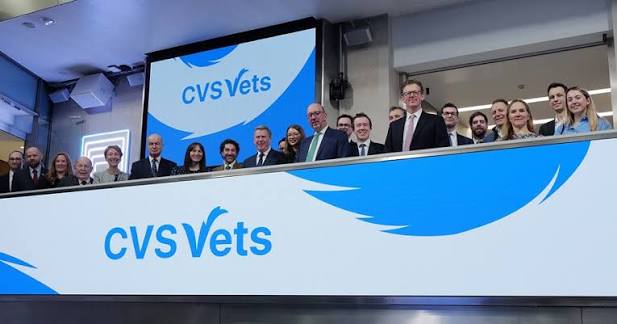
UK’s “big six” corporate veterinary groups have broadly welcomed the Competition and Markets Authority’s (CMA) final report on the veterinary services market, published March 24, 2026, closing out a two-and-a-half-year investigation into pricing, ownership transparency, and competition across the sector. With the CMA’s statutory order due to take legal effect by September 23, 2026, the industry is now moving from reaction to implementation.
Numbers Behind the Investigation
| Metric | Figure |
|---|---|
| Investigation launched | September 7, 2023 |
| Final report published | March 24, 2026 |
| Initial call-for-information responses | 56,000 (45,000 public, 11,000 industry) |
| UK vet sector value (ONS) | Over £6.7 billion |
| UK households owning a pet (2024) | 60% (approx. 17.2 million) |
| Share of practices under corporate ownership | Approximately 60% |
| Vet price rise, 2016–2023 | 63% (roughly double general inflation) |
| Estimated consumer detriment (5-year, first-opinion practices) | Approximately £1 billion |
| Large groups found to earn returns “materially exceeding” cost of capital | CVS, IVC, Pets at Home, VetPartners |
| Prescription fee cap, first medicine | £21 (inc. VAT) |
| Prescription fee cap, additional medicines (same consultation) | £12.50 per medicine (inc. VAT) |
| Written-estimate threshold | Treatments expected to cost £500+ |
| RCVS annual levy per practice (est., ongoing) | £450–£550 |
| RCVS one-off setup levy per practice (est.) | £150–£250 |
| Statutory order deadline | September 23, 2026 |
| Implementation window for large providers | September 2026 – September 2027 |
| Implementation extension for smaller providers (<15 practices) | +3 months |
| RCVS undertakings implementation window | December 2026 – September 2028 |
What the CMA Found
The CMA’s investigation identified a sector it described as operating under a regulatory framework “wholly unfit for purpose” — one that governs individual veterinary professionals but not the businesses that employ them, despite roughly 60% of UK practices now sitting under six large veterinary groups (LVGs): CVS, IVC Evidensia, Linnaeus, Medivet, Pets at Home (Vets4Pets), and VetPartners.
Three core problems anchored the CMA’s case for intervention:
-
Opaque pricing. As of the CMA’s most recent check, 40% of first-opinion practices still displayed no prices on their websites, making it difficult for pet owners to compare providers before committing to treatment.
-
Barriers to switching providers for medicines. Prescription fees at some practices exceeded £30, and consumers were often unaware they could request a written prescription and buy medication more cheaply elsewhere.
-
Unclear ownership. Many pet owners had no way of knowing whether their local practice was independently owned or part of a large corporate chain, despite evidence that corporate-owned practices commonly price above local independents on routine services.
On profitability, the CMA’s analysis found that four of the six large groups — CVS, IVC, Pets at Home, and VetPartners — generated profits that “materially exceeded the cost of capital over a sustained period,” which the regulator said provided direct evidence that rising prices were not being offset by corresponding investment in quality. Medivet was a notable exception: the CMA’s analysis found it does not generate excess profits.
Remedies Package
The CMA’s legally binding remedies, to be enacted through a statutory order and RCVS undertakings, cover five main areas:
-
Mandatory price lists — practices must publish comprehensive, publicly accessible pricing for consultations, vaccinations, common procedures, diagnostics, and cremation services, both online and in-practice.
-
Ownership transparency — practices must clearly disclose in signage, online, and in patient-facing communications whether they are independently owned or part of a larger corporate group.
-
Prescription fee caps — capped at £21 for the first medicine and £12.50 for each additional medicine within the same consultation (both inclusive of VAT, adjusted annually for inflation). Practices must proactively tell clients they can request a written prescription and that online pharmacies may offer significant savings.
-
Written estimates and itemised bills — required for any treatment expected to cost £500 or more, including likely aftercare costs, followed by a fully itemised final bill.
-
Independent complaints handling — practices must maintain formal complaints processes with access to independent mediation.
A new price-comparison service will be built into the RCVS’s expanded “Find a Vet” database, with data later made available to approved third-party comparison services. The RCVS will also take on a central compliance-monitoring role, funded by a business-size-scaled levy on veterinary practices.
How Each of the Six Large Groups Has Responded
Reaction across the sector has been largely positive, in contrast to the more adversarial submissions some groups made earlier in the consultation process.
-
CVS Group told investors it “welcomes the certainty that this morning’s announcement brings after more than two and a half years of CMA scrutiny,” noting the final decision introduced no new remedies beyond those in the earlier provisional decision. CVS shares rose 2.64% in early trading following the report’s publication.
-
Medivet said many of its existing practices — including its single transparent brand across all clinics and its online price transparency — already align with the CMA’s recommendations, and welcomed the finding that it does not generate excess profits.
-
Pets at Home (Vets4Pets) said it was “pleased that much of what we’re proud of has been recognised” in the final decision, pointing to its joint-venture model of locally owned, practitioner-run practices. Pets at Home shares rose 1.55% on the announcement.
-
IVC Evidensia said it welcomed the report’s publication.
-
Linnaeus said it was “carefully reviewing the findings and proposed remedies” and would “continue to engage constructively” with the CMA.
-
VetPartners did not issue a public statement in response to the final report’s conclusion.
By contrast, the Federation of Independent Veterinary Practices (FIVP), representing smaller independent practices, expressed disappointment with aspects of the decision — particularly the CMA’s move to promote online pharmacies over in-house dispensing, which it warned could push the market toward “monopolisation” of veterinary medicines.
What Happens Next
The CMA has set the following key dates for implementation:
-
End of July 2026 — funding arrangements finalized for the RCVS’s expanded compliance role (the draft Funding Order and RCVS Funding Undertakings were published for consultation on June 30, 2026, with the consultation period closing July 30, 2026).
-
By September 23, 2026 — the CMA must put the substantive remedies order in place and finalize RCVS undertakings covering its expanded regulatory remit.
-
September 2026 – September 2027 — large veterinary providers (15+ practices) implement the core remedies; smaller and independent practices receive a further three months.
-
December 2026 – September 2028 — RCVS implementation window for its own compliance and monitoring infrastructure.

