


In a major development for agricultural biosecurity and animal health, the U.S. Food and Drug Administration (FDA) has granted an Emergency Use Authorization (EUA) for Elanco Animal Health’s CLiK™ Extra (dicyclanil topical suspension) wound spray.
The spray is authorized for application on or around wounds to prevent infestations of New World screwworm (Cochliomyia hominivorax) larvae (myiasis) across a wide range of livestock species as well as captive and captured wildlife.
Key Details of the FDA Emergency Use Authorization
Category |
Product & Authorization Details |
Product Name |
CLiK™ Extra (dicyclanil topical suspension) Wound Spray |
Manufacturer |
Elanco Animal Health Incorporated (NYSE: ELAN) |
Regulatory Status |
FDA Emergency Use Authorization (EUA) |
Primary Indication |
Prevention of New World screwworm larval infestations in open/fresh wounds |
Target Species (Livestock) |
Sheep, cattle, goats, swine, and camelids (llamas, alpacas, camels) |
Target Species (Wildlife) |
Captive and captured cervids (deer, elk), American bison, bighorn sheep, and Sonoran pronghorn |
Distribution Channel |
U.S. Animal and Plant Health Inspection Service (APHIS) National Veterinary Stockpile |
Crucial Application Note: CLiK™ Extra is authorized strictly as a preventative agent on or around potential entry points, such as surgical cuts, birthing wounds, or minor lesions. It does not treat active infestations; wounds with active larvae require immediate alternative therapeutic intervention.
Elanco’s Complete Defense Suite Against New World Screwworm
Elanco provides a comprehensive portfolio of preventative and therapeutic options to equip livestock producers, wildlife managers, and veterinarians against this severe agricultural threat:
-
CLiK™ Extra (Dicyclanil): New FDA EUA spray designed specifically for larval prevention around vulnerable skin and surgical sites.
-
Negasunt® Powder (Coumaphos, Propoxur, Sulfanilamide): FDA EUA topical powder cleared earlier in the year for both prevention and active treatment of screwworm infestations.
-
Tanidil® (Coumaphos, Propoxur): Granted an EPA Section 18 Emergency Exemption alongside USDA coordination for preventative and curative applications.
-
Catron™ IV: An EPA-registered organophosphate/insecticidal spray offering immediate control of screwworm flies, maggots, and ear ticks across beef/dairy cattle, sheep, goats, swine, and horses.
Expert Advice: “Eyes on Livestock” & Early Intervention
Technical experts at Elanco emphasize that chemical tools must be paired with rigorous physical monitoring. Early detection remains the most vital strategy to limit animal suffering, prevent secondary bacterial infections, and stop the lifecycle of the parasite before an outbreak expands
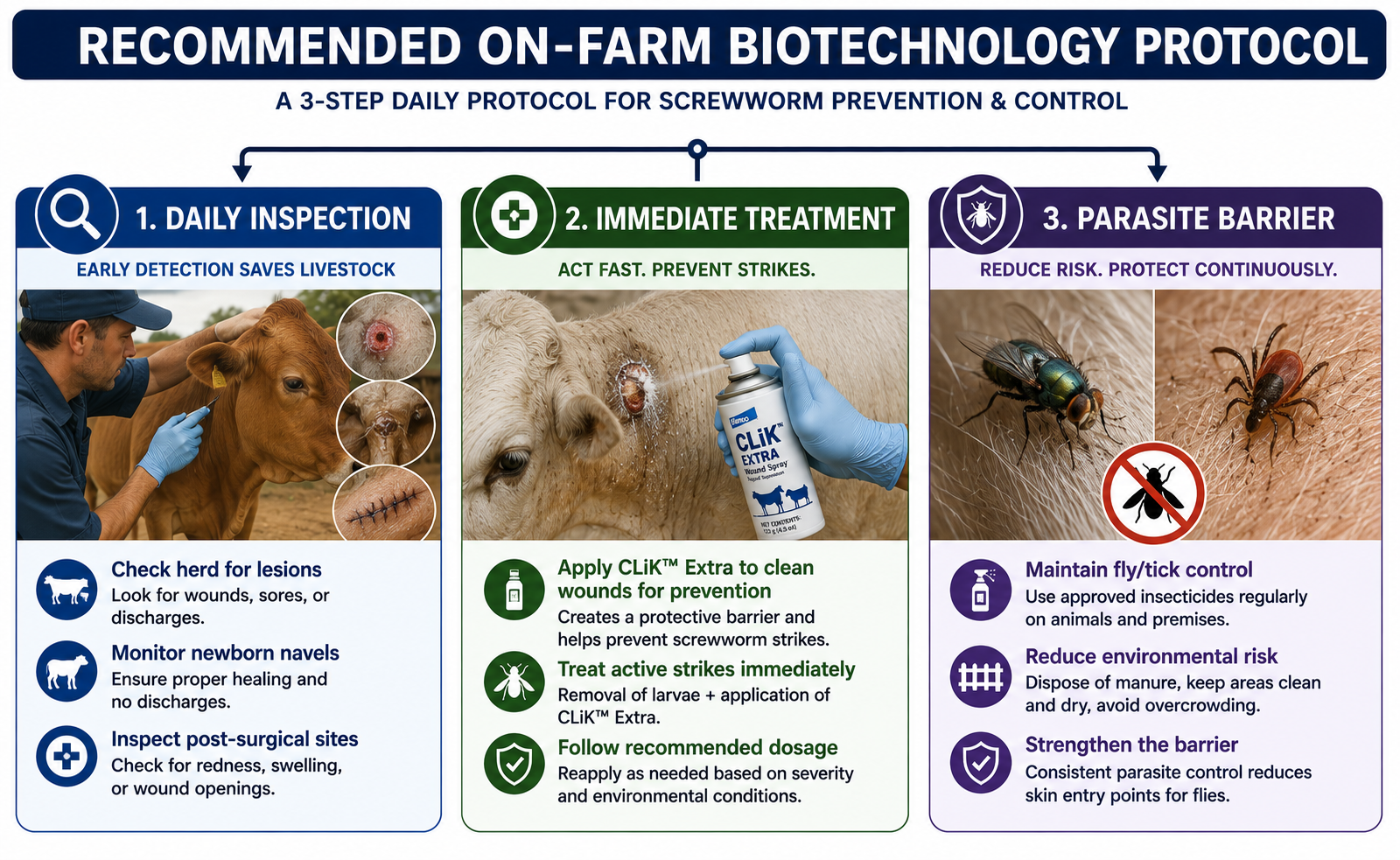
Essential Producer Practices
-
Routine Herd Checks: Perform visual inspections of high-risk zones, including branding marks, castrations, dehorning sites, and birth canals.
-
Proactive Fly & Tick Management: Suppressing tick bites and nuisance flies prevents initial skin breaches that attract adult female screwworm flies (Cochliomyia hominivorax).
-
Rapid Isolation & Reporting: Any suspicious lesions containing active maggots feeding on living tissue should be reported immediately to state veterinarians or USDA-APHIS officials

