


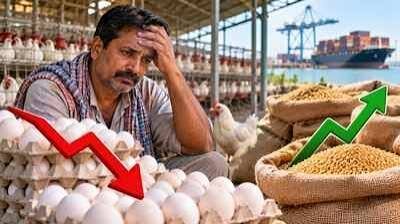
India’s poultry industry is facing an unprecedented cost squeeze as maize and soybean prices surge, ethanol manufacturers compete for grain supplies and chicken and egg realisations weaken.
The All India Poultry Breeders Association has asked the government to release 3 million tonnes of maize at concessional rates, while industry bodies seek imports, stock controls and access to unused government grain stocks.
India’s poultry industry is confronting a serious economic crisis, with rapidly escalating feed costs threatening the viability of poultry farms, breeding operations and integrated producers across several major poultry-producing states.
The latest warning has come from Bahadur Ali, Founder and Managing Director of IB Group and President of the All India Poultry Breeders Association (AIPBA), who has urged the government to release approximately 3 million tonnes of maize from state stocks to the poultry industry at subsidised rates.
In its representation dated November 25, the association also called for stock limits on maize and soybean, alleging that hoarding and artificial scarcity were aggravating an already difficult supply situation.
According to Ali, poultry feed prices have increased by approximately ₹15,000 per tonne, making production increasingly unviable. The association estimates that feed-plant production and demand have declined by 15–20%, while 20–25% of poultry farms have either shut down or are facing closure.
The financial consequences are becoming increasingly severe. AIPBA estimates that farmers are losing approximately ₹40–50 per kg on chicken sales because farm-gate realisations have failed to keep pace with production costs. It has warned that chicken prices could rise by ₹40–50 per kg and eggs by ₹3–4 apiece if the situation persists.
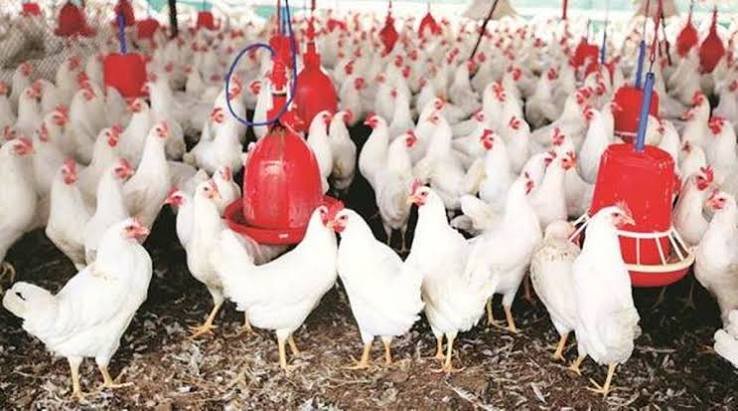
Maize: The biggest pressure point in poultry nutrition
The most immediate challenge is the price of maize, which accounts for approximately 50–55% of conventional poultry feed formulations.
According to Mr. Sumit Sureka, Chairman of the Compound Livestock Feed Manufacturers Association of India (CLFMA), maize prices have climbed sharply over recent weeks, reaching approximately ₹31,000–36,000 per tonne in November, compared with ₹23,000–27,000 per tonne around a month earlier.
The increase has been particularly damaging because poultry producers have limited flexibility to replace maize without affecting feed formulation economics and nutritional performance.
Soybean meal and de-oiled cake (DOC), the principal protein ingredients in poultry feed, have also become considerably more expensive.
The Maharashtra Poultry Farmers and Breeders Association has reported that maize prices in the state have increased from approximately ₹22/kg to above ₹36/kg, while soybean DOC has risen from around ₹45/kg to ₹80/kg. The result is a sharp escalation in the cost of producing broiler chickens, with little corresponding improvement in the prices farmers receive.
Ethanol demand adds a new dimension to the feed crisis
The growing competition between animal feed manufacturers and ethanol producers for maize is emerging as a significant structural concern.
India’s ethanol-blending programme has created a substantial additional market for maize. According to industry reporting based on Ministry of Petroleum and Natural Gas data, maize’s contribution to ethanol blending increased from zero in ESY 2021–22 to approximately 37% in ESY 2025–26.
The policy environment has become more complicated in the current ethanol supply year. In October 2026, the government directed sugar-producing states to prohibit ethanol production from sugarcane juice and B-heavy molasses during ESY 2026–27. This has increased the importance of alternative feedstocks, including maize and damaged foodgrains, in meeting the country’s ethanol requirements.
The first oil marketing company tender for ESY 2026–27 received offers in which maize accounted for approximately 59% of the offered ethanol volume, against around 45% in the corresponding initial allocation round a year earlier. These are offered volumes rather than confirmed procurement figures, but they illustrate the growing importance of maize in the ethanol supply chain.
For the poultry industry, the concern is not necessarily ethanol production itself, but the absence of an adequate mechanism to balance competing requirements for an increasingly valuable agricultural commodity.
The problem is particularly important because poultry feed manufacturers cannot replace maize entirely with distillers dried grains with solubles (DDGS). DDGS can contribute protein, fibre and other nutrients, but it does not provide the same nutritional function as maize, which is primarily an energy source.
A bumper maize harvest, but why are prices still rising?
An important dimension of the current debate is India’s agricultural production outlook. The Ministry of Agriculture’s final estimates, released on November 26, 2026, put maize production for 2025–26 at 55.03 million tonnes, compared with 43.41 million tonnes in 2024–25.
This represents an impressive annual increase of approximately 26.8%.
However, the first advance estimate for 2026–27 kharif maize production stands at approximately 26.06 million tonnes. The government has also reported difficult weather conditions, with rainfall 35–40% below normal during the relevant early-season period and drought-like conditions affecting important maize-producing states, including Maharashtra, Karnataka, Telangana and Andhra Pradesh.
A transparent assessment of maize stocks, market arrivals, industrial procurement and actual consumption across feed and ethanol sectors would help establish the relative contribution of each factor.
Farmers are caught between higher costs and falling realisations
The crisis is no longer limited to the price of raw materials. In Maharashtra, the reported cost of producing one kilogram of broiler chicken has increased from approximately ₹95 to ₹110 within a month.
Elsewhere, Venkateshwara Hatcheries General Manager K.G. Anand has described production costs exceeding ₹120/kg against farmer realisations of approximately ₹80/kg. These figures represent different reported regional and operating estimates, rather than a single national production-cost benchmark. Nevertheless, both illustrate the severe margin pressure facing producers.
The egg industry is experiencing a similar problem.
Namakkal, India’s largest egg-producing and exporting centre, saw reported ex-farm egg prices fall from approximately ₹6.70 on November 11 to ₹5.60 on November 25, a decline of nearly 19%.
The immediate trigger was the reported H5N1 outbreak in Tamil Nadu, which disrupted exports and diverted additional egg supplies into the domestic market. Seasonal weakness in southern Indian consumption further aggravated the situation. The combination is particularly damaging: feed costs remain elevated even as the selling prices of poultry products weaken.
Smaller farmers, who generally have less bargaining power, limited working capital and less flexibility in procuring feed ingredients, are especially vulnerable.
Industry seeks a coordinated policy response
The November 25 demand for 3 million tonnes of subsidised maize is part of a wider campaign by poultry and animal-feed industry representatives for government intervention. Earlier representations have included requests for duty-free imports of non-GMO maize, access to damaged or food-grade-ineligible FCI grain stocks, and imports of sorghum.
CLFMA representatives have also argued for a more predictable framework that balances the requirements of animal-feed manufacturers and ethanol producers.
There is a strong case for considering targeted and temporary relief measures.
A transparent release of available maize stocks to genuine feed manufacturers, based on verified requirements, could help moderate short-term supply pressure. Duty concessions on non-GMO maize imports could also be considered, subject to applicable biosafety, quality and import requirements.
The government could additionally examine the availability of damaged rice and wheat stocks for feed use, provided their safety and nutritional suitability are established. However, these interventions should be accompanied by better stock reporting and market surveillance. Imposing stock limits without establishing actual inventory concentration and market conduct could create unintended consequences for legitimate grain traders and processors.
Longer-term measures must include improving maize productivity, investing in drying and scientific storage infrastructure, strengthening regional grain logistics and expanding the range of nutritionally suitable feed ingredients.
The larger question: Can India protect affordable animal protein?
India’s poultry industry is a major contributor to affordable animal protein, rural employment and agricultural value addition.
The Compound Livestock Feed Manufacturers Association has indicated that India’s poultry-feed requirement is approximately 30 million tonnes annually and continues to grow by around 3–3.5 million tonnes each year.
That expansion will require additional maize and protein ingredients at a time when industrial demand for agricultural commodities is also increasing. The government therefore faces an important policy balancing exercise.
Ethanol blending has strategic benefits, including reduced dependence on imported fossil fuels. But these benefits must be evaluated alongside the economic consequences of competing demand for grain used in poultry, livestock and other food-production systems.
The answer need not be a choice between fuel and food. It should be a more carefully designed feedstock allocation framework, supported by reliable production forecasts, transparent stock information, targeted imports and investment in agricultural productivity.
For poultry farmers, the immediate challenge is survival through the current cost cycle. For consumers, the risk is that persistently higher production costs will eventually translate into more expensive chicken and eggs.

