


NORTH CANTON, Ohio — The pandemic-era pet adoption boom has officially flatlined, leaving the U.S. veterinary industry facing a stark new reality.
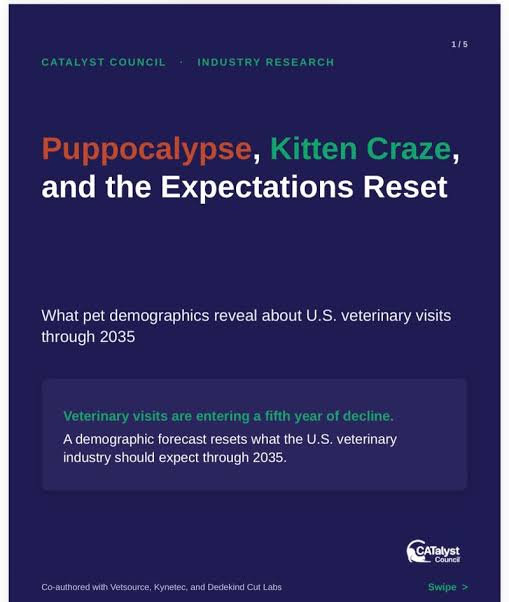
A landmark report released by the CATalyst Council—in partnership with Vetsource, Kynetec, and Dedekind Cut Labs—reveals that the surge in pet ownership during 2020 and 2021 was a temporary bubble rather than a permanent shift. The second edition of the white paper, titled “Puppocalypse, Kitten Craze, and the Expectations Reset,” warns that overall clinical veterinary visits will remain stagnant, projecting a growth rate of -2% to 0% through 2031.
This updated forecast incorporates fresh second-quarter 2026 data, confirming that the decline in new puppy visits is a long-term trend, not a temporary blip.
Two Species, Two Completely Different Stories
The study highlights a massive split in the demographics of America’s household pets, presenting a challenging outlook for dogs but a surprising opportunity for cats:
-
The “Puppocalypse” (Canine Decline): New puppy clinical visits have plummeted for four consecutive years and currently sit roughly 38% below their pre-pandemic baseline. In the second quarter of 2026 alone, puppy visits dropped by 10.5% year-over-year. Because smaller groups of puppies are entering the system today, lower visit volumes are effectively locked in for years to come.
-
The “Kitten Craze” (Feline Rush): In contrast, kitten visits have held steady at 8% to 10% above baseline over the same period. However, because cats historically receive less than a third of the veterinary visits that dogs do, this feline growth is not enough to offset the overall canine slump.
“The 2% to 3% visit growth that veterinary groups and manufacturers built their business plans around is no longer realistic,” the report authors write. “A plan that assumes flat-to-negative patient volume requires a completely different approach to staffing, pricing, and business growth”.
Why the Vet Visit Slump is Happening
The report points to a few major factors behind the shrinking numbers at the clinic checkout desk:
-
Price of Pet Care: Veterinary inflation has climbed significantly. According to government data, veterinary fees have risen 51.4% since December 2019, compared to 28.5% for general consumer items, pricing many families out of routine wellness checks.
-
Fewer Young Dogs: Primary household surveys screening over 60,000 U.S. homes confirmed a real deficit in young dogs entering American households, proving that families are simply adopting fewer puppies.

