


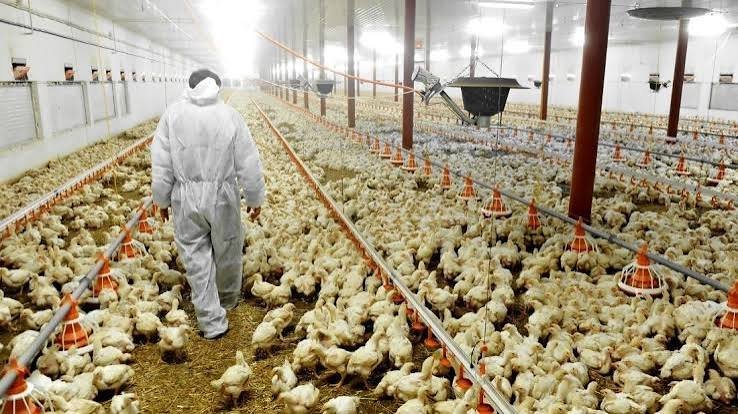
New research involving the Royal Veterinary College (RVC) and University of Cambridge argues that Britain’s ability to withstand highly pathogenic avian influenza (HPAI) cannot depend on farm-level biosecurity alone.
The study identifies poultry-sector structure, land-use planning, infrastructure concentration and financial risk-sharing as important determinants of resilience—broadening the policy debate from how individual farms prevent infection to how the entire poultry system is designed and financed.
The research is particularly significant because Great Britain has experienced sustained HPAI pressure in recent years. For the 2025–26 outbreak season, official UK data record 100 HPAI H5N1 cases across the UK: 79 in England, nine in Scotland, seven in Wales and five in Northern Ireland. Great Britain subsequently self-declared freedom from HPAI on 18 May 2026, and the Avian Influenza Prevention Zone was lifted across England, Wales and Scotland on 4 June.
RVC Study: The Problem Is Bigger Than the Farm Gate
The research, titled “Negotiating Security and Resilience: Planning Conundrums for Avian Influenza Control in Great Britain’s Poultry Systems,” examined how the organisation of Britain’s poultry sectors influences HPAI vulnerability and recovery.
Researchers combined a review of scientific literature, policy and industry evidence with 19 in-depth stakeholder interviews, farm visits and stakeholder engagement. They also mapped poultry production and distribution networks to examine how infrastructure and supply-chain connections could create vulnerabilities.
The analysis covered meat poultry, egg production and game birds, recognising that these sectors have different production structures and therefore different disease-risk profiles.
Four structural issues stand out
1. Geographic concentration
Large concentrations of poultry farms, processing facilities and related infrastructure can create interconnected disease-management challenges. The issue is not necessarily that concentration causes HPAI, but that the consequences of an outbreak can extend through tightly connected production and processing networks.
2. Ageing poultry housing
The researchers identify ageing housing infrastructure as another constraint. Modern disease resilience may require investment not only in operational biosecurity but also in physical infrastructure capable of supporting effective segregation, cleaning, controlled access and environmental management.
3. Land-use planning
Where new poultry farms, processing facilities and other agricultural infrastructure are located can influence disease resilience.
The study argues that poultry planning intersects with environmental policy, biodiversity objectives and interactions with wild and semi-wild birds. This creates a policy challenge: future poultry expansion needs to consider disease resilience at the planning stage rather than after farms are built.
4. Insurance and financial risk
One of the study’s less-discussed findings concerns the economics of HPAI risk.
Researchers identify limited availability of private avian-influenza insurance and uneven/contested government compensation arrangements as factors influencing how different producers experience and manage outbreak risk.
This moves the discussion beyond veterinary epidemiology into agricultural finance and risk management.
Britain Produces More Than 1 Billion Poultry Birds a Year
The structural issue has considerable food-security significance. The UK poultry industry reportedly raises approximately 1.1 billion birds annually, primarily for meat, and produces approximately 12 billion eggs. Poultry is also the UK’s most popular meat category and an important source of relatively affordable animal protein.
Consequently, HPAI resilience is not simply an animal-health issue. It potentially affects:
animal welfare → farm economics → processing capacity → food supply → consumer prices → agricultural insurance → national food security.
2025–26 HPAI Data Put the Research in Context
The latest official UK figures provide useful perspective.
| Outbreak season | HPAI cases in UK |
|---|---|
| 2025–26 | 100 |
| 2024–25 | 82 |
| 2023–24 | 6 |
| 2022–23 | 207 |
| 2021–22 | 158 |
For the 2025–26 season, England accounted for 79 cases, compared with 9 in Scotland, 7 in Wales and 5 in Northern Ireland. The official data therefore show that 2025–26 was substantially more active than 2024–25, although below the exceptionally high case count recorded in 2022–23.
Importantly, Great Britain’s declaration of HPAI freedom in May 2026 does not mean the underlying risk has disappeared. The UK’s disease-control system continues surveillance of wild birds, poultry and other relevant species because HPAI viruses remain established in wild-bird populations.
Biosecurity Remains Essential—but It Is Not the Whole Solution
The RVC research does not argue that farm biosecurity is unimportant. Quite the opposite. Biosecurity remains one of the principal tools available to poultry producers for reducing the probability of virus introduction and onward transmission.
The research question is whether it is sufficient when the surrounding production system contains structural vulnerabilities. The answer from the study is effectively no.
RVC’s FluTrailMap programme explicitly examines biosecurity alongside host susceptibility, vaccination, economics, production networks and spatial relationships between wild birds and poultry outbreaks.
What Could Change for Poultry Companies?
The research does not automatically mean that Britain will impose new regulations tomorrow. However, it provides evidence that could influence future policy and investment decisions.
1. Poultry housing investment – Ageing facilities may increasingly need to be evaluated against biosecurity resilience, not simply production efficiency.
Potential investment areas include:
-
controlled-entry systems
-
improved ventilation and environmental controls
-
enhanced cleaning and disinfection
-
physical separation of production zones
-
automated monitoring
-
improved wild-bird exclusion
-
environmental surveillance
2. Better disease surveillance – The research supports greater integration of farm, spatial, wildlife and supply-chain data.
That could eventually include more sophisticated risk mapping and predictive surveillance. RVC’s wider research programme already examines spatial relationships between wild birds and poultry outbreaks and the use of network data to improve outbreak investigation and control.
3. Planning decisions could become a biosecurity tool – Future poultry development may increasingly need to consider:
farm density + proximity to other poultry + processing infrastructure + wild-bird ecology + transport networks + environmental constraints.
This represents a significant change from treating disease prevention as primarily an operational farm responsibility.
4. Insurance could become a strategic issue – If private insurance markets remain unable to adequately cover recurring HPAI risks, policymakers may need to examine alternative risk-sharing mechanisms.
This is particularly important for smaller producers and sectors with different exposure profiles.
What About Poultry Vaccination?
Vaccination is part of the wider scientific discussion, but the RVC research should not be interpreted as a recommendation for immediate blanket vaccination of Britain’s poultry. The FluTrailMap programme has specifically investigated the potential deployment of vaccination and the possible longer-term effects of vaccination pressure on virus evolution.
Any future vaccination policy would need to consider:
-
vaccine effectiveness against circulating strains
-
duration of immunity
-
surveillance requirements
-
differentiation of infected from vaccinated animals
-
trade implications
-
international disease-status rules
-
viral evolution
-
production economics

