HomeCorporateVMD Sciences Launches Global Veterinary Pharmacy to Improve Access to Critical Animal...

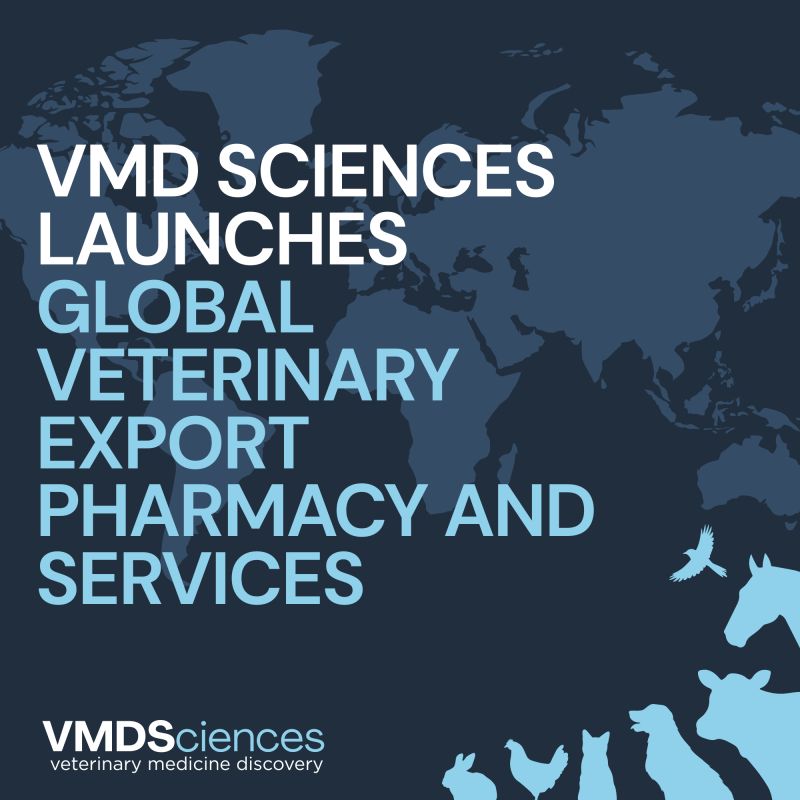
VMD Sciences Launches Global Veterinary Pharmacy to Improve Access to Critical Animal Medicines

New Florida facility and Veterinary Managed Access Programs aim to help veterinarians deal with medicine shortages and limited treatment options worldwide.

A new global veterinary medicine access programme has been launched to help veterinarians obtain important animal health drugs and treatments when normal local options are limited or unavailable due to regulatory delays.

VMD Sciences has opened its first Global Veterinary Export Pharmacy in Lake Worth, Florida, alongside the international introduction of its Veterinary Managed Access Programs, or VMAPs.

The company says the system is designed to support controlled access to veterinary medicines, vaccines and other treatments across national borders while dealing with country-specific approval and import requirements.

The development comes as veterinary medicine shortages and unequal access to animal health products remain a wider global concern.

Veterinary medicine shortages are a real problem

The need for alternative medicine access is not theoretical. The US Food and Drug Administration’s current animal drug shortage list includes products containing albendazole, cloprostenol sodium, domperidone, epinephrine, prednisolone and rabacfosadine. Reasons listed by the FDA include manufacturing delays, increased demand and pending approval of manufacturing changes.

For example, the FDA lists Valbazen Suspension containing albendazole as being in shortage since June 1, 2025 because of manufacturing delays.

Equidone Gel, containing domperidone, has been affected by a shortage dating from January 2025.

Prednisolone tablets have faced limited availability linked to manufacturing delays since August 2023.

The FDA specifically asks veterinarians to report animal drug shortages to its Center for Veterinary Medicine and advises practices to contact manufacturers for current supply information.

These figures help explain why veterinary medicine access is becoming a larger animal health industry issue.

What is the Global Veterinary Export Pharmacy?

VMD Sciences says its new Florida facility is intended to provide a controlled route for veterinary medicines moving between countries.

The company announced the pharmacy as its first Global Veterinary Export Pharmacy. According to the launch announcement, the programme is intended to support global access to FDA- and USDA-approved products and treatments identified through recognised veterinary medicine lists.

This does not mean a veterinarian can simply order any medicine from another country. Veterinary medicines are controlled by national laws. Import permits, export documents and local approval requirements may apply.

VMD Sciences says its role includes handling regulatory paperwork, export certificates, import permits and customs questions as part of a structured access process.

What are Veterinary Managed Access Programs?

The second part of the launch is the Veterinary Managed Access Program. The idea is relatively simple. A veterinarian may have an animal with a serious medical need, but the required treatment may not yet be normally available in that country.

VMD Sciences says VMAPs are designed to provide special access to treatments approved in another country for animals with unmet medical needs.

The company says it works with veterinary drug companies and regulatory authorities to obtain the required permissions and manage the movement of the treatment.

In practical terms, the programme may cover drugs, biological products and medical devices under controlled conditions.

VMD Sciences also says veterinary professionals must use a structured application process.

A model already familiar in human medicine moves into animal health

Managed access programmes have been used in human healthcare for many years. They are generally designed for patients with serious medical needs who may have no suitable approved treatment available locally.

VMD Sciences is now applying a similar access model to veterinary medicine. The company says the veterinary system can also help animal health companies gather information from actual treatment use. This information may support later regulatory work and help companies better understand how a treatment performs in veterinary practice.

For the animal health industry, this is potentially important. Veterinary medicines are not always launched in every country at the same time. A treatment may be approved in one market but remain unavailable in another.

Smaller animal populations and rare diseases can also make some veterinary products commercially difficult to launch widely.

Global veterinary medicine access remains highly unequal

The wider issue extends beyond the United States. The World Organisation for Animal Health says veterinary medicines, vaccines and diagnostic kits are essential tools for preventing, treating and controlling animal diseases. It also stresses that product quality must be protected to safeguard animal health, animal welfare and public health.

In a 2024 regional recommendation, WOAH noted that there is no single harmonised global definition of critical or essential veterinary products.

The organisation called for countries to identify the causes and effects of shortages and develop programmes to prevent and reduce shortages of important veterinary products. This creates a difficult situation.

A medicine may exist. It may already be legally approved and used in another country. But veterinarians elsewhere may still struggle to obtain it.

Essential veterinary medicine lists are becoming more important

The VMD Sciences announcement also refers to veterinary medicine lists associated with international animal health organisations.

These include work by the World Small Animal Veterinary Association and essential medicine initiatives covering food-producing animals. World Small Animal Veterinary Association represents more than 390,000 veterinarians through 113 member associations, according to its current organisation information.

WOAH also maintains a list of antimicrobial agents of veterinary importance to guide responsible medicine use and reduce the risk of antimicrobial resistance.

The growing use of essential medicine lists reflects a basic problem in global animal healthcare: having a treatment scientifically available does not guarantee that every veterinarian can obtain it.

Programme could also help during emerging animal diseases

Medicine shortages are only one possible use. VMD Sciences says its access model is also intended to support veterinary needs linked to emerging diseases and treatment gaps. This could become increasingly relevant as animal diseases move into new regions.

Disease outbreaks can create sudden demand for vaccines, medicines or other veterinary products. Local supply systems may not always be prepared for a rapid increase in need.

The FDA notes that drug shortages can arise from manufacturing problems, quality issues, delays and product discontinuations. US law has also expanded FDA’s ability to identify and reduce possible human and animal drug shortages.

A regulated international access route could therefore become useful when normal veterinary supply systems are disrupted.

Important questions remain

The launch is significant, but several details will need to become clearer as the programme expands. VMD Sciences has not publicly provided, in the sources reviewed for this report, detailed figures on the number of medicines currently available through the export pharmacy, the number of countries covered or the number of veterinarians already using VMAPs.

There is also no published evidence yet showing how many animal patients have received treatment through the newly launched global programme.

These figures will be important when assessing the real scale of the initiative. The programme should therefore be viewed as a new veterinary medicine access model with significant potential, rather than a proven solution to global animal drug shortages at this stage.

Veterinary medicine access could become a new animal health business sector

The animal health industry has traditionally focused on discovering, manufacturing and selling veterinary medicines. The VMD Sciences model focuses on a different problem: what happens when a useful medicine exists but the veterinarian cannot normally access it?

That gap is becoming increasingly important. FDA data confirm ongoing animal drug shortages in the United States. International animal health organisations are calling for stronger systems to identify and manage shortages of essential veterinary products. VMD Sciences is now attempting to build a commercial and regulatory service around this problem.

If Veterinary Managed Access Programs can safely connect veterinarians with treatments unavailable through normal local supply channels, they could create a new specialist segment within the global animal health industry.

For veterinarians, the promise is more treatment choices. For animal health companies, the model may provide a controlled route to reach patients before wider national launches.

And for animals with few treatment options, access to a medicine already available elsewhere could make the biggest difference of all.

Animal Health India Editorial Team
Animal Health India Editorial Teamhttps://animalhealthindia.com
Animal Health India (AHI) is an independent news and intelligence platform covering the global animal health, veterinary, livestock, poultry, companion animal and pet food sectors. Our editorial team comprises veterinary journalists, animal health professionals, regulatory affairs specialists and industry analysts with over 30 years of combined experience covering India, Asia, Europe and North America. AHI publishes news, regulatory updates, market intelligence and company news drawn from primary sources including DAHD, EMA, USDA, AVMA and leading veterinary publications worldwide.
RELATED ARTICLES