



In Part 1, we explored how Rumin8’s synthetic bromoform technology inhibits methane production by targeting methanogenic archaea in the rumen. The published science shows that the technology can dramatically reduce enteric methane under controlled conditions, but its effectiveness depends on formulation, dose and production system.
In this Part 2, we examine the published animal trials, compare Rumin8 with competing methane-reduction technologies, assess the available safety data and discuss what still needs to be proven before widespread commercial adoption.
What Do the Published Animal Trials Show?
Although Rumin8 has conducted numerous experimental studies, only a limited number have been published in peer-reviewed journals. Nevertheless, these studies provide encouraging evidence that synthetic bromoform can substantially reduce methane emissions while maintaining normal animal performance.
1. UC Davis Feedlot Study – The most widely cited study was published in Translational Animal Science (2025) and evaluated two investigational Rumin8 formulations in Angus beef steers housed under feedlot conditions. The researchers compared:
Control diet
Oil-based Rumin8 formulation
Powder-based Rumin8 formulation
Results
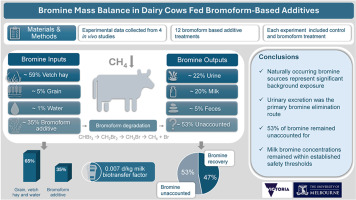
The oil formulation produced remarkable results:
95.2% reduction in total methane production
95% reduction in methane yield
96.1% reduction in methane intensity
These reductions are among the highest reported for any synthetic methane inhibitor under controlled feedlot conditions. Equally important, the researchers found: No reduction in dry matter intake, No significant change in average daily gain, No deterioration in feed efficiency, Normal rumen fermentation profiles and No evidence of animal health concerns during the study period
2. Powder Formulation Produced More Variable Results – Interestingly, the powder formulation tested in the same experiment did not perform as well.
Although hydrogen production increased—confirming inhibition of methanogenesis—the reduction in methane was considerably smaller than with the oil formulation. Researchers concluded that formulation and delivery of the active ingredient are critical determinants of efficacy. This is an important scientific lesson.
When discussing Rumin8, one should avoid quoting a single methane-reduction figure because different formulations have produced different outcomes.
3. Grazing Cattle Study – A second peer-reviewed study published in Animal Nutrition (2025) evaluated a powder formulation containing synthetic bromoform in cattle grazing fresh pasture. Unlike feedlot systems, grazing presents several challenges:
Variable feed intake
Different rumen fermentation patterns
More difficult delivery of feed additives
The study reported:
A clear dose-dependent reduction in methane emissions
Up to 24% lower methane yield at the highest dose
No detectable bromoform residues in edible tissues
Good animal acceptance
Although methane reductions were lower than those seen in feedlot studies, the results demonstrated that synthetic bromoform can also be effective under pasture conditions when appropriate delivery systems are used.
What About the New Prodrug Technology?
One of Rumin8’s newest developments is a prodrug formulation, designed to improve stability and provide controlled release of the active compound within the rumen.
The company has reported preliminary methane reductions of up to 86% in a small cattle trial. However, these findings have so far been released as top-line company results and have not yet been fully validated in peer-reviewed publications. Until larger independent studies are available, these results should be regarded as promising but preliminary.
Is Rumin8 Safe?
Safety remains one of the most important questions for regulators, veterinarians and consumers. The available evidence is encouraging, but still developing. Across published studies, researchers have reported:
No significant reduction in feed intake
No impairment of growth
Normal rumen fermentation
No clinically important behavioural changes
Normal eating behaviour
Normal rumination
Normal locomotion
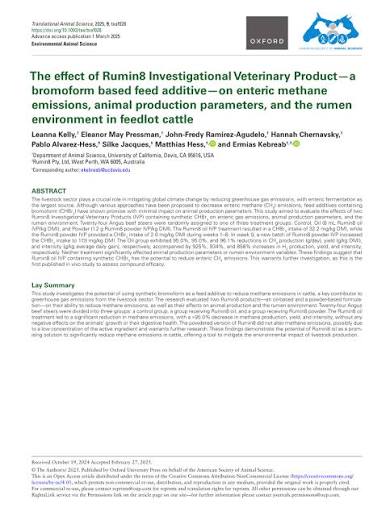
A separate dairy cow study evaluating twice-daily administration of an investigational bromoform formulation likewise found no adverse effects on eating, rumination or locomotion behaviour, supporting short-term animal welfare under the study conditions.
Food Safety
One of the principal regulatory concerns is whether bromoform residues remain in meat or milk. Current published studies have reported:
No detectable residues in muscle
No detectable residues in fat
No detectable residues in edible tissues examined
These findings are reassuring but do not replace the comprehensive residue studies required during regulatory approval. Long-term food safety evaluations remain part of the ongoing development programme.
How Does Rumin8 Compare with Bovaer and Other Potential Products?
The obvious comparison is Bovaer® (3-nitrooxypropanol or 3-NOP), the first commercially approved methane-reducing feed additive.
| Technology | Active Ingredient | Typical Methane Reduction | Commercial Status |
|---|
| Rumin8 | Synthetic bromoform | Trial-dependent; early peer-reviewed studies report reductions ranging up to over 90% under some controlled conditions | Development/validation |
| Bovaer | 3-NOP | Typically around 20–40% depending on diet and production system | Commercial in multiple countries |
| Asparagopsis | Natural bromoform | Often 50–90% in controlled studies, depending on inclusion rate | Limited commercial adoption |
| Nitrate | Nitrate salts | Generally 10–20% | Commercial |
| Essential oils | Various | Usually <10% | Commercial |
| Tannins | Plant extracts | Variable | Commercial |
Both technologies target the same biochemical pathway, but Bovaer has undergone substantially more commercial-scale validation and regulatory review. Rumin8’s potential lies in achieving very high methane reductions if those early findings can be replicated consistently across commercial production systems.
Remaining Scientific Questions
Despite encouraging findings, several questions remain unanswered. Researchers still need to determine:
Long-term efficacy over complete production cycles.
Performance in large commercial dairy herds.
Performance in tropical grazing systems.
Effects under different feeding strategies.
Potential adaptation of rumen microbial populations.
Economic return under commercial farm conditions.
Regulatory acceptance across major livestock-producing countries.
Large-scale, independent field trials will be essential before the technology can be adopted widely.
Commercial Outlook
Rumin8 is positioning itself as a next-generation methane mitigation technology that could be used across beef and dairy production.
According to the company, more than a dozen animal trials have now been completed across multiple formulations, with several additional scientific publications expected as regulatory development progresses.
If future studies confirm the high methane reductions reported in early feedlot research while maintaining productivity and food safety, synthetic bromoform could become an important tool for helping livestock producers meet greenhouse gas reduction targets.
Expert Perspective
The published evidence indicates that Rumin8 is one of the most promising emerging methane-reduction technologies currently under development.
The strongest peer-reviewed evidence comes from controlled feedlot studies using an oil-based formulation, where methane reductions of around 95% were achieved without measurable effects on animal performance.
However, the scientific picture is more nuanced than headline figures suggest. Different formulations have produced different results, grazing systems remain more challenging, and several of the most widely quoted efficacy figures—including the newer prodrug data—still await independent peer-reviewed confirmation.
In science, reproducibility is the ultimate test. The next generation of commercial-scale, independently conducted studies will determine whether Rumin8 can consistently deliver the impressive methane reductions observed in early research while remaining safe, practical and economically viable for cattle producers worldwide.
Select References
- Kelly H. et al. Translational Animal Science. 2025. Feedlot evaluation of Rumin8 investigational veterinary products
- Gyeltshen T. et al. Animal Nutrition. 2025. Dose-dependent methane reduction in pasture-fed cattle
- Tognelli R. et al. Veterinary and Animal Science. 2025. Behavioural assessment of bromoform-based investigational product in dairy cows.
Rumin8. Trial programme updates and development pipeline

