

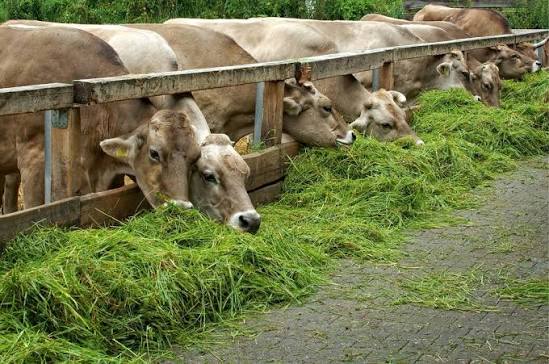
HomeCorporateIndia’s Fodder Supply Faces Climate Pressure as Feed Costs Raise New Risks...

India’s Fodder Supply Faces Climate Pressure as Feed Costs Raise New Risks for Milk Prices

India’s livestock sector is facing a renewed feed security challenge as an uncertain monsoon and the risk of El Niño put pressure on fodder availability. Recent government data and dairy industry warnings suggest that a prolonged shortage of green fodder could raise farm costs and eventually affect milk and other animal protein prices.

The concern has become more immediate after the Centre stepped up weekly reviews of the 2026 kharif season. On July 8, the Ministry of Agriculture said it was increasing preparedness because of uncertainty surrounding the southwest monsoon and the possible impact of El Niño.

India already has a serious fodder gap

The feed problem did not begin with the 2026 monsoon but looks like getting accentuated due to potential El Nino led weak monsson rains.

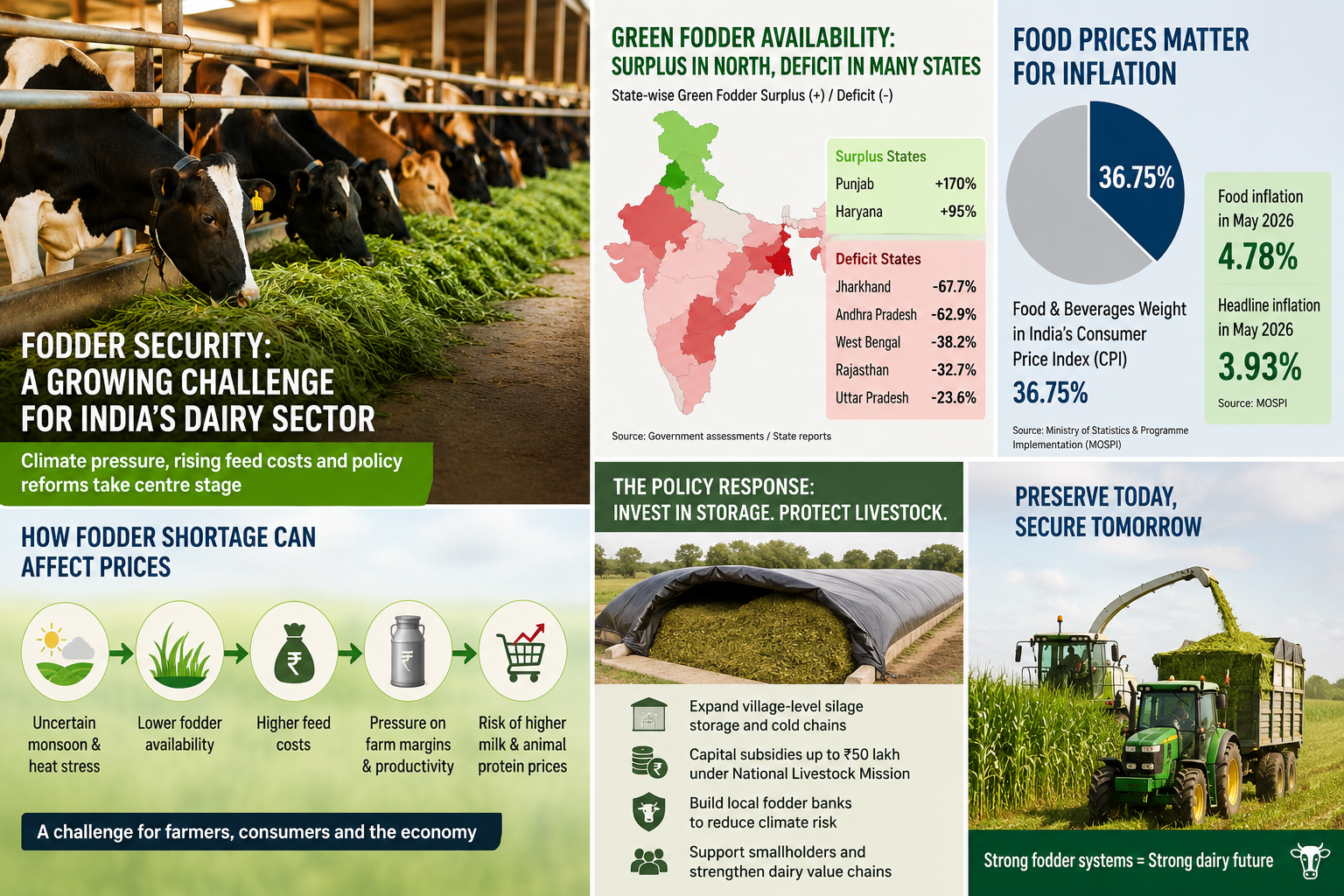
Government assessments have repeatedly identified large differences between fodder demand and availability across India. Recent state-level figures show green fodder deficits of 67.7% in Jharkhand, 62.9% in Andhra Pradesh, 38.2% in West Bengal, 32.7% in Rajasthan and 23.6% in Uttar Pradesh.

In contrast, Punjab has reported a green fodder surplus of about 170%, while Haryana has a surplus of nearly 95%. The sharp regional imbalance shows that India’s fodder challenge is not simply about total production. Storage and movement of fodder from surplus to deficit areas are also major problems.
Weak monsoon could turn a fodder shortage into a feed shock

Green fodder production is closely linked to rainfall. Dry periods can reduce the availability of grasses and fodder crops, while extreme heat can affect crop growth and animal productivity.

The Maharashtra government has already advised farmers to prepare for possible fodder shortages linked to El Niño conditions.

A weak monsoon can create a chain reaction. Lower fodder availability pushes farmers towards more expensive purchased feed. Higher feeding costs reduce dairy farm margins. Heat stress can also lower milk production, increasing the cost of producing every litre of milk.

Dairy industry executives have warned that milk prices, which rose by around 2–3% in May 2026, could increase again in July or August if poor rainfall deepens fodder shortages and affects milk production.

Why higher animal feed prices matter for Indian inflation

The impact could extend beyond dairy farms. Under India’s revised Consumer Price Index, food and beverages carry a weight of 36.75%. This means changes in food prices remain highly important to overall consumer inflation.

India’s food inflation was already 4.78% in May 2026, compared with headline retail inflation of 3.93%, according to the Ministry of Statistics and Programme Implementation.

A sustained rise in fodder and feed costs does not automatically produce an immediate rise in consumer prices. However, prolonged cost pressure can move through the animal protein supply chain.

Fodder shortage → higher feeding costs → pressure on farm margins → lower animal productivity or higher procurement prices → possible increases in milk and animal protein prices.

The risk is particularly important for dairy because India has millions of small livestock holders with limited capacity to absorb a prolonged rise in feed costs.

Silage storage is becoming a climate protection tool

The policy debate is therefore shifting from simply producing more fodder to preserving fodder when it is available.

Silage allows green fodder to be stored for use during dry periods or seasonal shortages. Decentralised silage units can help villages build local feed reserves rather than depend entirely on fresh fodder supplies.

The government’s National Livestock Mission already includes a dedicated Feed and Fodder Development programme. It supports the fodder seed chain and encourages the establishment of fodder block, hay baling and silage-making units.

Under the programme, eligible projects for silage balers, fodder blocks and total mixed ration units can receive 50% capital subsidy support, up to ₹50 lakh, according to National Livestock Mission scheme information.

Village-level fodder banks could reduce climate risk

The emerging policy case is clear: India needs more local fodder storage capacity. Small silage units, farmer producer organisations, dairy cooperatives and village-level fodder banks could help store surplus fodder during good production periods and release it when rainfall fails.

The government is also supporting quality fodder seed production and the development of fodder-focused farmer producer organisations.

For small dairy farmers, such infrastructure could mean the difference between maintaining milk production during a dry period and being forced to buy expensive feed in the open market.

Feed security is becoming central to India’s dairy growth story

India’s livestock feed challenge is increasingly linked to climate, farm income and food inflation.

The 2026 monsoon uncertainty has again exposed a basic weakness in the dairy and livestock economy: India produces enormous volumes of milk, but fodder availability remains highly uneven across states and seasons.

The next phase of livestock policy may therefore need to treat silage plants, fodder banks and local feed storage networks as essential rural infrastructure.

For India’s dairy sector, feed security is no longer only an animal nutrition issue. It is becoming a farm income, milk price and food inflation issue.

Animal Health India Editorial Team
Animal Health India Editorial Teamhttps://animalhealthindia.com
Animal Health India (AHI) is an independent news and intelligence platform covering the global animal health, veterinary, livestock, poultry, companion animal and pet food sectors. Our editorial team comprises veterinary journalists, animal health professionals, regulatory affairs specialists and industry analysts with over 30 years of combined experience covering India, Asia, Europe and North America. AHI publishes news, regulatory updates, market intelligence and company news drawn from primary sources including DAHD, EMA, USDA, AVMA and leading veterinary publications worldwide.
RELATED ARTICLES