

HomeCorporateIndian Veterinary Corps Strengthens Global "One Health" Security with South Sudan Clinics

Indian Veterinary Corps Strengthens Global “One Health” Security with South Sudan Clinics

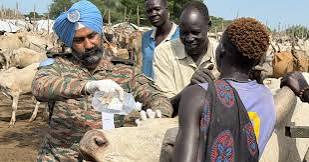
JONGLEI, SOUTH SUDAN — Operating on the frontlines of global health and international defense, the specialized veterinary unit of the Indian Army has dramatically scaled its medical footprint in conflict-affected regions.

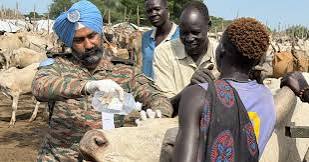
Working under the United Nations Mission in South Sudan (UNMISS), the Indian Veterinary Corps team has successfully treated more than 41,500 critically sick animals across remote territories in Jonglei. The extensive field operation highlights India’s commitment to the global “One Health” framework—the vital scientific understanding that animal wellness, human health, and regional stability are entirely interconnected.
Clinical Blueprint: Tackling Widespread Viral Threats

Livestock in South Sudan represent the primary source of food, household income, and financial security for rural families. In areas like Jonglei where standard animal hospitals do not exist, a single unmanaged viral outbreak can devastate an entire community’s survival

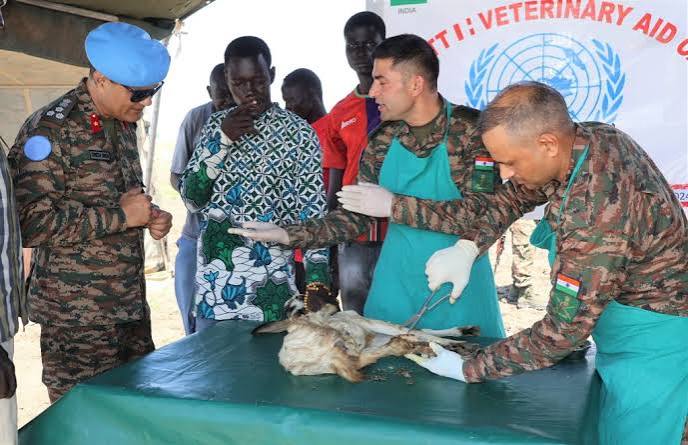
To combat this, the Indian battalion established highly mobile veterinary tents and field clinics in rugged, hard-to-reach terrain. Lead veterinarian Lieutenant Colonel Harmanjeet Singh Goraya confirmed that the team provides free surgeries, diagnostic screenings, and critical medications that are otherwise unavailable in local markets. The medical teams focus heavily on containing high-consequence, endemic production threats, including:

  • Foot-and-Mouth Disease (FMD)

  • East Coast fever

  • Severe tick infestations and internal parasitic illnesses
Building Long-Term Local Capacity and Independence

The international mission extends far beyond direct medical care. To leave a permanent legacy of self-reliance, the Indian Veterinary Corps has actively transitioned into an educational body for the region.

Over the past year, the team has successfully trained 252 Community Animal Health Workers to independently diagnose common illnesses, perform basic surgeries, and support regional vaccination drives. Mirroring progress in modern agricultural systems, 165 of these trained workers are local women, creating vital new pathways for female economic independence in the region.

Additionally, the peacekeepers partnered with Dr. John Garang Memorial University of Science and Technology, providing hands-on clinical training to 40 advanced veterinary students to secure the nation’s future animal health workforce.

Animal Health Drives Border Peace

The data compiled from the field highlights an important socioeconomic trend: healthier animals lead directly to safer borders.

When livestock remain healthy, pastoral communities are no longer forced to migrate into distant, unfamiliar territories in search of resource relief. By stabilizing herd health at the village level, the Indian Veterinary Corps has significantly reduced resource-driven friction and land disputes between nomadic herders and stationary farming communities—proving that advanced veterinary field medicine is one of the most effective tools for building lasting global peace.

This UNMISS Video Dispatch outlines the broader, decorated efforts of the Indian peacekeeping forces as they administer essential resource protection and medical aid programs to rural communities across the Jonglei region.

Animal Health India Editorial Team
Animal Health India Editorial Teamhttps://animalhealthindia.com
Animal Health India (AHI) is an independent news and intelligence platform covering the global animal health, veterinary, livestock, poultry, companion animal and pet food sectors. Our editorial team comprises veterinary journalists, animal health professionals, regulatory affairs specialists and industry analysts with over 30 years of combined experience covering India, Asia, Europe and North America. AHI publishes news, regulatory updates, market intelligence and company news drawn from primary sources including DAHD, EMA, USDA, AVMA and leading veterinary publications worldwide.
RELATED ARTICLES