


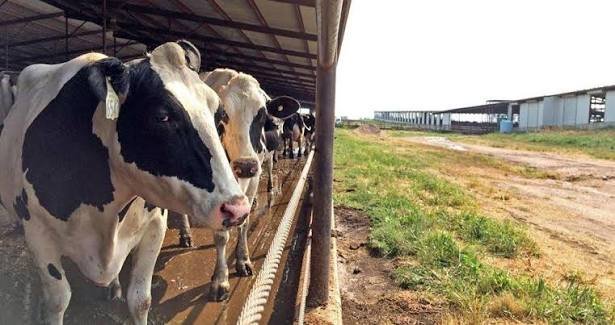
Researchers at the University of Nebraska–Lincoln (UNL) have engineered a promising broad-spectrum vaccine candidate designed to protect livestock from highly pathogenic avian influenza (H5N1). The breakthrough addresses the historic 2024 jump of bird flu into dairy herds and offers a vital defense mechanism against potential human pandemic threats.
Published in NPJ Vaccines, the study demonstrates that the innovative dual-route vaccine provides 100% protection against severe disease across multiple H5N1 strains in preclinical trial models.
Science Behind the Dual-Route H5N1 Cattle Vaccine
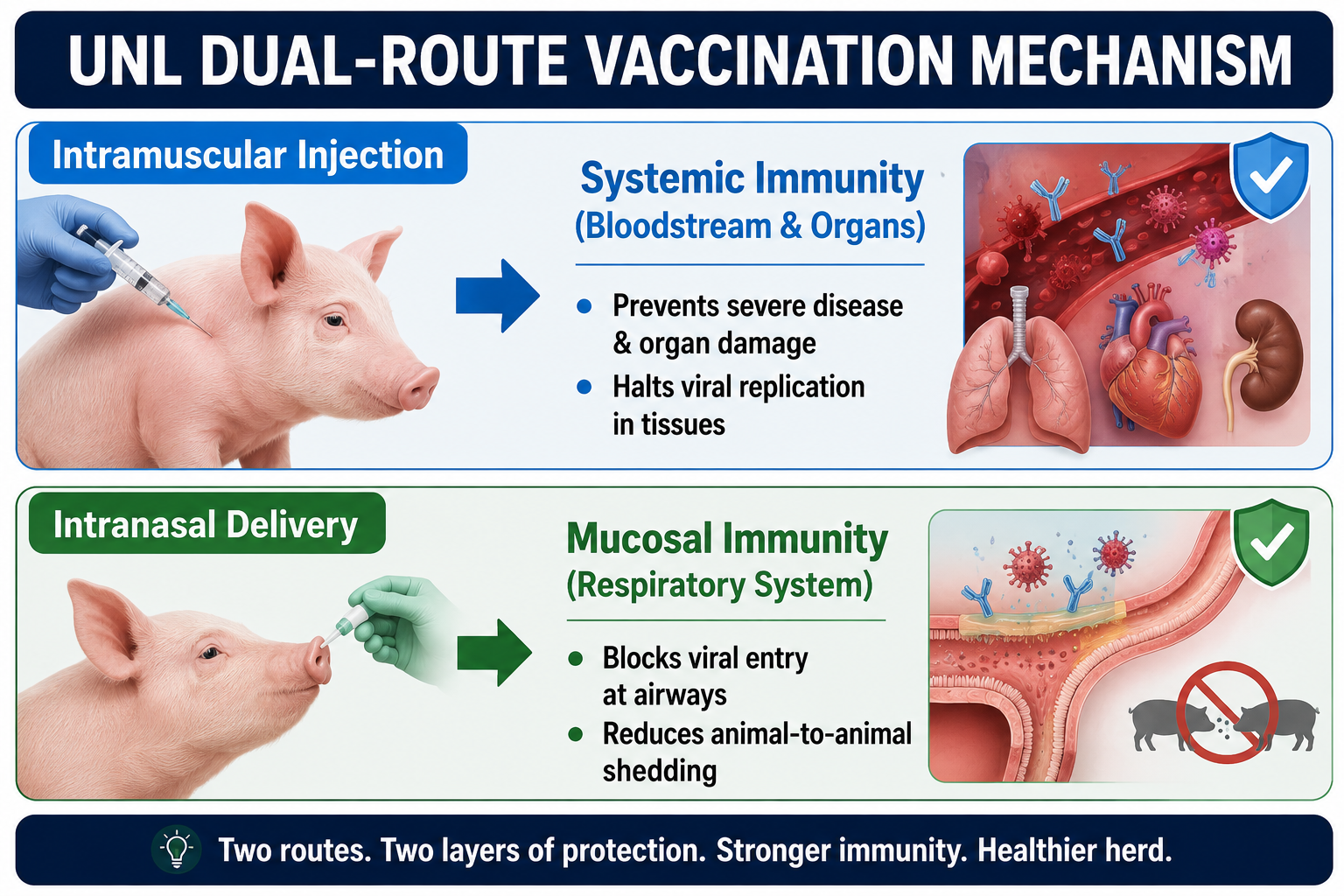
Led by Dr. Eric Weaver, director of the Nebraska Center for Virology and professor of biological sciences, alongside postdoctoral fellows Dr. Joshua Wiggins and Dr. Adthakorn Madapong, the team set out to construct a vaccine capable of halting both systemic illness and viral transmission.
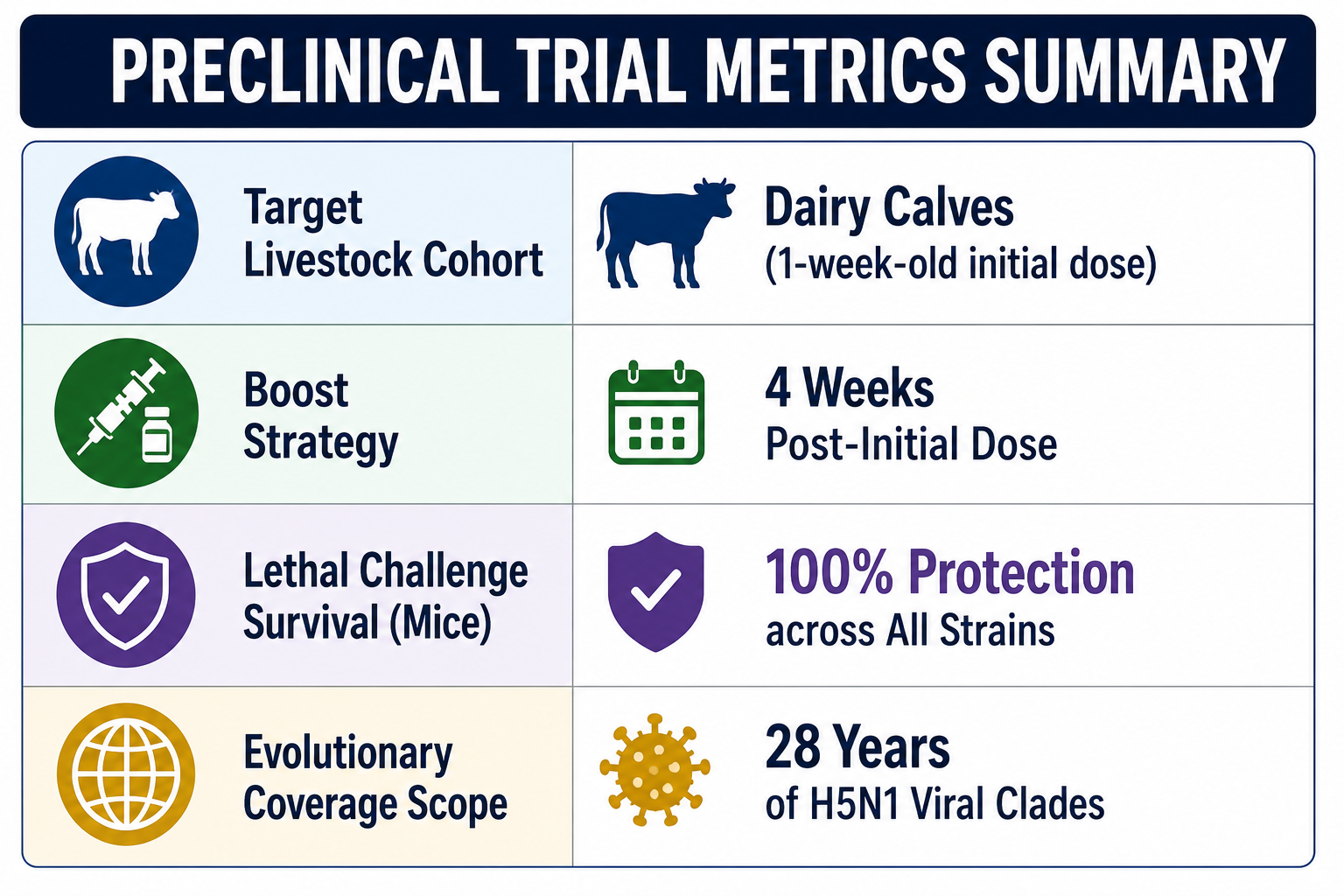
Unlike conventional strain-specific vaccines, the UNL platform utilizes a consensus-based approach incorporating 28 years of H5N1 viral evolution. By targeting ancestral genetic sequences shared across lineages, the vaccine triggers broad immunity effective against historical variants and emerging strains like clade 2.3.4.4b.
“The idea was that if we put it intramuscularly, we can prevent it from spreading in the body, and then a mucosal aspect, intranasally, would prevent it from spreading from animal to animal.”
— Dr. Eric Weaver, Lead Researcher & Director, Nebraska Center for Virology
Preclinical Results: Complete Protection in Calves and Mice
During trials conducted with the Nebraska Animal Care Team, dairy calves were vaccinated at one week of age and given a booster four weeks later.
-
Complete Protection: Preclinical mouse models exposed to lethal doses across diverse H5N1 strains achieved 100% survival.
-
Robust Neutralization: In vaccinated dairy calves, the vaccine induced high titers of neutralizing antibodies in both systemic circulation and nasal mucosa without causing adverse side effects.
-
No Licensed Alternatives: Currently, zero USDA-licensed H5N1 vaccines exist for cattle, leaving livestock producers vulnerable to severe agricultural disruptions.
Agricultural and Public Health Implications
Since 2022, H5N1 outbreaks have forced the culling of over 166 million commercial birds in North America. The virus’s spillover into dairy cattle in early 2024 marked a pivotal cross-species jump, subsequently infecting over 1,000 dairy herds and causing mild to moderate illness in approximately 70 agricultural workers.
By inoculating dairy herds, the UNL vaccine addresses two critical vulnerabilities:
1. Shielding Farm Operations from Economic Loss
While H5N1 mortality in cattle is relatively low, infected cows experience sudden drops in milk production, mastitis, and prolonged lethargy. Economically viable vaccination protects dairy margins and stabilizes milk supply chains.
2. Cutting Off Pandemic Evolutionary Pathways
Continued circulation in mammals gives H5N1 opportunities to accumulate mutations that could facilitate sustained human-to-human transmission. Blocking replication in cattle cuts off a primary viral reservoir.
“We’d like to have a vaccine for the farm and the farmer, and everything shows that this would be an effective vaccine platform for humans, as well. Influenza A viruses have never been an issue in cattle, but it is now, and it’s not going away.”
— Dr. Eric Weaver, Director, Nebraska Center for Virology
Next Steps: Commercialization, Funding, and Multi-Species Deployment
The Nebraska research team is actively seeking industry partnerships and federal grant funding to move the vaccine into field trials and commercial production. Designed with scalable viral vector manufacturing in mind, Dr. Weaver noted that the platform will be cost-effective for farm-wide deployment.
Future studies will evaluate whether a single-route delivery (intramuscular or intranasal alone) retains full efficacy to simplify field administration for agricultural producers

