


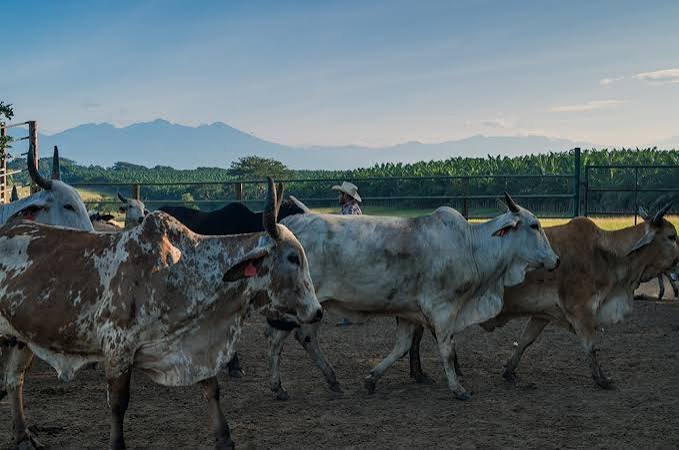
On August 11, 2026, U.S. Department of Agriculture (USDA) Secretary Brooke Rollins and leadership from the Department of Homeland Security (DHS) formally signed a landmark Memorandum of Understanding (MOU) at Moore Air Base in Texas. The cross-agency initiative expands border security and agricultural biosurveillance to interdict illicit cattle trafficking across the southern border and safeguard the U.S. livestock herd from foreign animal diseases (FADs).
Key Framework & Operational Scope of the MOU
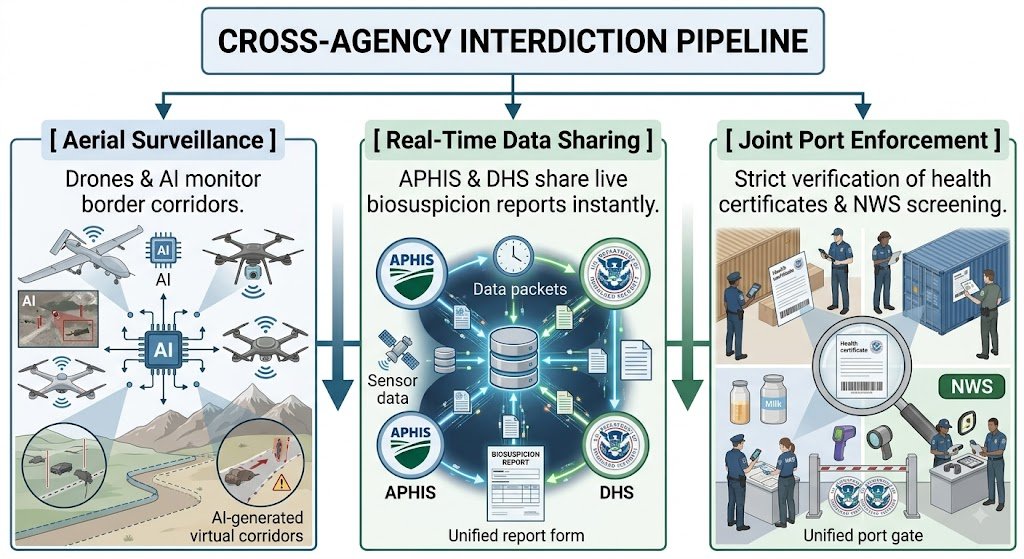
The MOU establishes a coordinated defense network between USDA Animal and Plant Health Inspection Service (APHIS) inspectors and DHS border enforcement agents:
-
Next-Gen Border Interdiction: Deployment of Unmanned Aircraft Systems (UAS) and Artificial Intelligence (AI) models to detect illicit herd movements at, between, and within border ports of entry.
-
Real-Time Data Fusion: Immediate, cross-agency sharing of actionable biosurveillance data and animal movement tracking.
-
Research Partnerships: Joint development of rapid screening and pest-detection technologies in collaboration with DHS Centers of Excellence.
-
Import & Traceability Enforcement: Tighter coordination with Mexican agricultural authorities to ensure only fully documented, health-certified livestock enter approved U.S. entry ports.
The Scale of the Illicit Trade
USDA estimates reveal the immense scope of illegal livestock trafficking moving northward through Central America and Mexico:
Metric |
Estimated Volume / Impact |
Annual Volume Smuggled |
~800,000 head of cattle annually moving from Central America into Mexico |
Illicit Market Value |
~$320 million in unmonitored black-market trade |
Regulatory Gap |
Smuggled animals completely bypass state sanitary inspections, quarantine periods, and official ear-tag traceability systems |
Biosecurity Threats to the U.S. Herd
The primary catalyst for this emergency intervention is the rising vector threat along northern migration corridors:
1. Re-emergence of New World Screwworm (NWS)
New World screwworm (Cochliomyia hominivorax)—a parasitic fly whose larvae feed on living flesh of warm-blooded animals—is endemic in parts of Central America. Smuggled cattle carry larvae past quarantine lines, driving the pest northward through Mexico and threatening to breach the U.S. southern border.
2. Bypassing Traceability & Vaccination Protocols
Untracked cattle lack documentation for Bovine Tuberculosis (bTB), Brucellosis, and Foot-and-Mouth Disease (FMD). If an infected, untracked animal enters a commercial feedlot or processing line, tracing contacts becomes virtually impossible, threatening systemic contagion.
Economic Implications for American Livestock Producers
-
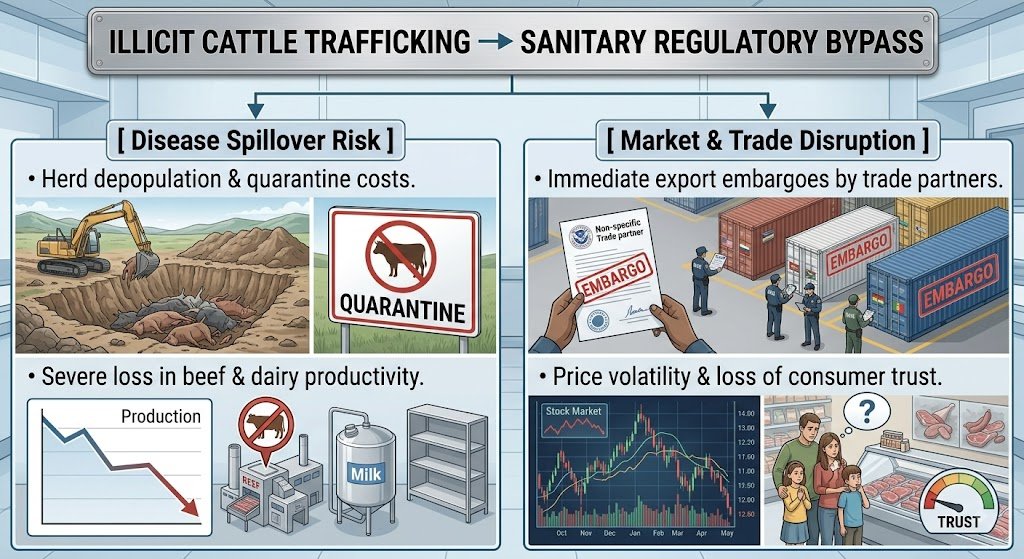
Catastrophic Outbreak Costs: An outbreak of a foreign animal disease or screwworm infestation in the U.S. herd could trigger widespread movement bans, mandatory herd depopulation, and hundreds of millions of dollars in containment costs.
-
Export Market Closure: Major foreign buyers (such as Japan, South Korea, and China) maintain strict sanitary standards. A confirmed case of a major FAD tied to border breach could result in immediate, multi-billion-dollar trade embargoes on U.S. beef exports.
-
Market Distortion: Black-market cattle dilute legitimate livestock valuations, while domestic producers shoulder the heavy regulatory and financial burden of maintaining biosecurity compliance.
-
Producer Organization Stance: Livestock groups, including R-CALF USA, have commended the MOU as a critical initial step but continue to advocate for strict border scrutiny to prevent smuggled animals—or beef processed from them—from infiltrating the domestic supply chain.

