


At the World Pork Expo (WPX), Dr. Megan Inskeep (Technical Services Veterinarian at Merck Animal Health) addressed the evolving operational and health landscapes facing modern swine producers.
Her insights focus on two key areas transforming herd management: tailored protocols for Mycoplasma hyopneumoniae-negative (M. hyo-negative) herds and the operational advantages of needle-free intradermal vaccination technology.
1. Tailored Vaccination Strategies for Myco-Negative Herds
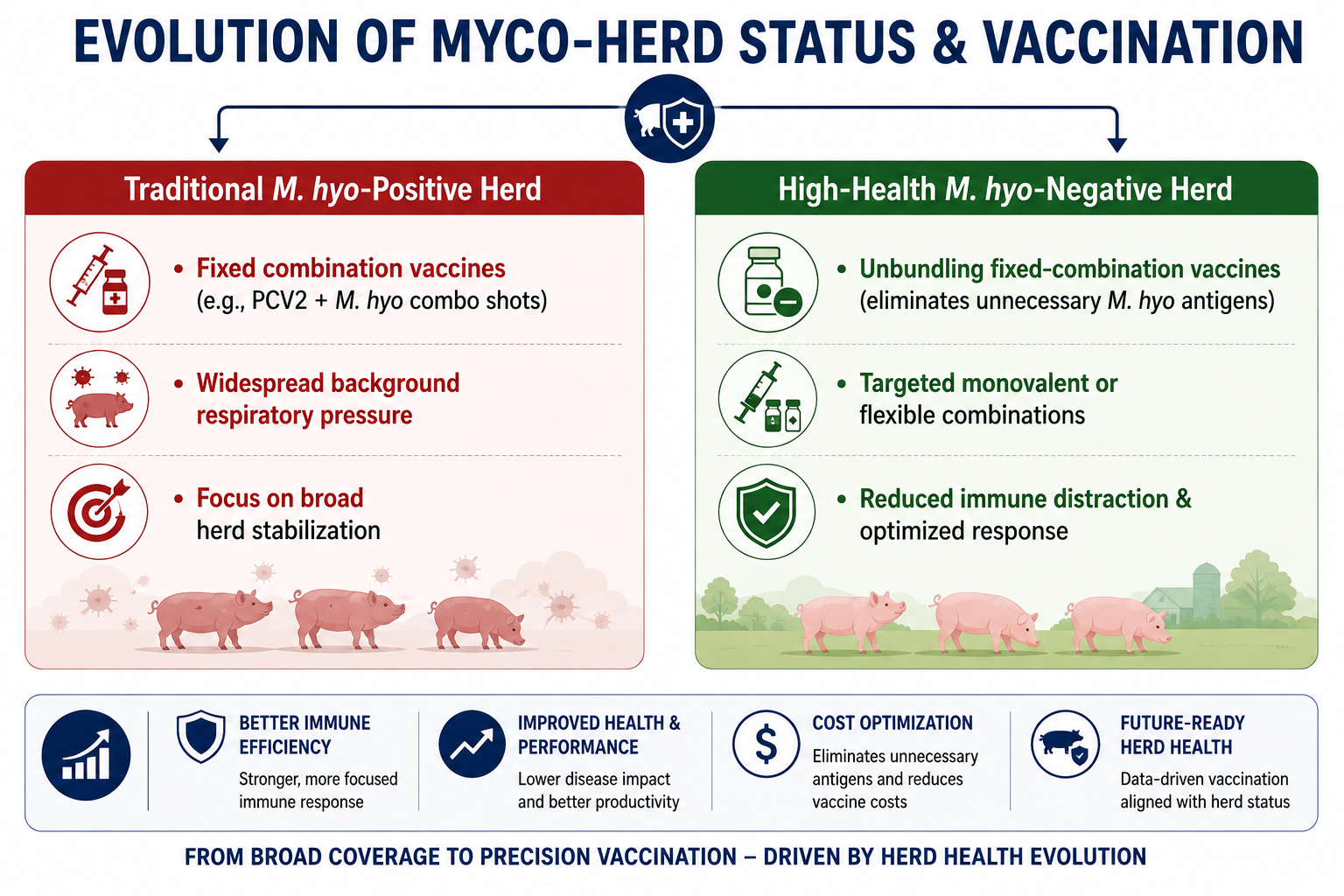
As more commercial operations successfully eliminate Mycoplasma hyopneumoniae (M. hyo) to create high-health, M. hyo-negative herds, traditional combination vaccination protocols need adjustment.
Key Considerations for M. hyo-Negative Operations:
-
Unbundling Fixed Combos: In conventional herds, combination vaccines (such as PCV2 + M. hyo) streamline labor. However, in M. hyo-negative herds, continuing to inject M. hyo antigens is unnecessary and adds extra cost.
-
Targeted Immunization: Transitioning to monovalent or tailored vaccines—such as standalone PCV2 (Porcine Circovirus Type 2) or Lawsonia intracellularis (Ileitis) coverage—allows veterinarians to customize protection without exposing negative herds to unneeded bacterial antigens.
-
Preserving Herd Status: Customizing vaccine protocols reduces the risk of diagnostic confusion (seroconversion from vaccination vs. field exposure) and helps maintain high biosecurity standards.
2. The Operational & Immunological Benefits of Needle-Free Intradermal Vaccination
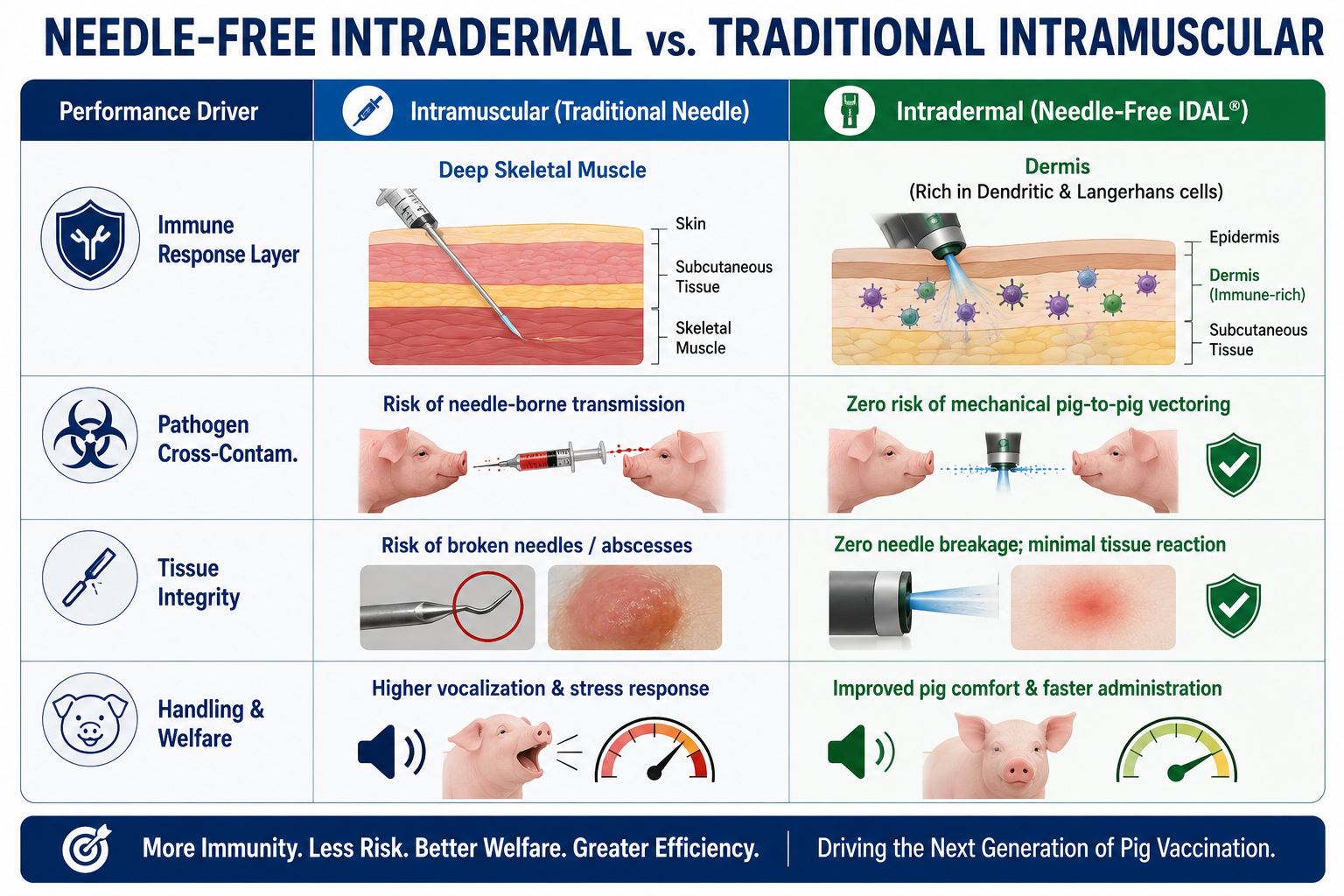
Dr. Inskeep also highlighted the growing industry adoption of needle-free intradermal vaccination systems (such as Merck’s IDAL® platform), which deliver small, precise doses directly into the dermal layer of the skin rather than deep muscle tissue.
Core Advantages:
-
Targeted Antigen Delivery: The dermal layer is densely populated with Langerhans cells and dendritic antigen-presenting cells (APCs). Intradermal delivery triggers a robust, rapid immune response using a fraction of the liquid volume (0.2 mL vs. 1.0 – 2.0 mL intramuscularly).
-
Biosecurity & Disease Containment: Eliminating needles removes a primary vector for mechanical cross-contamination of systemic pathogens—such as PRRSV (Porcine Reproductive and Respiratory Syndrome Virus) and Streptococcus suis—between co-housed pigs.
-
Pork Quality & Food Safety: Needle-free administration eliminates the risk of broken needles in pork carcasses and prevents deep-muscle abscesses or trim losses at the processing plant.
-
Animal Welfare & Worker Safety: Intradermal administration reduces pig stress, vocalization, and operator risk from accidental self-injection.
Summary Takeaway for Producers
As swine health challenges become more complex and herd health statuses diversify, one-size-fits-all vaccination schedules are no longer ideal. Leveraging targeted antigen selection for M. hyo-negative animals alongside needle-free intradermal delivery allows swine producers to improve disease protection, reduce herd stress, and maximize labor efficiency.

