


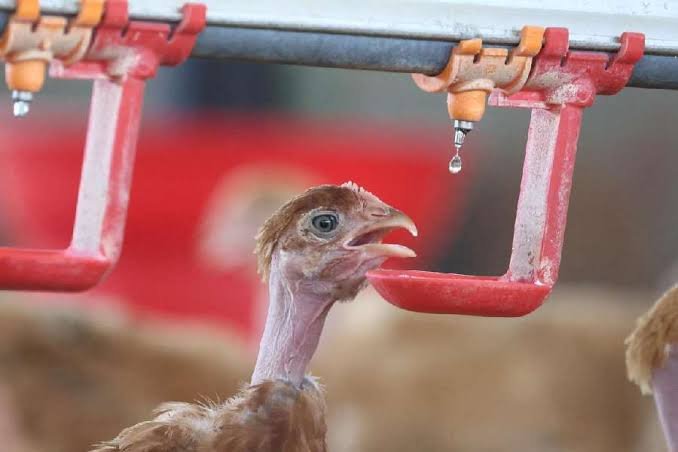
France’s exceptional summer heatwave has produced an unusual secondary crisis for the livestock sector: rendering plants have struggled to process the surge in poultry carcasses generated by heat-related mortality, creating collection backlogs, severe odor problems and pressure on local authorities.
The episode is significant not simply because of the number of birds lost, but because it demonstrates how extreme weather can propagate through the livestock value chain—from animal welfare and mortality to carcass collection, rendering, waste management, environmental controls and local communities.
According to Le Monde, between 2.5 million and 3 million poultry died in western France during the late-June heatwave, while Akiolis reported collecting 10 times its normal volume of poultry carcasses during the week of June 22 in parts of western France.
The French Ministry of Agriculture independently confirmed that intense heat accelerates carcass degradation, particularly in poultry, creating additional degraded material that can slow rendering processes and generate delays in collection and treatment.
Crisis Began With Extreme Heat—But Did Not End on the Farm
France’s late-June heatwave was exceptional in its early timing, intensity and geographic reach.
France’s public-health agency reported that the heatwave from June 17 to July 2 affected 92 departments, representing 98.5% of mainland France’s population. At least 5,764 excess deaths from all causes were estimated during affected days, a record-high heatwave excess mortality figure since 2003, although below the 2003 heatwave level.
For livestock, the consequences were immediate. The French Agriculture Ministry warned on June 25 that the heat episode was exceptional in intensity and could significantly affect animal health and welfare, particularly in vulnerable animals.
Poultry proved particularly vulnerable because of their limited ability to dissipate body heat under extreme environmental conditions. The result was mass mortality concentrated over a short period.
And that created a second problem: What happens when thousands—or millions—of carcasses need to be collected simultaneously?
2.5–3 Million Poultry Deaths in Western France
According to the French poultry industry organisation Anvol, approximately 2.5 million to 3 million poultry died in western France during the heatwave.
The losses were concentrated particularly in Brittany and Pays de la Loire, two of France’s major poultry-producing regions. Le Monde reported that approximately 6,600 tonnes of poultry died in Brittany alone. The scale becomes clearer when translated into daily logistics.
A rendering network normally operates around expected mortality volumes and established collection schedules. A sudden several-fold increase can overwhelm:
Farm → collection truck → temporary storage → rendering plant → processing line → recovered products
If any one of these nodes becomes constrained, carcasses begin accumulating upstream.
Akiolis Reported 10× Normal Carcass Volumes
The most striking operational figure comes from Akiolis. The company told Le Monde that during the week of June 22, it collected approximately 10 times more chicken carcasses than normal in western France, particularly from major poultry-producing departments including Sarthe and Mayenne.
Volumes also increased substantially in northeastern France. This illustrates an important characteristic of climate-driven livestock shocks: The problem is not necessarily annual capacity. It is peak-event capacity.
A rendering plant may have sufficient annual processing capability under normal operating conditions but still become overwhelmed when an extreme weather event generates several times the normal carcass volume within days.
Why Poultry Carcasses Created a Rendering Bottleneck
Rendering is an industrial process that converts animal by-products and carcasses into usable materials. The process described by Akiolis involves:
Grinding → cooking → pressing → separation
The process separates fats from protein-rich material and other solids. The recovered materials can enter several downstream markets, including:
-
animal-feed applications where legally permitted
-
pet-food ingredients
-
biofuels
-
industrial uses
-
cement-furnace fuel
Le Monde reported that the unusually high proportion of poultry material itself created an operational problem because poultry carcasses have different physical characteristics from more bony materials. Akiolis said that processing predominantly poultry material significantly slowed plant throughput.
This is an important engineering lesson: Rendering capacity is not simply measured in tonnes per day. Material composition matters.
Trucks Became Temporary Storage Facilities
The consequences were visible outside rendering plants. Le Monde reported that dozens of trucks containing hundreds of tonnes of carcasses waited at a rendering facility in the Orne region. Some reportedly remained there for up to 15 days.
Although the trucks were sealed, they were not refrigerated, meaning that carcasses continued decomposing under temperatures approaching 40°C.
The resulting odors became a major problem for nearby communities. This transforms an agricultural mortality event into a local environmental and public-administration issue.
Odor Became a Community Crisis
Residents in several French communities reported severe odors. The affected locations included:
-
Agen
-
Mortagne-au-Perche
-
Plouvara
In Agen, residents launched a petition seeking measures to control and reduce odors, while local government officials demanded greater action. Le Monde reported that one local association received more than 400 reports from residents during July relating to odor problems.
This is significant for the livestock industry because rendering plants traditionally operate as an important circular-economy infrastructure layer that remains largely invisible to the public when functioning normally. During a capacity shock, that invisibility disappears.
Approximately 8,000 Tonnes Required Alternative Disposal
The scale of the disruption prompted the French government to permit exceptional disposal measures. According to the Agriculture Ministry, approximately 8,000 tonnes of degraded materials or animal carcasses across France had been directed to non-hazardous waste storage facilities since June.
This should not be interpreted as a normal replacement for rendering. It was an emergency response to exceptional processing constraints.
France’s regional agricultural authorities similarly reported that the heatwave had saturated collection and rendering capacity and could produce critical delays, prompting procedures allowing exceptional on-farm burial under strict conditions.
The Infrastructure Question: Is Rendering Capacity Climate-Ready?
The French experience raises a broader strategic question for Europe and other livestock-producing regions: Should rendering capacity be designed around average mortality—or extreme mortality events?
Historically, rendering infrastructure can be optimised around predictable livestock mortality flows. Climate change challenges that assumption.
Extreme heat can generate: large mortality + geographic concentration + simultaneous collection demand + accelerated decomposition.
That combination is fundamentally different from normal operating conditions.
Analyst View: Rendering Is Becoming Part of Climate-Resilient Livestock Infrastructure
The French heatwave should be treated as an important warning for intensive livestock markets worldwide. The key lesson is not merely that poultry are vulnerable to extreme heat.
It is that: A climate shock can overwhelm the infrastructure responsible for dealing with the consequences of animal mortality.
The French government has already recognised the issue. Its guidance specifically acknowledges that heat accelerates carcass degradation and can reduce rendering capacity, while regional authorities have introduced emergency procedures when collection and treatment capacity becomes saturated.
For the global animal-health sector, this points toward a new investment equation:
Heat-resilient farms + predictive animal-health technology + surge-capable rendering + emergency carcass logistics
will increasingly become components of livestock climate resilience.
The French episode therefore deserves attention not as an isolated odor controversy, but as an early example of what may become a recurring infrastructure challenge as extreme heat becomes more frequent and intense.
Key Data at a Glance
| Indicator | 2026 France heatwave impact |
|---|---|
| Poultry deaths in western France | 2.5–3 million |
| Poultry deaths in Brittany | ~6,600 tonnes |
| Akiolis carcass collections, week of June 22 | ~10× normal volume |
| Maximum reported truck waiting period | Up to 15 days |
| Animal material/carcasses diverted to non-hazardous waste facilities | ~8,000 tonnes since June |
| Departments affected by June 17–July 2 heatwave | 92 |
| Mainland French population exposed | 98.5% |
| Estimated excess deaths during affected heatwave days | 5,764 |
| Peak temperatures in affected regions | >40°C |

