


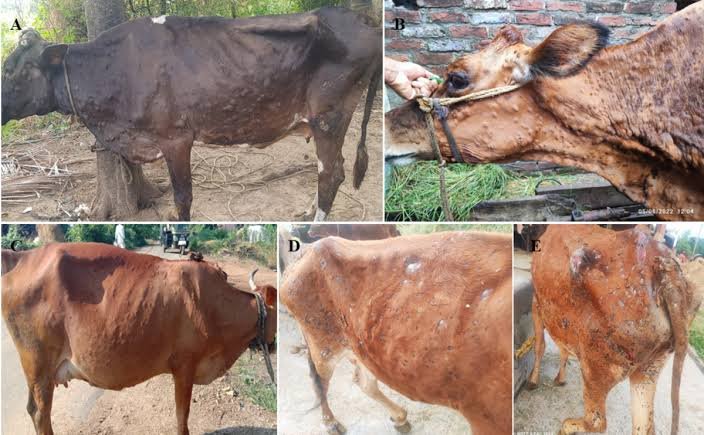
State veterinary authorities in Himachal Pradesh have mobilized emergency containment protocols following confirmed re-emergence of Lumpy Skin Disease (LSD) across the Solan and Sirmaur districts.
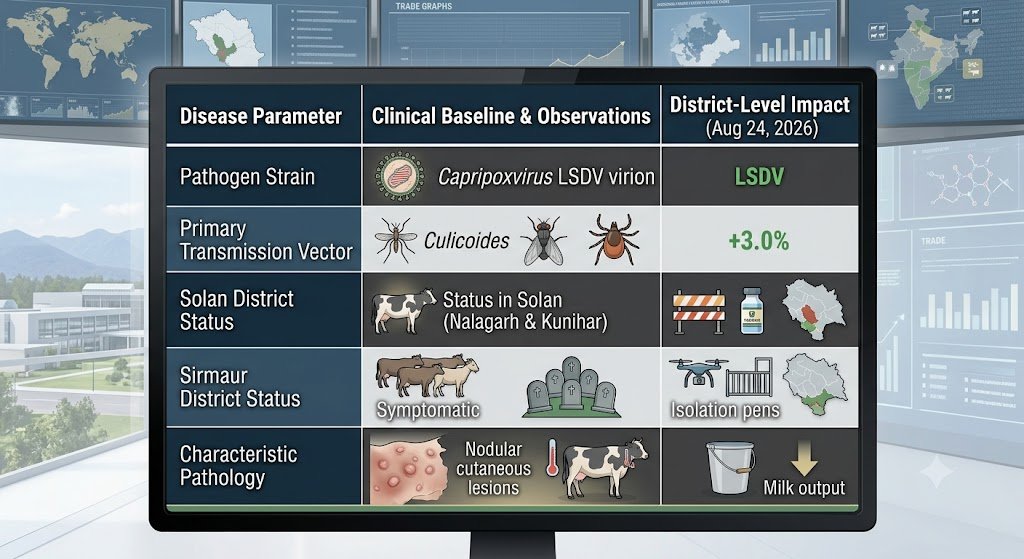
The Animal Husbandry Department has confirmed 40 active bovine infections across the Nalagarh and Kunihar blocks of Solan district. Simultaneously, epidemiological surveillance in neighboring Sirmaur district reveals symptomatic presentation in 1,039 animals, with 19 fatalities recorded over the past week.
The sudden re-emergence of the Capripoxvirus strain breaks a period of localized control, highlighting the vulnerability of unvaccinated youngstock and herds with waning post-vaccination immunity.
1. Outbreak Dynamics & Clinical Profile
The outbreak presents significant risks to dairy production due to the virus’s rapid mechanical transmission via arthropod vectors (mosquitoes, biting flies, and Rhipicephalus ticks).
-
Pathology: Infected cattle show high fever, cutaneous nodules (20–50 mm in diameter) covering the mucosal membranes and skin, severe enlarged lymph nodes, and acute drop in milk yield.
-
Vector Risk: Monsoonal humidity across the foot-hills of Solan creates high vector density, increasing the risk of transmission to unvaccinated herds in adjacent agricultural zones.
2. Emergency Response & Containment Strategy
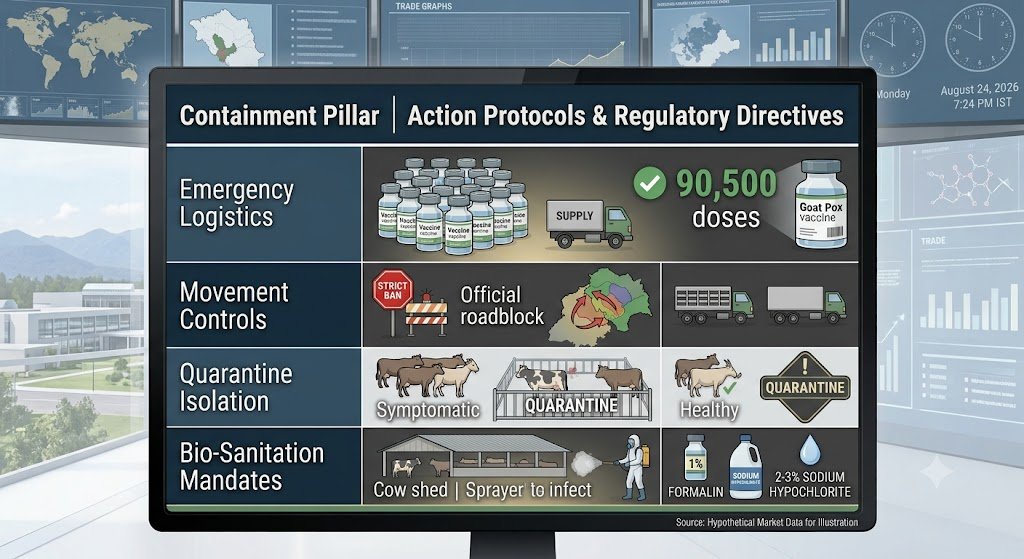
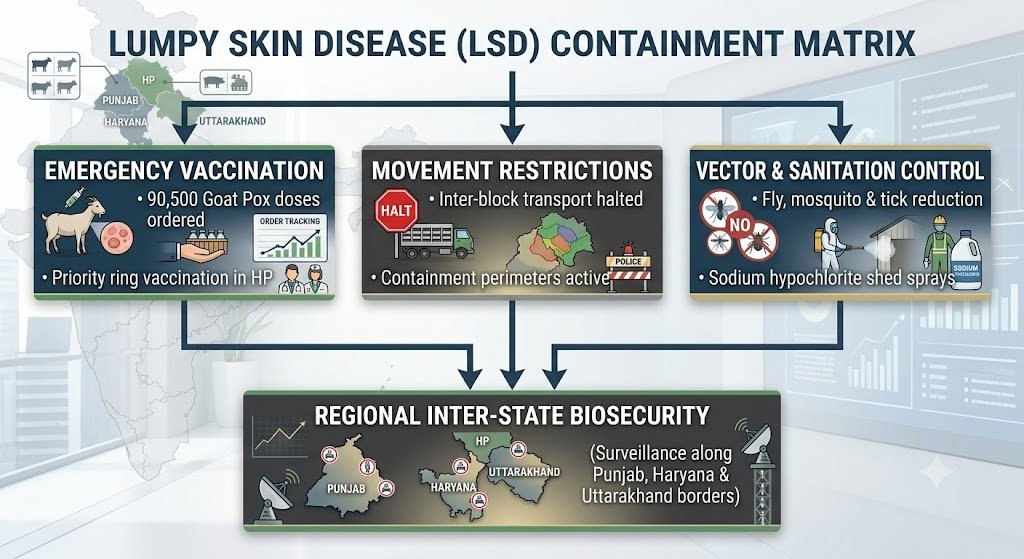
To prevent a repeat of the nationwide 2022–2023 epizootic—which affected millions of cattle across India—the Himachal Pradesh Department of Animal Husbandry launched a targeted containment program:
3. Regional Inter-State Risk & Dairy Market Impact
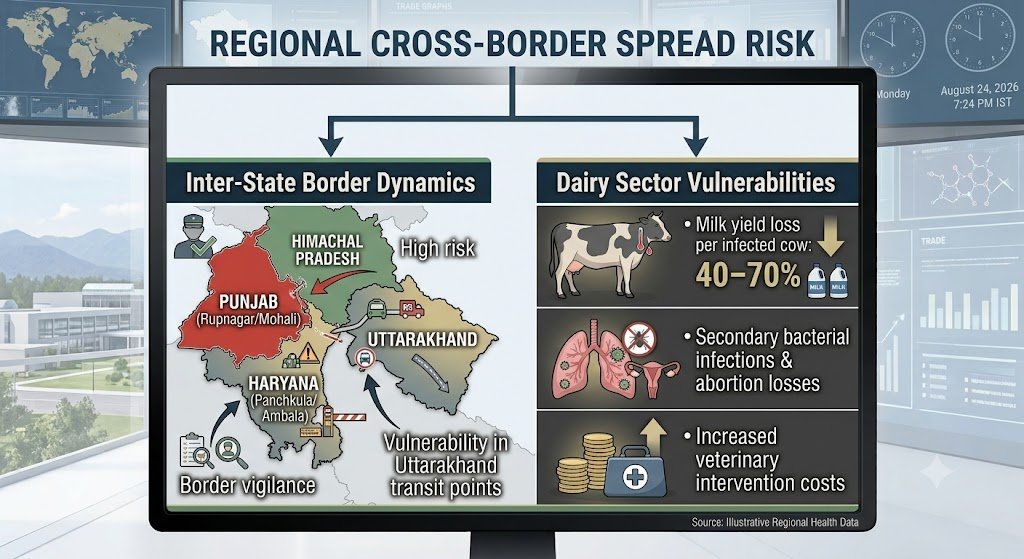
The re-emergence of LSD in Solan is particularly critical due to its geographic proximity to major agricultural corridors:
-
Dairy Cooperatives Exposure: Smallholder and commercial dairy farmers across Solan and Sirmaur face direct economic losses from reduced milk collection and long recovery periods (4 to 6 weeks per surviving cow).
-
Inter-State Border Controls: Neighboring animal husbandry departments in Punjab, Haryana, and Uttarakhand have been advised to increase border monitoring and check post vigilance to stop illegal cattle transit from the infected hill zones.
Strategic Summary & Recommendations
The re-emergence of LSD in Himachal Pradesh highlights the necessity of maintaining annual booster vaccination coverage rather than relying solely on past herd immunity. Veterinary officials advise cattle owners to report early symptoms immediately, maintain vector control in cattle sheds, and isolate affected stock to contain the outbreak.
Regulatory & Institutional References
-
Department of Animal Husbandry, Himachal Pradesh. (2026, August 24). Emergency Epizootic Advisory: Lumpy Skin Disease Surveillance in Solan and Sirmaur Districts. Government of Himachal Pradesh.
-
Directorate of Cold Chain & Biologics. (2026). Goat Pox Vaccine Supply and Ring-Vaccination Guidelines. Ministry of Fisheries, Animal Husbandry & Dairying, Government of India.
-
National Institute of High Security Animal Diseases (ICAR-NIHSAD). (2026). Diagnostic Protocols and Vector Management for Capripoxvirus Outbreaks.

 outbreak in Solan & Sirmaur, Himachal Pradesh INDIA. State orders 90,500 vaccine doses)