



NASDA and NASAHO seek a voluntary national emergency vaccination framework, potentially beginning with pilot programmes in participating states, as H5N1 continues to circulate in US dairy herds.
Pressure is mounting on the US Department of Agriculture (USDA) to establish a framework permitting voluntary vaccination of dairy cattle against highly pathogenic avian influenza H5N1.
The National Association of State Departments of Agriculture (NASDA) and the National Assembly of State Animal Health Officials (NASAHO) have urged the federal government to authorise a voluntary national emergency vaccination framework. Their request was submitted in a letter to Agriculture Secretary Brooke Rollins on 5 November and was highlighted in industry reporting published on 20 November 2026.
The organisations are advocating a programme that could initially involve willing states and participating dairy producers.
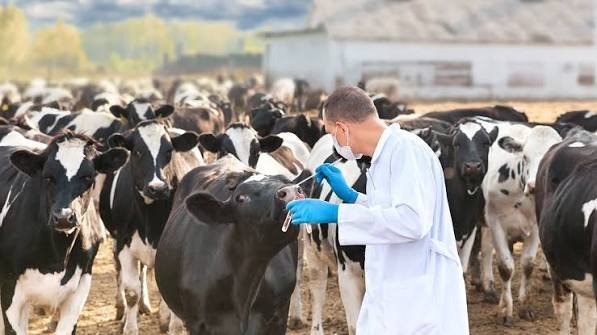
Why dairy cattle vaccination is becoming a priority
H5N1’s detection in dairy cattle has changed the traditional understanding of avian influenza risk. While poultry remains a major host population, the spread of H5N1 among dairy cattle has created additional challenges for animal-health authorities and the dairy industry. The continuing detection of infections in cattle herds has increased interest in whether vaccination could become an additional disease-control instrument.
The proposed vaccination framework
The state organisations are advocating a voluntary approach rather than an immediate compulsory nationwide vaccination programme.
A pilot model could allow participating states to evaluate vaccination under defined surveillance and reporting arrangements. Important components would include:
1. State participation – Willing state veterinary authorities could participate in the programme and coordinate with federal agencies.
2. Vaccine authorisation – USDA would need to establish the relevant regulatory and emergency-use framework for suitable vaccine products.
3. Surveillance – Vaccinated herds would require continued monitoring to identify infection and evaluate vaccine performance.
4. Traceability – Animal identification and movement records would remain essential for understanding disease transmission.
5. Trade considerations – The effects of vaccination on international trade and trading-partner requirements would need to be assessed.
The animal-health market opportunity
A voluntary dairy-cattle vaccination programme could create a significant opportunity for veterinary biological manufacturers. Potential areas include:
-
H5N1 vaccine research and manufacturing
-
Vaccine formulation and adjuvant development
-
Diagnostic assays
-
Serological surveillance
-
Milk testing
-
Veterinary laboratory services
-
Cold-chain logistics
-
Farm-level disease monitoring
Leading animal-health companies with livestock biological capabilities, including Zoetis, MSD Animal Health, Boehringer Ingelheim, Elanco, Ceva and HIPRA, are relevant to this developing market.
However, a potential vaccination programme should not be confused with a confirmed commercial market. Regulatory authorisation, vaccine availability, efficacy and trade acceptance will determine its actual scale.
What are the challenges?
The introduction of vaccination against H5N1 in dairy cattle would involve several scientific and operational considerations. These include:
-
Whether the vaccine provides adequate protection against relevant circulating strains
-
Whether vaccination reduces infection, clinical disease or viral shedding
-
How vaccinated animals will be distinguished from naturally infected animals
-
How milk surveillance will be maintained
-
How vaccination will affect movement and trade policies
-
Whether a voluntary programme achieves sufficient coverage to influence transmission
Vaccination would need to complement, rather than replace, farm biosecurity and disease surveillance.
What happens next?
The key development to watch is USDA’s response to the proposal and whether it establishes a pilot framework with defined eligibility, surveillance and reporting requirements.
For the dairy industry, this is an important policy debate with potential implications for animal welfare, production continuity, veterinary medicine and international trade. For the animal-health industry, it represents a possible new vaccine-development and deployment opportunity, but one that remains dependent on regulatory and scientific validation.

