


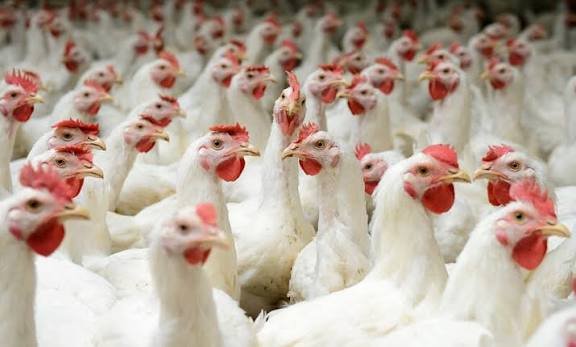
China’s white-feather broiler industry is entering a tighter supply phase, with commercial day-old chick prices climbing to a new 2026 high as restricted access to overseas breeding stock continues to work its way through the poultry production cycle.
According to data reported by Chinese market sources, the national white broiler chick price increased from approximately ¥2.84 per chick in early August to ¥3.51 by mid-August, a 23.59% increase. The move occurred during what is traditionally a weaker seasonal period for broiler chick demand, making the price acceleration particularly notable.
The increase also reflects a much larger upstream story: constraints at the grandparent-stock level can take months to propagate through parent-stock and commercial-broiler production.
Commercial Chick Prices Rise 23.59% in August
Data from 卓创资讯 (Mysteel/industry reporting) show that China’s white-feather broiler chick price rose from ¥2.84/chick to ¥3.51/chick during the first half of August.
Indicator |
Latest data |
|---|---|
Early-August chick price |
¥2.84/chick |
Mid-August price |
¥3.51/chick |
August increase |
23.59% |
First-half August average |
¥3.22/chick |
H1 2026 average |
¥2.89/chick |
H1 2026 YoY increase |
12.89% |
Jan–July reported average increase |
~42.7% YoY |
The first-half August average of ¥3.22/chick was itself about 30% above the previous month, according to 卓创资讯. Other market data show the same direction: the national average rose from ¥2.70/chick on August 3 to ¥3.05 on August 8, before reaching ¥3.38 on August 11.
The precise percentage differs depending on the starting date and data series, but the direction is unambiguous: white broiler chick prices have moved sharply higher in August.
France Became a Critical Bottleneck
The 2026 disruption was particularly linked to France, following highly pathogenic avian influenza restrictions.
According to Chinese industry reporting, grandparent imports were halted between January 1 and June 10, with imports resuming on June 11. Once the channel reopened, approximately 163,000 sets were imported in June, including 83,000 AA+ and Ross 308 birds in roughly half a month.
This illustrates the vulnerability created when a strategically important poultry genetics supply chain depends heavily on a limited number of international breeding sources. The impact is amplified because commercial broiler production cannot immediately replace lost genetic capacity.
China Is Responding With Domestic Genetics
There is an important countertrend. China has spent years developing domestic white-feather broiler genetics, reducing dependence on foreign breeding companies.
In June 2026, China exported 20,000 grandparent birds of its domestically developed Shengze 901 breed to Uzbekistan, in what China Daily described as the country’s first large-scale overseas shipment of white-feather broiler GP stock. The shipment was expected to generate parent stock capable of producing more than 120 million commercial broilers in Uzbekistan.
This is strategically important. China is moving from:
Imported genetics → domestic multiplication
toward: Domestic genetics → domestic production → international genetics exporter
That transition could eventually reduce China’s exposure to international breeding-stock disruptions.
Domestic Breeds Are Already Gaining Ground
The 2026 data show that domestic genetics are playing a larger role.
During January–May, Chinese reports indicate that three major domestic lines—Shengze 901, WOD188 and Guangming 2—accounted for approximately 69.4% of grandparent updates, while imported lines accounted for approximately 30.6%.
Another H1 industry review put the major domestic and imported breeding structure into context:
| Breed/line | H1 2026 share of grandparent updates |
|---|---|
| Cobb | 33.51% |
| Shengze 901 | 24.94% |
| WOD188 | 15.73% |
| Guangming 2 | 9.46% |
| AA+ + Ross 308 | 16.36% |
The exact shares differ across reporting periods and datasets, but the strategic trend is consistent: domestic genetics are becoming increasingly important in China’s white-broiler breeding pyramid.
Why Commercial Chick Prices Are Responding Now
The current price increase reflects the interaction of three forces.
1. Restricted upstream supply – The earlier reduction in grandparent-stock imports has reduced the biological capacity available downstream.
2. Strong parent-stock demand – Chinese parent-stock chick sales reached approximately 42.32 million sets during H1 2026, up 10.29% year on year, according to industry data. June alone reached approximately 7.62 million sets, up 10.53% year on year.
3. Seasonal restocking – The first half of August coincided with seasonal restocking demand, including preparation for the Mid-Autumn and National Day consumption periods.
With white broilers reaching market weight in roughly 42 days, farmers can adjust production relatively quickly, but the biological supply of chicks cannot expand at the same speed as a sudden increase in placement demand.
The “42-Day” Biology Matters
White-feather broiler production is unusually efficient and standardised. Modern commercial broilers can reach market weight in approximately 42 days, according to peer-reviewed research on China’s white-feather broiler industry.
But the genetic pyramid operates on a much longer timescale. A disruption in:
grandparent imports today
may affect: parent availability months later
and ultimately: commercial chick supply later still.
This lag explains why the poultry cycle can experience apparently sudden shortages even after the original supply disruption has already passed.
Chick Price Inflation Is Already Showing Up in Company Revenues
The market move is also visible in listed poultry companies. In July:
-
Yisheng Stock reported white-feather broiler chick sales revenue of approximately ¥214 million, up 112.79% YoY.
-
Minhe reported commercial chick sales revenue of approximately ¥77.29 million, up 86.86% YoY.
These numbers are important because they show that the current cycle is not simply a statistical movement in spot chick prices.
Higher chick prices are translating into materially higher upstream poultry-company revenue.
However, revenue growth should not be confused with equivalent profit growth because hatchery costs, parent-stock costs, feed and other inputs are also changing.
A Critical Cost Issue: Chicks Are Only One Part of the Equation
For broiler producers, higher chick prices do not automatically mean higher profitability.
Peer-reviewed research indicates that feed typically represents approximately 60–70% of variable production costs, while chick procurement represents roughly 16%. This means the industry’s profitability equation remains:
Chick price + feed price + mortality + live-bird price + processing economics
rather than chick price alone. A higher chick price can therefore be absorbed if broiler selling prices rise sufficiently, but margins can deteriorate rapidly if feed or downstream chicken prices fail to follow.
The Most Important Strategic Signal: Genetic Security
For the global poultry industry, the most important lesson may not be the ¥3.51 chick price. It is the vulnerability of the genetic supply chain.
China’s experience demonstrates that poultry genetics should increasingly be treated as strategic agricultural infrastructure. A country may have:
-
hatcheries,
-
feed mills,
-
farms,
-
processing plants,
-
cold storage,
but if access to elite breeding genetics is disrupted, the entire production pyramid can eventually become constrained. China is therefore pursuing a dual strategy:
Short term – Diversify and restore imported breeding-stock channels.
Long term – Develop domestic genetic lines and build independent breeding capacity.
The export of Shengze 901 GP stock to Uzbekistan demonstrates that the second strategy is moving beyond self-sufficiency toward international commercialisation.
Implications for India’s Poultry Industry
China’s experience has direct relevance to India. India remains heavily dependent on sophisticated breeding genetics and imported genetic material at the upper levels of the poultry pyramid.
The strategic lesson is not that India should eliminate international genetics. Rather, India should strengthen:
domestic breeding programmes + genetic diversity + biosecurity + import-source diversification + genomic selection.
The Chinese model shows the value of developing domestic lines that can compete on:
-
feed conversion ratio;
-
growth rate;
-
livability;
-
heat tolerance;
-
disease resilience;
-
breeder performance;
-
processing yield.

