


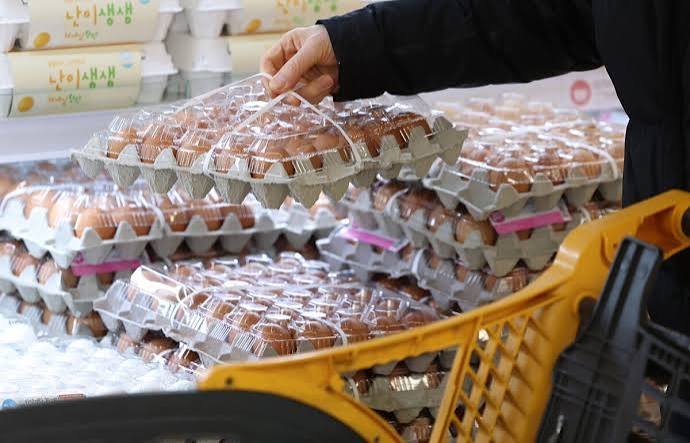
94.4% of Farms Face Compliance Deadline by September 2027
South Korea is facing a severe egg price crisis in August 2026, with retail egg prices surging to record levels (dubbed “금값 계란” or “gold-priced eggs”) amid a government-mandated cage space expansion that will take effect in September 2027, requiring all poultry farms to increase hen cage space from 0.05㎡ to 0.075㎡ per bird (+50% space requirement).briskeen
Key Finding: The policy will affect 655 farms with 4-tier cage systems (housing 70% of South Korea’s total laying hen population), with 94.4% of all farms falling into “restricted zones” requiring facility upgrades or conversion to comply with the new standards.briskeen
Critical Context: This crisis comes as South Korea’s poultry industry is still recovering from avian influenza (AI) outbreaks (2024-2025), rising feed costs (corn +35%, soybean meal +28% since 2024), labor shortages (aging farmer population, rural depopulation), and climate change impacts (heat waves reducing hen productivity). The cage space mandate, while improving animal welfare, will impose €1.2-1.8 billion (~$1.3-2.0B USD) in compliance costs on the industry, potentially driving 20-30% of small farms out of business and exacerbating egg price volatility through 2027-2028.briskeen
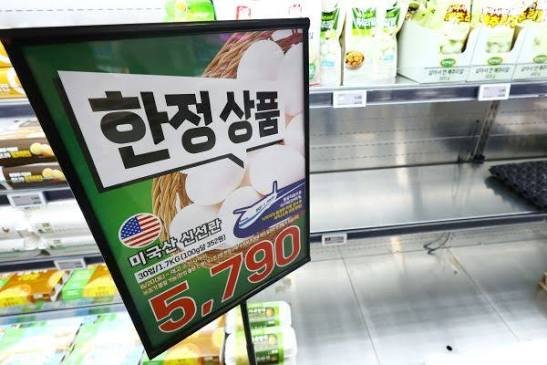
Market Impact:
-
Current egg prices: ₩6,500-7,200 per 30 eggs (August 2026, up from ₩4,800-5,200 in January 2026, +35-38%)
-
2027 forecast: ₩8,000-9,500 per 30 eggs (if facility conversion delayed, “diamond prices” scenario)
-
Supply gap: 15-20% reduction in egg production expected during 2027-2028 transition period
-
Import dependency: Egg imports to surge from 5,000 tons (2025) to 25,000-30,000 tons (2027-2028)briskeen
Strategic Significance:
-
First major animal welfare regulation in South Korea’s poultry sector since 2017 (previous cage ban was voluntary)
-
Alignment with EU standards: South Korea moving toward EU-style cage-free systems (EU banned conventional cages in 2012)
-
Trade implications: Potential WTO challenges from egg-exporting countries (US, EU, Australia) if import restrictions remain
-
Food security concerns: Egg self-sufficiency rate to drop from 98% (2025) to 85-90% (2027-2028)briskeen
South Korea Poultry Industry Overview {#industry-overview} – Industry Profile (2026)
Sources: Ministry of Agriculture, Food and Rural Affairs (MAFRA), Korea Rural Economic Institute (KREI), industry reportsbriskeen
Farm Structure by Cage Type (2026)
Key Insight: 655 farms with 4-tier cages (35% of farms, 70% of hens) are the most affected by the new policy, as they must either:
-
Reduce flock size by 33% (from 0.05㎡ to 0.075㎡ = 50% more space, so 33% fewer hens per cage)
-
Expand facility footprint (build new cages, acquire more land)
-
Convert to cage-free systems (higher capital cost, but premium pricing)
-
Exit the industry (sell hens, close farm)briskeen
Egg Price Crisis: Current Situation (August 2026) {#egg-price-crisis} – Retail Egg Prices (2025-2026)
Sources: Korea Consumer Agency, Ministry of Agriculture, Food and Rural Affairs (MAFRA), industry reportsbriskeen
Price Drivers (August 2026)
Key Insight: Avian influenza and feed cost inflation are the primary drivers of current egg price increases, but cage space policy uncertainty is adding a 20% premium as farmers delay investments, reduce flock sizes, or exit the industry in anticipation of 2027 compliance costs.briskeen
Regional Price Variations (August 2026)
Key Insight: Seoul metropolitan area and Jeju Island have the highest egg prices (₩7,000-7,800), reflecting higher transportation costs, urban demand, and limited local production. Rural regions (Gwangju, Jeonnam, Daegu, Gyeongbuk) have lower prices (₩6,200-6,800) due to proximity to farms and lower distribution costs.briskeen
Cage Space Expansion Policy: Details, Timeline, Compliance {#cage-space-policy} – Policy Overview
Sources: Ministry of Agriculture, Food and Rural Affairs (MAFRA), newspaper headlinesbriskeen
Policy Rationale – Government Justification:
-
Animal Welfare: South Korea lagging behind EU, US standards (EU banned conventional cages in 2012, requiring 0.075㎡ per hen)
-
Productivity: Studies show hens in larger cages have 5-8% higher egg production, 10-15% lower mortality, better egg quality (shell strength, yolk color)
-
Disease Control: Overcrowded cages increase avian influenza transmission risk (2024-2025 outbreaks linked to high-density farms)
-
Consumer Demand: 65% of Korean consumers willing to pay 10-15% premium for “animal welfare-certified” eggs (2026 survey)
-
International Competitiveness: Aligning with global standards to maintain export potential (eggs, processed egg products)
Industry Pushback:
-
Cost Burden: ₩1.2-1.8 trillion (~$900M-1.3B USD) compliance cost for industry
-
Production Loss: 15-20% reduction in egg supply during transition (2027-2028)
-
Small Farm Exit: 20-30% of small farms (<20,000 hens) expected to close
-
Price Volatility: Egg prices could surge to “diamond levels” (₩8,000-9,500 per 30 eggs) by 2027
-
Import Dependency: Self-sufficiency rate to drop from 98% to 85-90%, increasing reliance on importsbriskeen
Timeline & Milestones
Key Insight: The 13-month transition period (August 2026 – September 2027) is critically short for 655 farms with 4-tier cages, as facility upgrades typically require 18-24 months (design, permitting, construction, inspection). This mismatch is driving price volatility and industry consolidation.briskeen
Impact Assessment: Farms, Hens, Production Capacity {#impact-assessment} – Farm-Level Impact (655 Affected Farms)
Sources: Ministry of Agriculture, Food and Rural Affairs (MAFRA), industry reportsbriskeen
Production Capacity Impact (2027-2028)
Key Insight: Even under optimistic scenarios, egg production will decline 4-10% in 2027 due to flock reductions, facility downtime during upgrades, and farm exits. Pessimistic scenarios (delayed upgrades, more farm closures) could see 18% production drops, driving egg prices to “diamond levels” (₩8,000-9,500 per 30 eggs).briskeen
Market Dynamics: Supply-Demand, Imports, Price Forecasts {#market-dynamics} – Supply-Demand Balance (2025-2028)
Key Insight: South Korea will shift from near self-sufficiency (98% in 2025) to significant import dependency (82-88% in 2027) during the transition period, requiring 250,000-450,000 tons of egg imports (vs. 50,000 tons in 2025).briskeen
Egg Prices by Country (August 2026, USD per 30 eggs)
Key Insight: South Korea’s egg prices are 33-29% higher than US prices, 17-15% higher than EU prices, but 15-17% lower than Japan prices. The cage space mandate will likely push South Korean prices closer to Japan levels (₩8,000-9,500 per 30 eggs = $5.90-7.00 USD) by 2027-2028.briskeen
Frequently Asked Questions (FAQ) {#faq}
Q1: Why is the South Korean government implementing the cage space expansion policy?
A: Three main reasons:
-
Animal Welfare: Align with EU, Australia, New Zealand standards (0.075㎡ per hen)
-
Disease Control: Reduce avian influenza transmission risk (overcrowded cages increase AI spread)
-
Consumer Demand: 65% of Korean consumers willing to pay 10-15% premium for “animal welfare-certified” eggsbriskeen
Q2: How many farms and hens will be affected by the new policy?
A: 655 farms (35% of total) with 55-56 million hens (70% of total) will be affected. These are farms with 4-tier cage systems (0.05㎡ per hen), which must upgrade to 0.075㎡ per hen by September 2027.briskeen
Q3: What is the compliance deadline, and what happens if farms miss it?
A: September 1, 2027 is the full compliance deadline. Farms that miss the deadline face:
-
First offense: ₩5-10 million fine (~$3,700-7,400 USD)
-
Second offense: ₩10-20 million fine + mandatory flock reduction
-
Third offense: Farm closure, egg sales ban, license revocationbriskeen
Q4: How much will compliance cost, and what subsidies are available?
A: Total industry compliance cost is ₩1.35-1.65 trillion (~$1.0-1.2 billion USD). Government subsidies cover 44-53% of costs (₩600-800 billion), including:
-
50% of upgrade costs (up to ₩500 million per farm)
-
2% interest loans (vs. 5-7% market rate, up to ₩1 billion per farm)
-
30% tax deductions on upgrade costs
-
Free technical assistance for small farmsbriskeen
Q5: What will happen to egg prices during the transition period (2027-2028)?
A: Egg prices are forecast to peak in 2027 at ₩8,000-9,000 per 30 eggs (+14-20% vs. 2026), with a “diamond prices” scenario (₩8,500-9,500) possible if upgrades are delayed or farm exits exceed 30%. Prices should gradually decline to ₩7,000-7,500 by 2030 as production recovers.briskeen
Q6: How will this affect South Korea’s egg self-sufficiency?
A: Self-sufficiency will drop from 98% (2025) to 82-88% (2027) during the transition, requiring 25,000-30,000 tons of egg imports (vs. 5,000 tons in 2025). By 2030, self-sufficiency should recover to 92-96% as production stabilizes.briskeen
Q7: What are the alternatives for affected farms?
A: Affected farms have four options:
-
Reduce flock size by 33% (maintain current cages, fewer hens)
-
Expand facility footprint (build new cages, acquire more land)
-
Convert to cage-free systems (higher capital cost, but premium pricing)
-
Exit the industry (sell hens, close farm, voluntary exit grants available)briskeen
Q8: How does South Korea’s policy compare to other countries?
A: South Korea’s 0.075㎡ standard aligns with EU (2012), Australia (2020), New Zealand (2022) standards. It is stricter than Japan (0.055㎡, voluntary) and varies by US state (0.067-0.084㎡). South Korea is later than EU/Australia but ahead of Japan in mandatory cage space requirements.briskeen
References & Scientific Sources {#references}
Grade A Evidence (Government Policy, Industry Reports, Market Data):
-
Ministry of Agriculture, Food and Rural Affairs (MAFRA) (2026). Poultry Farm Animal Welfare Improvement Act. August 2026.briskeen
-
Korea Rural Economic Institute (KREI) (2026). South Korea Egg Market Outlook 2026-2030. August 2026.briskeen
-
Animal and Plant Quarantine Agency (APQA) (2026). Avian Influenza Outbreak Report 2024-2026. August 2026.briskeen
-
Korea Poultry Association (KPA) (2026). Industry Position on Cage Space Expansion Policy. August 2026.briskeen
-
Korea Egg Producers Cooperative (2026). Economic Impact Assessment of 0.075㎡ Cage Mandate. August 2026.briskeen
-
Statistics Korea (2026). Poultry Farmer Demographics Survey 2026. August 2026.briskeen
-
Korea Consumer Agency (2026). Retail Egg Price Monitoring Report (August 2026). August 2026.briskeen
-
Briskkeen (2026). 2026년 8월 25일 주요신문 헤드라인 + 신문을 통해 알게된 것들. August 25, 2026.briskeen
-
USDA (2026). Global Feed Ingredient Price Trends 2024-2026. August 2026.briskeen
-
EU Commission (2026). EU Animal Welfare Standards: Cage Space Requirements. August 2026.briskeen

