



The acquisition brings Antelligence’s veterinary data, content and industry relationships together with Vet Intel’s technology-led intelligence platform, positioning the combined business around a more dynamic approach to veterinary market intelligence, customer mapping and commercial decision-making.
Acquisition targets a major information gap in veterinary medicine
The Veterinary Intelligence Company (Vet Intel) has acquired Antelligence, bringing together Antelligence’s established veterinary data, content, readership and industry relationships with Vet Intel’s technology and commercial intelligence capabilities.
The transaction was announced by Vet Intel co-founder Adam Little, DVM, who said he and co-founder Ben Church had established the Veterinary Intelligence Company and acquired Antelligence.
The strategic rationale is straightforward: veterinary and animal-health companies increasingly need timely information on practice ownership, market structure, clinical services, decision-makers, competitors and changing customer behaviour, but these data remain fragmented across multiple sources.
Vet Intel describes its proposition as an “intelligence layer” for the veterinary industry, designed to convert fragmented and rapidly changing market information into actionable commercial intelligence.
From veterinary publishing and content to commercial intelligence
Antelligence has built an audience around veterinary business information, education and industry content. Its existing ecosystem includes publications such as Veterinary Student Insider, which provides information on the business of veterinary medicine.
The acquisition potentially changes the value proposition from simply accessing veterinary information to connecting information with structured commercial data. That distinction is strategically important.
For an animal-health company, knowing that a veterinary practice exists is relatively basic information.
Vet Intel is building a veterinary “fact graph”
One of the more significant aspects of the company’s strategy is its emphasis on a structured industry data layer rather than a conventional static database.
Its current platform reports approximately:
| Intelligence Metric | Current platform figure |
|---|---|
| Veterinary practices | 32,659 |
| Clinical staff | 195,052 |
| Industry groups | 142 |
| Verified facts | 1.04 million+ |
| Attributes tracked | 40+ |
AI is becoming the interface to veterinary market intelligence
Vet Intel’s strategy also reflects a broader shift in enterprise intelligence: AI is increasingly being used as the interface through which users interrogate structured commercial data.
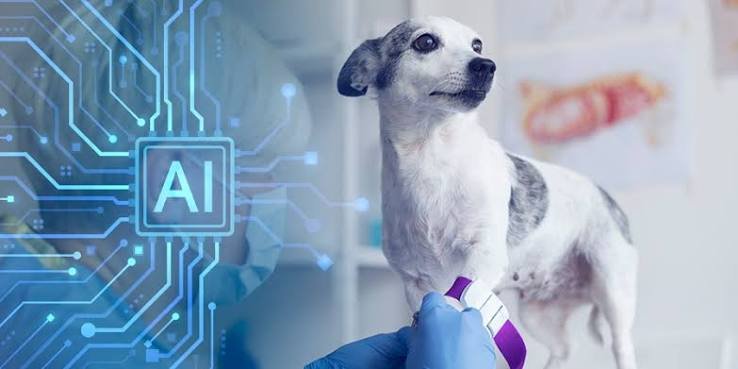
The company says its platform incorporates AI, matching, enrichment and file-analysis capabilities, alongside integrations with systems including Salesforce, HubSpot, Zoho, Snowflake and APIs. Its stated use cases include:
-
CRM enrichment
-
Cleaning and enriching veterinary account records.
-
Sales-call intelligence
Providing representatives with information about an account before a customer interaction.
Lead generation
Creating targeted practice lists based on geography, ownership, services and size.
Market monitoring – Tracking ownership changes, openings, closures and other changes.
Strategic planning – Mapping market opportunity according to geography, ownership and commercial potential.
Custom reporting – Building continuously updated market-share, coverage and ownership analyses.
This potentially represents an important evolution from static veterinary market research to continuously updated commercial intelligence.
Antelligence adds more than data
The acquisition is also notable because Antelligence brings content, readership and industry relationships, rather than simply another dataset.
Vet Intel’s Chris Kelly described the transaction as bringing together Antelligence’s “trusted data, content, readers and industry relationships” with Vet Intel’s technology and business expertise.
Acquisition also raises important data-governance questions
The expansion of AI-powered veterinary intelligence inevitably brings data-governance considerations. Vet Intel’s current terms state that its services are an industry-intelligence and research service, rather than an authoritative registry or professional-advice service.
Its privacy policy states that information may be obtained from public and professional sources, customers, research providers and legacy or acquired datasets, including information acquired with the Antelligence business.
The company also discloses that its systems use automated processing for matching, deduplication, classification, enrichment and inference, with outputs potentially reviewed, disputed, corrected or superseded.
For customers, this makes source transparency, data freshness, confidence levels and correction mechanisms important considerations when using intelligence for commercial decisions.
Bottom Line
The Veterinary Intelligence Company–Antelligence acquisition marks a potentially important step in the professionalisation of veterinary market intelligence.
By combining Antelligence’s data, content, readership and industry relationships with Vet Intel’s technology, structured data graph and AI-enabled commercial intelligence platform, the combined company is targeting a fundamental problem in veterinary markets: fragmented and rapidly changing information.
Its current platform already reports more than 32,000 veterinary practices, 195,000 clinical staff, 142 industry groups and more than one million verified facts, illustrating the scale of the data infrastructure being assembled.

