HomeCorporateEuropean Shamonda Virus Spreads Across France and Europe, Raising New Cattle-Health Questions

European Shamonda Virus Spreads Across France and Europe, Raising New Cattle-Health Questions

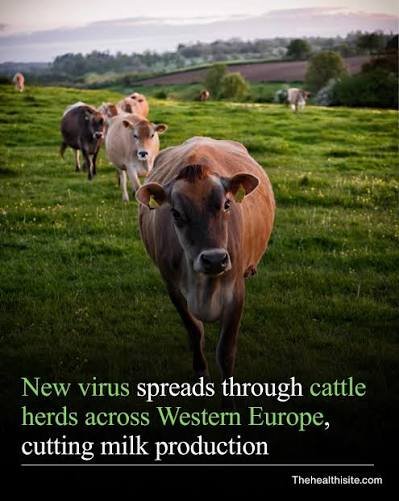
A newly identified Shamonda-type orthobunyavirus, now referred to by researchers as European Shamonda Virus (ESV), is spreading among cattle in France and several other European countries. As of August 24, viral genome had been detected in cattle in 18 French departments, up from five departments reported by French authorities on August 13.

European Shamonda Virus Spreads Across France and Europe

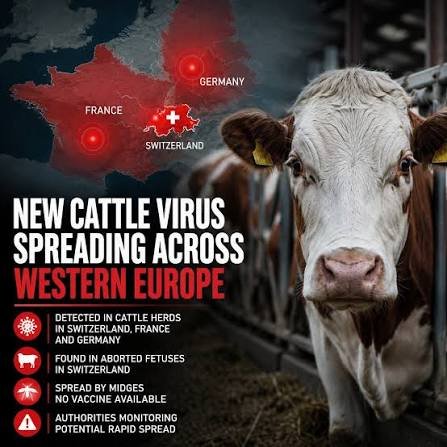
The development is significant because the virus was not previously recognised as circulating in Europe. Veterinary laboratories in France, Germany and Switzerland identified closely related viruses in cattle during summer 2026, with subsequent detections in the Netherlands, Belgium, Liechtenstein and Austria.

What is European Shamonda Virus?

ESV is an orthobunyavirus in the Simbu serogroup, genetically related to Shamonda virus and more distantly associated with the better-known Schmallenberg virus. The European virus has genetic differences from Shamonda strains previously identified in Africa and Asia.

The virus is considered vector-borne, with biting midges (Culicoides) regarded as the principal transmission route. There is currently no evidence of important direct animal-to-animal transmission, although vertical transmission during pregnancy has been demonstrated.

Importantly, available veterinary evidence indicates that Shamonda virus is not considered a zoonosis, meaning there is currently no evidence that it naturally infects humans.

Rapid geographical expansion

The speed of detection is one of the most notable features of the current European episode.

As of August 24, ESV had been identified in cattle in 18 French departmentsThe virus has also been detected in Germany, Switzerland, the Netherlands, Belgium, Liechtenstein and Austria. Switzerland alone has reported detections across 22 cantons, according to recent veterinary surveillance reporting.

This geographical pattern is consistent with a vector-borne pathogen expanding during a period of high midge activity, although the precise route and timing of introduction into Europe remain unresolved. The Friedrich Loeffler Institute says further spread is expected and that investigations into the virus’s introduction are continuing.

Clinical impact: apparently temporary, but economically relevant

The initial description of affected dairy cattle involved fever, diarrhoea, lethargy or reduced appetite and marked but generally temporary reductions in milk production.

Early field investigations suggest that the production effect may nevertheless be substantial.

In an investigation of nine initially affected French dairy herds, reported reductions in bulk milk production ranged from approximately 15% to 75%, while the proportion of cows showing diarrhoea varied from 8% to 100%. The affected herds contained between 25 and 275 cattle.

These figures should be interpreted cautiously: they come from early investigations of affected herds, rather than a population-wide estimate of ESV’s average impact.

Why this matters

Even a short-lived production decline can have economic consequences for dairy farms through:

Reduced milk yield → veterinary and management costs → disrupted production planning → potential reproductive losses → lower farm margins

The discovery of vertical transmission also increases the importance of monitoring pregnancies and newborn calves.

The reproductive question is particularly important

The experience with related Simbu-group viruses demonstrates why veterinary researchers are watching ESV closely.

Schmallenberg virus, another Simbu-group orthobunyavirus, caused reproductive disease in European ruminants following its emergence in 2011, including abortions, stillbirths and congenital malformations. That does not mean ESV will produce the same disease profile.

However, preliminary evidence of vertical transmission means reproductive outcomes are an important area for continued surveillance. Recent reporting has also documented ESV infection in sheep in Belgium, expanding the known host range beyond cattle.

There is an additional signal that warrants investigation: viral genetic material was detected in the brains of two neurologically affected horses in Switzerland. This does not yet establish that ESV caused the neurological disease, and the finding requires further investigation.

No vaccine or specific treatment currently available

At present, there is no commercially available vaccine specifically targeting European Shamonda Virus, and no treatment capable of eliminating the virus from infected animals. Vector-management measures aimed at reducing exposure to biting midges therefore remain an important practical consideration.

ESV is also not currently classified as a regulated disease under the EU Animal Health Law, and it is not subject to international WOAH disease-control requirements.

That regulatory position could change if evidence demonstrates significant effects on animal health, productivity or trade.

Animal Health India Editorial Team
Animal Health India Editorial Teamhttps://animalhealthindia.com
Animal Health India (AHI) is an independent news and intelligence platform covering the global animal health, veterinary, livestock, poultry, companion animal and pet food sectors. Our editorial team comprises veterinary journalists, animal health professionals, regulatory affairs specialists and industry analysts with over 30 years of combined experience covering India, Asia, Europe and North America. AHI publishes news, regulatory updates, market intelligence and company news drawn from primary sources including DAHD, EMA, USDA, AVMA and leading veterinary publications worldwide.

RELATED ARTICLES