


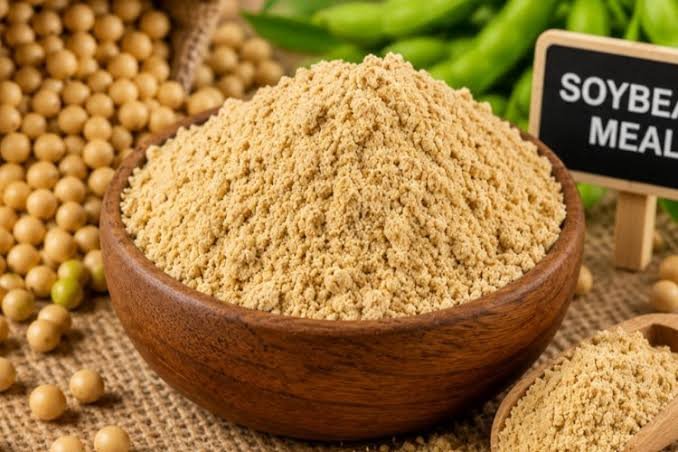
India’s oilmeal exports fell 65% year-on-year to 148,609 tonnes in July 2026, as soybean meal shipments plunged nearly 90%. Uncompetitive export prices, cheaper South American supplies, strong domestic feed demand and higher shipping costs are squeezing India’s position in global protein-feed markets.
India’s oilmeal export trade suffered a sharp setback in July 2026, highlighting the growing challenge of balancing domestic demand for protein-rich animal feed with the economics of competing in international commodity markets.
According to provisional export data compiled by the Solvent Extractors’ Association of India (SEA), total oilmeal shipments declined to 148,609 tonnes in July 2026, from 422,388 tonnes in July 2025. The contraction was driven principally by soybean meal, whose shipments fell by almost 90%, while rapeseed meal exports also weakened significantly during the month.

The deterioration extended beyond July. During April–July 2026, the first four months of financial year 2026–27, India’s cumulative oilmeal exports dropped 27% to 1.106 million tonnes from approximately 1.517 million tonnes a year earlier. The figures point to a broad-based export challenge, although performance varied considerably between oilmeal categories and destination markets. Source: SEA data reported by Rural Voice and Capital Market.
Key export figures: July and April–July 2026
Indicator |
July 2026 |
April–July 2026 |
|---|---|---|
Total oilmeal exports |
148,609 tonnes |
1,105,833 tonnes |
Corresponding year-earlier exports |
422,388 tonnes |
1,516,981 tonnes |
Year-on-year change |
−64.8% |
−27.1% |
Soybean meal |
Down nearly 90% |
187,000 tonnes, versus 676,000 tonnes a year earlier |
Rapeseed meal |
96,500 tonnes, versus 209,100 tonnes |
756,000 tonnes, versus 740,000 tonnes |
Principal export markets |
Asian markets remained important |
China, Bangladesh and Vietnam |
1. Soybean meal bears the brunt of the export collapse
Soybean meal, a major protein ingredient in poultry, livestock and aquaculture feeds, was the weakest component of India’s oilmeal export basket.
July shipments fell to approximately to 17,800 tonnes from 183,600 tonnes in the corresponding month of 2025, a decline of around 90%. Over April–July, shipments fell to approximately 187,000 tonnes from 676,000 tonnes a year earlier.
India’s export offers were reported at approximately US$613 per tonne, compared with international market benchmarks of around US$428 per tonne. The difference of US$185 per tonne meant Indian offers were approximately 43% above that benchmark.
Nevertheless, the reported gap illustrates the competitive disadvantage facing Indian exporters. Buyers able to source suitable meal from Argentina or Brazil have a powerful incentive to shift purchases away from higher-priced Indian supplies.
2. High domestic prices restrict exportable surplus
Strong domestic demand from poultry and livestock-feed manufacturers has added pressure to the export market. Soybean meal is an important source of concentrated protein in commercial feed formulations. When local feed manufacturers are willing to pay prices above export-parity levels, processors and traders may find domestic sales more attractive than overseas shipments.
This creates a direct commercial trade-off: stronger domestic demand can support local realisations while reducing the quantity available for export.
Earlier reporting also documented severe price pressure in the Indian soybean complex. Reuters reported in May 2026 that Indian traders had cancelled 25,000 tonnes of soybean meal export contracts after domestic soybean prices surged, while local soymeal prices reached approximately ₹66,000 per tonne. Export offers for June loading were reported to have risen to around US$695 per tonne from about US$475 a month earlier.
The longer-term challenge is to secure sufficient competitively priced soybeans, maintain efficient crushing operations and preserve a dependable export surplus without undermining the economics of domestic feed production.
3. Argentina and Brazil intensify competition
South America remains a formidable competitor in the global soybean and soybean-meal trade. Argentina and Brazil benefit from large-scale soybean production, established crushing industries and extensive export infrastructure.
When supplies from these origins are available at lower prices, Indian meal can lose market share even where buyers value its particular attributes.
India’s position is also influenced by its domestic non-genetically modified soybean supply chain and the preferences of certain international buyers. Such attributes may offer opportunities in specialised markets, but they do not automatically compensate for a substantial price premium.
For Indian exporters, the immediate priorities are likely to include improving procurement efficiency, maximising plant utilisation, securing freight capacity and targeting markets where buyers value product specifications and reliability enough to justify the delivered price.

4. Red Sea disruptions add to the delivered-cost disadvantage
Shipping disruptions around the Red Sea have created another headwind for exporters serving destinations that depend on routes through the region.
Longer voyages and altered shipping routes can raise freight costs, extend delivery times and complicate vessel scheduling. For a commodity such as soybean meal, where buyers closely compare prices across origins, additional logistics costs can make a marginally competitive offer commercially unviable.
The effect is particularly important when Indian exporters already face higher raw-material costs than competing suppliers. Freight does not have to be the original cause of the price disadvantage to make the problem worse.
The combined effect of expensive domestic meal and elevated logistics costs can narrow the range of destinations where Indian shipments remain economically attractive.
5. Rapeseed meal offers a partial cushion
The contraction in soybean meal was not mirrored across every oilmeal category. Rapeseed meal exports increased during April–July, rising to approximately 756,000 tonnes from 740,000 tonnes a year earlier.
However, July itself was weak: rapeseed meal shipments fell to approximately 96,500 tonnes from 209,100 tonnes in July 2025. While Rapeseed meal has helped cushion the broader export decline, supported by demand in Asian markets, but substitution across oilmeal categories is not unlimited.
Feed manufacturers formulate rations according to protein content, amino-acid balance, fibre, anti-nutritional factors, palatability and price. Rapeseed meal therefore cannot automatically replace soybean meal tonne for tonne in every application.
6. China, Bangladesh and Vietnam remain important destinations
Asian markets continued to provide a foundation for Indian oilmeal exports during April–July 2026.
Destination |
Indian oilmeal imports, April–July 2026 |
Year-on-year trend |
|---|---|---|
China |
355,482 tonnes |
Up from 283,648 tonnes |
Bangladesh |
172,852 tonnes |
Up from 147,000 tonnes |
Vietnam |
108,098 tonnes |
Up from approximately 76,000 tonnes |
China was the largest destination in the period, with purchases rising by approximately 25% year-on-year. Its imports were dominated by rapeseed meal, demonstrating that the growth in destination-level purchases did not necessarily translate into stronger demand for Indian soybean meal.
Bangladesh and Vietnam also increased their purchases. These gains indicate that Indian oilmeal exporters have not lost competitiveness in every market or product category. They also underline the importance of diversifying the export portfolio rather than relying on soybean meal alone.
7. Implications for poultry, livestock and aquaculture feed
The export slump matters beyond oilseed processors and trading companies. It also offers a window into the economics of India’s animal-feed supply chain.
For poultry integrators: Soybean meal is an important protein input in broiler and layer feed. Domestic meal prices influence feed formulation costs, which can affect production margins when poultry prices do not rise at the same pace. The export decline itself does not prove that domestic meal prices will fall: local supply, soybean availability, crushing volumes and feed demand remain decisive.
For dairy and livestock producers: Protein supplements support ration quality and animal productivity. Changes in the relative prices of soybean meal, rapeseed meal and other protein sources may encourage nutritionists to review formulations, subject to nutritional requirements and animal performance.
For aquaculture: Protein ingredients contribute to feed costs, although the degree of soybean-meal use varies by species, life stage and feed formulation. Any change in sourcing needs to be assessed against digestibility, amino-acid balance and fish or shrimp performance rather than price alone.
For feed manufacturers: The key question is whether domestic meal availability will improve enough to ease input costs, or whether tight soybean supplies and strong local demand will continue to support prices despite weaker exports.
The relationship between exports and domestic prices is therefore not mechanical. Lower exports can leave more product in the domestic market, but the benefit will depend on the availability and cost of soybeans and the ability of processors to produce meal economically.
8. What the numbers mean for India’s oilseed-processing industry
The April–July decline highlights three structural issues.
First, export competitiveness depends on the cost of the complete supply chain, not just factory-gate production costs. Raw materials, crushing efficiency, quality assurance, financing, inland transport, port handling and freight all shape the final offer.
Second, a concentrated product mix increases vulnerability. When soybean meal exports collapse, gains in rapeseed meal may be insufficient to offset the loss in total shipments. Diversification across oilmeal categories and destination markets can help reduce that exposure.
Third, exporters must respond to a market in which international buyers have access to multiple origins. India’s ability to retain market share will depend on competitive pricing, consistent quality, dependable fulfilment and a clear value proposition for its products.
9. What to watch next
The following indicators will help establish whether July represents a temporary shock or a more persistent loss of export competitiveness:
-
SEA’s subsequent monthly export data: whether total shipments and soybean meal volumes recover.
-
Soybean arrivals and domestic prices: whether the new-crop supply improves raw-material availability and lowers crushing costs.
-
Soymeal export offers versus South American benchmarks: whether India’s price premium narrows on a comparable basis.
-
Poultry and livestock-feed demand: whether domestic consumption continues to compete with export demand for available meal.
-
Rapeseed meal shipments: whether the relative resilience seen over April–July continues.
-
Ocean freight and route reliability: whether shipping costs and transit times improve for traditional export destinations.
-
Import demand from China, Bangladesh and Vietnam: whether these markets maintain purchases and which oilmeal categories drive the volumes.

