HomeSwineThailand: Chulalongkorn Researchers Develop Synthetic Boar Scent to Improve Swine Breeding Biosecurity

Thailand: Chulalongkorn Researchers Develop Synthetic Boar Scent to Improve Swine Breeding Biosecurity

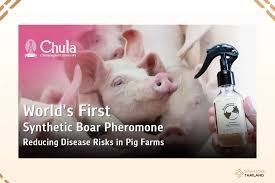
Researchers at Chulalongkorn University’s Faculty of Veterinary Science, Thailand, have developed a synthetic scent designed to mimic chemical signals from mature boars and stimulate estrus behaviour in young female pigs (gilts) without requiring direct contact with a live boar.

thailand-researchers-develop-synthetic-boar-scent

The team analysed secretions from mature boars using gas chromatography and identified 23 key odor compounds used to formulate the synthetic scent. In comparative testing, approximately 50% of gilts exposed to the synthetic scent showed estrus behaviour, compared with about 75% following live-boar exposure and 18% in unstimulated controls.

The technology could have particular value for swine biosecurity, because eliminating direct boar–gilt contact may reduce opportunities for disease transmission and also simplify handling. Chulalongkorn specifically highlights African swine fever (ASF) as an important disease-control concern.

The innovation remains at the prototype stage. Several commercial farms have expressed interest in testing it, while the research team is pursuing intellectual-property protection and regulatory certification in Thailand.

Animal Health India Editorial Team
Animal Health India Editorial Teamhttps://animalhealthindia.com
Animal Health India (AHI) is an independent news and intelligence platform covering the global animal health, veterinary, livestock, poultry, companion animal and pet food sectors. Our editorial team comprises veterinary journalists, animal health professionals, regulatory affairs specialists and industry analysts with over 30 years of combined experience covering India, Asia, Europe and North America. AHI publishes news, regulatory updates, market intelligence and company news drawn from primary sources including DAHD, EMA, USDA, AVMA and leading veterinary publications worldwide.

RELATED ARTICLES