


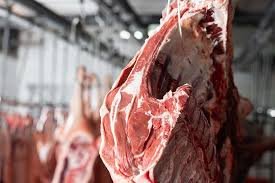
Global beef production is forecast to decline by about 2% year on year in 2026, tightening supplies just as trade restrictions, high consumer prices and changing import patterns are reshaping the international beef market. The latest RaboResearch Global Beef Quarterly Q3 2026, published August 26, identifies declining production, elevated cattle prices and China’s new import-quota regime as the central forces influencing the market.
The contraction is particularly significant because the supply decline is occurring across several major producing regions, including the United States, Brazil, China and Europe. Rabobank expects the global supply reduction to persist into the next 12 months, although the speed and magnitude will vary by country.
Global beef supply enters a tighter phase
Rabobank’s latest assessment puts the 2026 global beef-production decline at approximately 2%, with its summary also indicating a broader 2%-3% contraction during 2026 depending on the period measured. The market therefore faces an unusual combination:
-
declining cattle and beef availability;
-
historically high cattle prices in several producing countries;
-
elevated retail beef prices;
-
growing consumer resistance to expensive beef;
-
increasingly restrictive import policies;
-
and major changes in the destination of exported beef.
This combination is creating a more fragmented global beef market rather than simply producing a uniform worldwide price increase.
Global beef market: key indicators
| Indicator | 2026 development |
|---|---|
| Global beef production | ~2% lower YoY |
| Expected 2026 supply contraction | ~2%-3% |
| US beef imports, H1 2026 | 3.3 billion lb / ~1.5 million tonnes |
| US beef import growth | +11% YoY |
| China 2026 total beef quota | ~2.688 million tonnes |
| Australia-China quota | 205,000 tonnes |
| Brazil-China quota | ~1.106 million tonnes |
| Australia quota status | Filled June 18, 2026 |
| Australian out-of-quota tariff | 55% |
| Brazil share of exports going to China in 2025 | ~48% |
China’s quota regime is particularly important because it is redirecting large volumes of beef toward alternative markets.
United States: imports compensate for shrinking domestic supply
The United States is emerging as one of the clearest examples of how a domestic production deficit can alter global trade. According to the figures supplied from the Rabobank report, US beef imports increased 11% year on year to 3.3 billion pounds, or roughly 1.5 million tonnes, during the first half of 2026.
Australia, Mexico and Argentina accounted for much of the incremental supply, contributing approximately:
-
Australia: +99 million pounds
-
Mexico: +91 million pounds
-
Argentina: +71 million pounds
The increase is economically significant because the United States is simultaneously experiencing declining domestic beef production.
USDA’s 2026 outlook had already projected lower US beef production while forecasting increased imports. In its April outlook, USDA projected 25.79 billion pounds of US beef production, while imports were forecast at 5.79 billion pounds, approximately 6% above 2025.
The latest USDA trade database also confirms that US beef trade remains closely monitored by country of origin and commodity category, with monthly trade data updated through August 2026.
The demand problem
The supply deficit has supported prices, but Rabobank’s assessment introduces an important counterweight: US beef demand appears to be losing momentum at very high price levels.
The figures cited in the Q3 analysis show that US beef prices reached a peak during Q2 before retreating by approximately 8%-16% across relevant market indicators. The reported USDA all-fresh retail beef price reached approximately US$10/lb in April, equivalent to about US$22.05/kg.
That matters because beef demand is ultimately constrained by household purchasing power. When retail prices rise faster than incomes, consumers can respond by:
-
buying less beef;
-
switching to cheaper beef cuts;
-
shifting toward poultry or pork;
-
reducing restaurant consumption; or
-
increasing promotional purchases rather than routine consumption.
This is one of the central tensions in the 2026 beef market: supply is tight, but exceptionally high prices can destroy part of the demand needed to sustain those prices.
China: the biggest structural force in global beef trade
China’s beef-import policy has become arguably the most important trade variable for the global market. China introduced a three-year safeguard quota system from January 1, 2026, following an investigation into the impact of rising beef imports on domestic cattle producers.
The overall 2026 quota is approximately 2.688 million tonnes, around 4% below the previous year’s import volume. Specific country allocations include approximately 205,000 tonnes for Australia and 1.106 million tonnes for Brazil.
Imports above the relevant quotas face an additional 55% tariff, dramatically changing the economics of exporting beef to China. This is not simply a tariff story. It is a global supply-chain reallocation story.
Australia reaches its China quota
Australia provides the clearest evidence of the policy’s immediate effect. China officially confirmed that Australia’s 205,000-tonne 2026 beef quota was filled on June 18. The additional 55% tariff became applicable from June 20.
Australia’s 2025 exports to China had exceeded the new quota, creating a substantial volume that exporters needed to redirect. Rabobank previously estimated that approximately 100,000 tonnes of Australian beef could need to find alternative markets under the new quota regime.
The impact is already visible in trade flows. Rabobank’s Q3 report says Australian exports to China fell sharply after the quota was reached. The alternative destinations include:
-
Japan
-
South Korea
-
United States
-
Middle East
-
Southeast Asia
But redistribution is not frictionless. Different markets demand different cuts, quality specifications, packaging, certifications and price points. That creates a potentially important “market mismatch” problem: a kilogram of beef displaced from China cannot necessarily be sold elsewhere at the same value.
Brazil: the next major pressure point
Brazil is potentially the most consequential second-stage effect of China’s quota system. China was Brazil’s largest beef export market in 2025, accounting for approximately 48% of Brazil’s total export volume, according to Rabobank.
The latest RaboResearch assessment expects Brazil to approach its Chinese quota during August or September 2026.
Brazilian shipments to China had already fallen sharply, with the supplied data indicating a 48% month-on-month decline in July. The implications are substantial because Brazil is one of the world’s largest and most cost-competitive beef exporters.
If Brazilian exporters have to redirect significant volumes away from China, competition could increase in:
-
the United States;
-
Southeast Asia;
-
the Middle East;
-
other Asian markets; and
-
potentially Europe, depending on regulatory access.
This could temporarily put downward pressure on export prices in receiving markets, even while global beef production is falling.
That apparent contradiction is important: Global beef supply can decline while individual regional markets experience increased supply because trade restrictions redirect existing production.
Cattle prices: correction rather than collapse
Rabobank reports that cattle prices eased in July from record levels earlier in 2026, with declines of approximately 2%-6% across Australia, Canada and the United States. The bank attributes the softer market sentiment to:
-
improving cattle availability;
-
consumer resistance to high beef prices;
-
trade disruption;
-
and changing international flows.

