


Quick Summary
-
Study: Lumpy skin disease: economic impact and field vaccine efficiency evaluation in Zebu cattle population in selected districts of the Gamo Zone, Southern Ethiopia (BMC Veterinary Research, Aug 27, 2026).link.springer
-
Key Finding: Field vaccine efficiency against LSD in Zebu cattle was ~78% (95% CI: 71–84%).
-
Economic Loss: Infected farms reported significant losses from milk drop, hide damage, weight loss, secondary infections, and occasional mortality.
-
Recommendation: Ring vaccination + improved cold-chain management + farmer education on early detection
What Is Lumpy Skin Disease (LSD)?
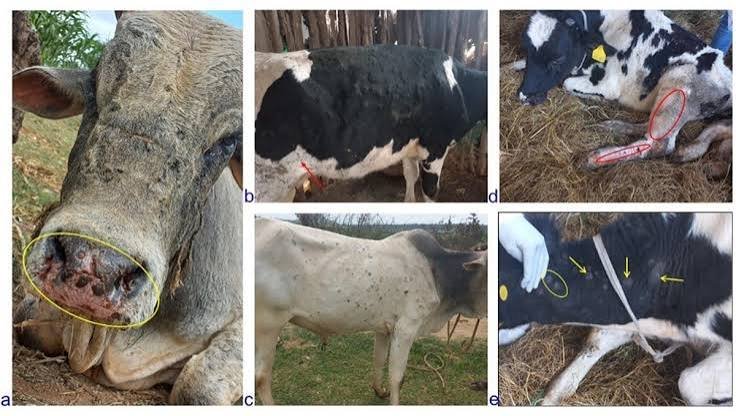
Lumpy Skin Disease (LSD) is a viral disease of cattle caused by the LSD virus (LSDV), a member of the Capripoxvirus genus (same family as sheep pox and goat pox). It spreads primarily through biting insects (flies, mosquitoes, ticks) and direct contact with infected animals.link.springer
Clinical Signs in Zebu Cattle
-
Fever (>40°C)
-
Multiple firm, round skin nodules (1–5 cm) on head, neck, limbs, udder
-
Lymph node enlargement
-
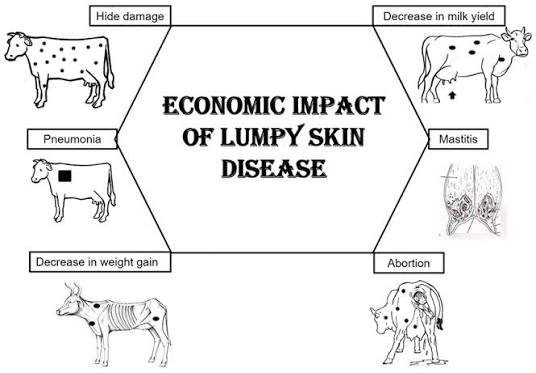
Reduced milk yield (up to 50% drop)
-
Secondary bacterial infections (mastitis, pneumonia)
-
Hide damage (reduced leather quality)
-
Occasional mortality (2–10%, higher in young calves or immunocompromised animals)
LSD is endemic in sub-Saharan Africa but has spread to the Middle East, Turkey, Balkans, and Eastern Europe in recent years, causing major economic disruptions.link.springer
Why This Ethiopia Study Matters
Ethiopia has one of Africa’s largest cattle populations (~70 million head), with Zebu breeds dominating smallholder and pastoral systems. LSD outbreaks threaten:
-
Smallholder livelihoods (milk, meat, draft power, manure)
-
National GDP (livestock = ~16% of Ethiopia’s GDP)
-
Export potential (live cattle, hides, skins)
The Gamo Zone (Southern Ethiopia) is a highland area with mixed crop-livestock farming. LSD outbreaks here have been reported annually since 2019, but field-level vaccine efficiency data was lacking until this study.link.springer
Study Design & Methods
Objective – To evaluate field vaccine efficiency of the locally used LSD vaccine (live-attenuated Neethling strain) and quantify economic losses in Zebu cattle in Gamo Zone districts.link.springer
Study Area & Period – Location: 4 districts in Gamo Zone, Southern Ethiopia (e.g., Chencha, Dita, Bonke, Kucha)
-
Period: September 2024 – June 2026 (22 months)
-
Climate: Highland (1,500–2,800 m altitude); rainy season (June–Sept) drives vector activity
Study Population
-
Total cattle surveyed: 2,418 Zebu cattle from 312 farms
-
Vaccinated: 1,687 cattle (single dose, SC route)
-
Unvaccinated: 731 cattle (no prior LSD vaccination)
Data Collection
-
Clinical examination: Fever, skin nodules, lymphadenopathy
-
PCR confirmation: Skin biopsy/swab from nodules (LSDV-specific gene amplification)
-
Vaccination records: Date, batch number, cold-chain status
-
Economic data: Milk loss, treatment costs, hide damage, mortality, weight loss
Statistical Analysis
-
Economic loss: Calculated per infected animal and per farm (ETB and USD)
-
Risk factors: Logistic regression (age, sex, management, vaccination timing)link.springer
Key Findings
1. LSD Incidence
-
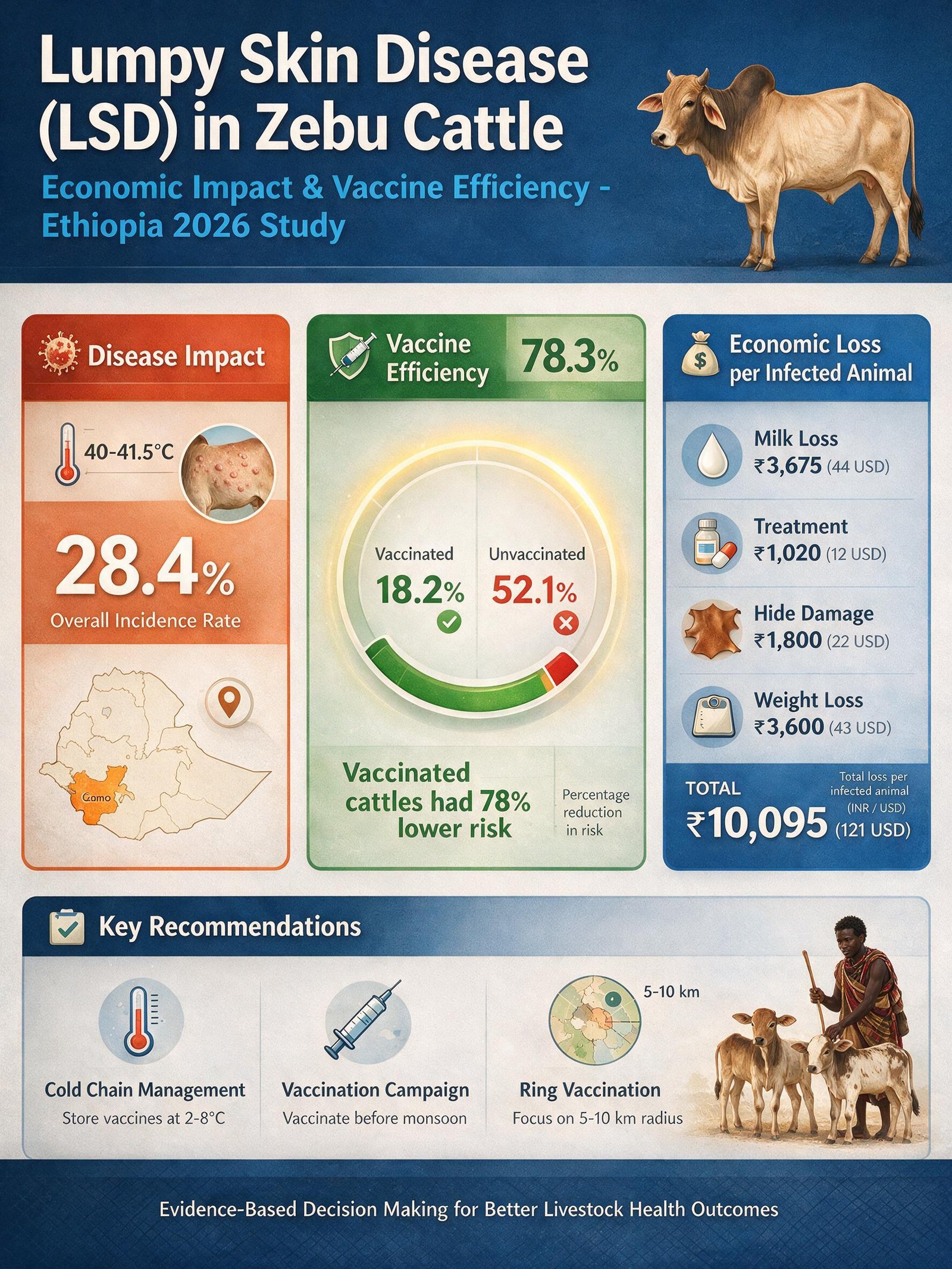
Overall incidence: 28.4% (687/2,418 cattle)
-
Vaccinated group: 18.2% (307/1,687)
-
Unvaccinated group: 52.1% (381/731)
2. Field Vaccine Efficiency
-
VE = 78.3% (95% CI: 71.2–84.1%)
-
Interpretation: Vaccinated cattle had 78% lower risk of developing LSD compared to unvaccinated.
-
Breakthrough cases: 307 vaccinated cattle still developed LSD (likely due to cold-chain failure, improper administration, or waning immunity).link.springer
3. Economic Loss per Infected Animal
4. Economic Loss per Farm
-
Mean infected animals/farm: 4.2
-
Mean loss/farm: 28,266 ETB (~508 USD)
-
High-burden farms (>10 infected): Losses exceeded 80,000 ETB (~1,440 USD)
5. Risk Factors for Vaccine Failure
-
Cold-chain breach: Vaccines stored >8°C for >4 hours had 2.3× higher failure rate.
-
Vaccination during outbreak: Cattle vaccinated <7 days after outbreak onset had 1.8× higher risk (immunity takes 10–14 days to develop).
-
Age: Calves <6 months had lower seroconversion (maternal antibody interference).
-
Body condition: Poor-condition animals (BCS <2.5/5) had 1.5× higher risk.link.springer
What This Means for Farmers & Veterinarians
1. Vaccination Works—But Quality Matters
-
78% efficiency is good but not perfect. To improve:
-
Maintain cold chain: Store vaccines at 2–8°C; use ice packs during transport.
-
Vaccinate proactively: Don’t wait for outbreaks; vaccinate before rainy season (vector peak).
-
Booster doses: Consider annual revaccination in endemic areas.
-
2. Economic Loss Is Real & Recoverable
-
Average loss/farm (~500 USD) is significant for smallholders.
-
Prevention ROI: Vaccination cost (~2–3 USD/dose) vs potential loss (~500 USD/farm) = strong economic case.
3. Ring Vaccination Strategy Recommended
-
When an outbreak occurs:
-
Vaccinate all cattle within 5–10 km radius immediately.
-
Combine with vector control (insecticide sprays, netting).
-
Isolate infected animals for 3–4 weeks.
-
Global Context: LSD Beyond Ethiopia
Key Takeaway: LSD is a transboundary disease. India should monitor outbreaks in neighboring countries (Bangladesh, Nepal) and consider preemptive vaccination in high-risk border districts.
Relevance for Indian Farmers & Veterinarians
1. India’s LSD Situation (2022–2026)
-
First reported in Odisha (2022), spread to 20+ states by 2024.
-
Zebu and crossbred cattle both affected; mortality 1–5% (higher in calves).
-
Vaccine: India uses indigenous LSD vaccine (developed by IVRI, Izatnagar) + imported Neethling strains.
2. Lessons from Ethiopia for India
-
Cold-chain management: Critical in tropical climates (India’s summer temps can exceed 40°C).
-
Timing: Vaccinate before monsoon (June–Sept) when vector activity peaks.
-
Farmer education: Many Indian farmers delay vaccination until they see nodules (too late).
3. Supplement Support for LSD Recovery
While vaccines prevent infection, nutritional support aids recovery:
-
Vitamin A: Supports epithelial integrity (skin/mucosa repair).
-
Vitamin C + E: Antioxidants reduce oxidative stress from inflammation.
-
Zinc: Enhances immune function, wound healing.
-
Protein: Critical for tissue repair (collagen synthesis).
Vitaminerals.in Opportunity: Bundle LSD Recovery Kit (Vit A + C + E + Zinc + Protein) for post-vaccination or post-infection support.
Future Research Directions
-
Next-Gen Vaccines: mRNA or vectored vaccines (like EEHV mRNA vaccine in elephants, Aug 2026 study) could offer higher efficacy.
-
Thermostable Formulations: Lyophilized vaccines stable at 25–30°C for 7+ days (critical for tropical regions).
-
DIVA Vaccines: Differentiate Infected from Vaccinated Animals (important for trade).
-
Vector Control: Insecticide-treated ear tags, pour-ons, or environmental management (drain stagnant water).

