


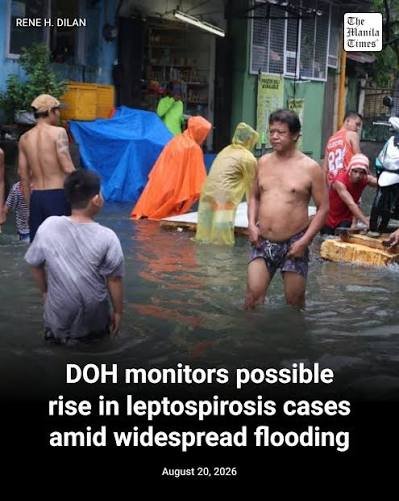
MANILA, PHILIPPINES — The Department of Health (DOH) has reported a significant increase in leptospirosis cases nationwide following weeks of heavy monsoon rains and severe typhoon-induced flooding. Epidemiologists and infectious disease experts warn that the country could face a second wave of infections as early as next week as stagnant floodwaters remain contaminated in high-risk urban and agricultural areas.
Acute Case Data & Surge Metrics
According to official surveillance data released by the DOH Epidemiology Bureau:
-
Case Increase: Leptospirosis incidence has spiked nationwide, with flood-affected regions—including Metro Manila (NCR), Central Luzon (Region III), and CALABARZON (Region IV-A)—reporting a 120% to 200% increase in hospital admissions compared to pre-flood baselines
-
Mortality Rate: The case fatality rate (CFR) for severe leptospirosis remains high at approximately 9% to 11%, driven primarily by delayed medical presentation leading to renal failure and pulmonary hemorrhage
-
Demographic Impact: Working-age adults (20–49 years) account for over 75% of reported cases, with high occupational exposure among street vendors, relief workers, and agricultural laborers traversing flooded terrain
Pathophysiology & Transmission Risk
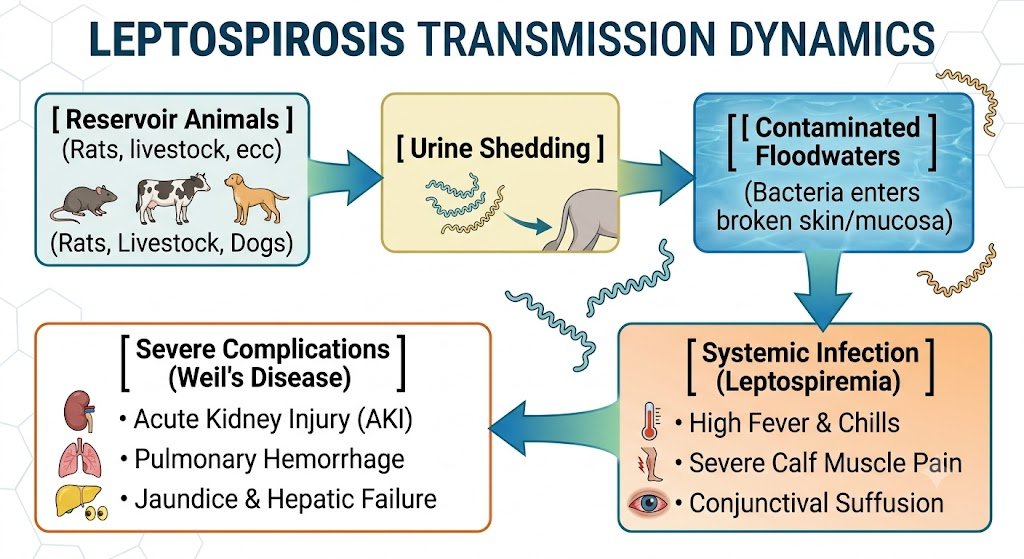
Leptospirosis is a major zoonotic bacterial disease caused by pathogenic spirochetes of the genus Leptospira.
-
Transmission Mechanism: Pathogenic Leptospira are shed through the urine of infected reservoir animals—predominantly rodents (Rattus norvegicus), as well as livestock and domestic pets. The bacteria enter the human body through skin abrasions, cuts, or mucous membranes (eyes, nose, mouth) during contact with floodwaters or saturated soil.
-
Incubation Period: Typically 7 to 14 days (ranging from 2 to 30 days), explaining the lagged surge following flood events.
-
Clinical Severity (Weil’s Disease): While mild cases present with acute fever, severe headache, conjunctival suffusion, and severe myalgia (particularly in the calf muscles), severe cases progress to Weil’s Syndrome—characterized by acute kidney injury (AKI), jaundice, and lethal pulmonary hemorrhage syndrome (SPHS).
Clinical Guidelines & DOH Prophylaxis Protocols
The DOH has issued urgent advisories to primary care units and emergency departments to initiate immediate empiric treatment and post-exposure prophylaxis (PEP):
Post-Exposure Prophylaxis (PEP)
-
Single High-Risk Exposure (Wading in floodwaters): Doxycycline 200 mg single dose orally within 24–72 hours of exposure.
-
Continuous/Ongoing Exposure: Doxycycline 200 mg once weekly for the duration of exposure.
Clinical Management
-
Mild/Outpatient Cases: Oral Doxycycline (100 mg twice daily for 7 days) or Amoxicillin.
-
Severe/Inpatient Cases: Intravenous Penicillin G, Ceftriaxone, or Cefotaxime, alongside immediate renal replacement therapy (hemodialysis) for acute kidney failure.
References & Medical Citations
-
DOH Epidemiology Bureau: Surveillance Report on Waterborne, Foodborne, Vector-borne, and Laboratory-confirmed Diseases (WFVLD). Department of Health, Philippines
-
WHO Leptospirosis Guidelines: World Health Organization. (2003). Human leptospirosis: guidance for diagnosis, surveillance and control. World Health Organization
-
Severe Leptospirosis Dynamics: Bharti, A. R., et al. (2003). Leptospirosis: a zoonotic disease of global importance. The Lancet Infectious Diseases, 3(12), 757–771
-
Post-Typhoon Outbreaks: Amilasan, A. T., et al. (2012). Outbreak of leptospirosis after Typhoon Ketsana, Metro Manila, Philippines. Emerging Infectious Diseases, 18(1), 91–94

