


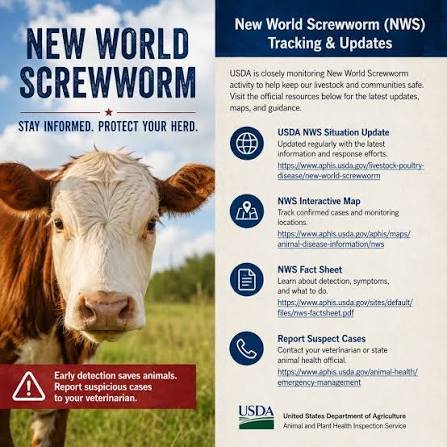
USDA’s Animal and Plant Health Inspection Service (APHIS) is holding a virtual stakeholder meeting on 9 September 2026 as part of its quarterly review of the U.S. response to New World screwworm, with livestock-health stakeholders expected to provide feedback on response protocols and operational guidance.
The meeting is part of a new quarterly stakeholder-review process established by APHIS to continuously update its New World Screwworm Response Playbook and related policies as the threat evolves.
The agency’s schedule identifies 9 September 2026 as the FY2026 fourth-quarter virtual stakeholder meeting, followed by a formal comment-review period from 21 September to 4 October.
Industry feedback becomes part of response planning
APHIS said the Response Playbook, initially released in April 2026, incorporated feedback from state animal-health officials, federal partners, Tribal governments, livestock and wildlife industry groups and veterinary organisations.
The agency intends to use feedback from each quarterly meeting to identify operational gaps and determine whether updates are needed to the Playbook and associated policy and guidance documents.
The approach is significant because New World screwworm is not simply a veterinary disease issue. A significant incursion could affect livestock production, animal movement, trade, veterinary surveillance and border biosecurity.
Why the meeting matters to livestock
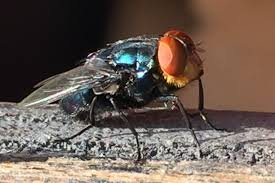
New World screwworm is caused by the larvae of Cochliomyia hominivorax, which develop in wounds and living tissue. Untreated infestations can cause severe injury and death in animals.
For the U.S. livestock sector, the principal concern is preventing establishment and spread following the continued regional threat from Mexico and Central America.
The issue is particularly relevant to cattle, horses and other susceptible livestock, as well as animal-movement controls and veterinary inspection systems.
A growing animal-health preparedness market
The continuing APHIS review creates potential implications for several segments of the animal-health industry:
-
Veterinary diagnostics and surveillance
-
Livestock wound management
-
Parasite-control technologies
-
Veterinary laboratories
-
Animal-movement and traceability systems
-
Biosecurity services
-
Emergency veterinary response
-
Livestock inspection and quarantine
-
Digital disease-surveillance platforms

