HomeLivestockSouth Korea Launches 2026–27 Winter Livestock Disease Special Quarantine Campaign

South Korea Launches 2026–27 Winter Livestock Disease Special Quarantine Campaign

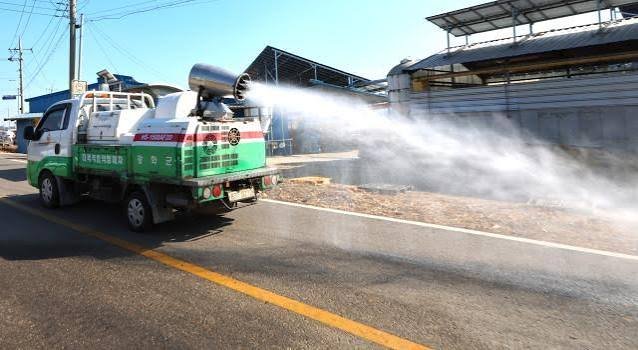
South Korea’s Ministry of Agriculture, Food and Rural Affairs (MAFRA) will operate a special livestock-disease quarantine period from October 2026 through February 2027, targeting three major transboundary diseases: highly pathogenic avian influenza (HPAI), foot-and-mouth disease (FMD) and African swine fever (ASF). The programme was discussed by the National Policy Coordination Council on September 16.

Avian Influenza: Earlier surveillance and tighter layer-farm controls

The government is strengthening migratory-bird surveillance from September and will manage 280 restricted-access routes around migratory-bird habitats.

For poultry farms, a three-stage biosecurity system will cover regional disinfection facilities, farm entrances and poultry houses. Large layer farms will additionally introduce advance registration of incoming vehicles and personnel, while approximately 100 unmanned CCTV-based access-control posts are planned.

MAFRA said overseas HPAI detections during January–August 2026 reached 2,957, more than twice the 1,432 recorded during the same period of 2025.

South Korea Launches 2026–27 Winter Livestock Disease Special Quarantine Campaign

FMD: SAT1 preparedness becomes a priority

South Korea is also preparing for possible introduction of the SAT1 FMD virus type, following detections in China and Mongolia.

FMD vaccination was completed in July in high-risk border areas of Incheon, Gyeonggi and Gangwon, as well as breeding stock. Vaccination will subsequently be extended to 28 moderate-risk cities and counties, with the government planning to stockpile 32 million doses of SAT1 vaccine by 2027.

ASF: Wildlife surveillance and feed-chain controls expand

ASF measures will focus heavily on infected wild-boar areas, including Hwacheon, Chuncheon, Chungju, Pocheon and Gapyeong, where thermal-imaging drones, detection dogs, vehicles and search teams will be deployed.

The government will also install 150 capture traps in Ulsan and Goryeong, where new wild-boar ASF detections have occurred.

A further measure targets a potential feed-chain pathway. Samples from 64 slaughterhouses and 36 blood-storage facilities will be tested to prevent potentially contaminated blood products from entering feed ingredients, while controls on plasma-protein feed manufacturing will be strengthened.

Compliance and industry implications

Existing ASF biosecurity rules provide for fines of up to ₩10 million for specified violations, with potential reductions in slaughter-compensation payments when an affected pig farm is found to have breached applicable requirements.

The 2026–27 programme represents a broader shift toward risk-based, technology-enabled livestock disease prevention, combining wildlife surveillance, farm access control, vaccination, diagnostic testing, feed-chain monitoring, drones, CCTV and planned AI-enabled biosecurity systems.

AHI Analyst Takeaway

South Korea’s approach is significant for Asian animal health because it treats AI, FMD and ASF as interconnected transboundary risks requiring continuous surveillance across wildlife, farms, transport and feed supply chains—not simply outbreak response after disease is detected.

Animal Health India Editorial Team
Animal Health India Editorial Teamhttps://animalhealthindia.com
Animal Health India (AHI) is an independent news and intelligence platform covering the global animal health, veterinary, livestock, poultry, companion animal and pet food sectors. Our editorial team comprises veterinary journalists, animal health professionals, regulatory affairs specialists and industry analysts with over 30 years of combined experience covering India, Asia, Europe and North America. AHI publishes news, regulatory updates, market intelligence and company news drawn from primary sources including DAHD, EMA, USDA, AVMA and leading veterinary publications worldwide.

RELATED ARTICLES