


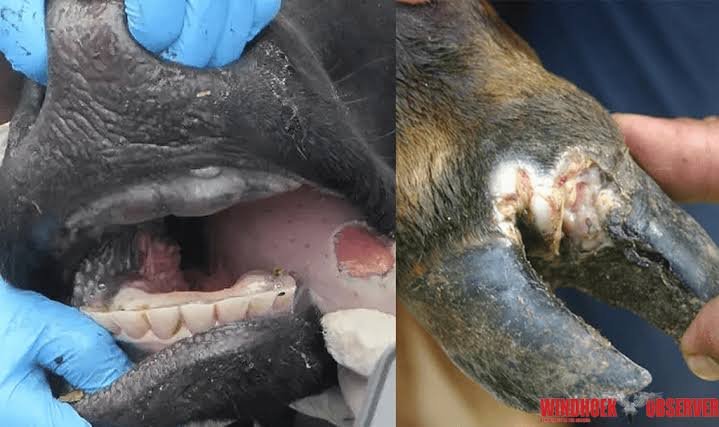
Namibia has partially relaxed restrictions imposed following a Foot-and-Mouth Disease (FMD) outbreak in the //Kharas Region, after preliminary traceability and veterinary inspection indicated that the outbreak remains geographically contained.
The Directorate of Veterinary Services has lifted certain movement restrictions north of the Veterinary Cordon Fence, while restrictions remain in place for livestock and selected animal products moving into protected areas.
Livestock traced from an infected farm in the Karasburg Veterinary District to Otjozondjupa were reportedly tested negative for FMD.
Movement of livestock into northern areas remains restricted, while certain processed products—including cooked meat and pasteurised milk—can move under specified conditions.
Animals eligible for movement to abattoirs must meet traceability, biosecurity, veterinary examination and testing requirements.
WOAH has separately recorded the suspension of Namibia’s recognised FMD-free zone where vaccination is not practised status following the Karasburg East outbreak.
Why It Matters
Namibia’s beef industry is highly dependent on disease-free status and traceability for export-market access.
Consequently, FMD is not simply a veterinary problem—it is a trade and market-access issue.
The latest response demonstrates how traceability systems can support targeted restrictions rather than imposing uniform national shutdowns.
Strategic / Analyst View
The episode strengthens the strategic importance of:
-
Livestock traceability
-
Digital movement permits
-
FMD diagnostics
-
Veterinary testing
-
Zoning and compartmentalisation
-
Biosecurity certification
For African livestock markets, investment in traceability infrastructure can have a direct commercial connection to export eligibility and continuity of trade.
Source: Namibia Directorate of Veterinary Services / local reporting and WOAH.

