



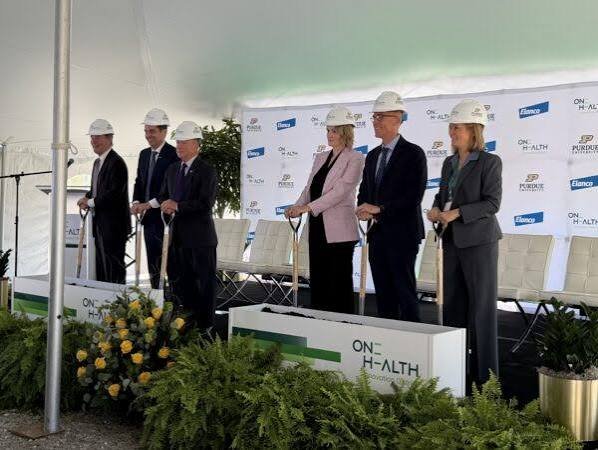
Purdue University and Elanco Animal Health have broken ground on a planned 150,000-square-foot One Health Research Institute in Indianapolis, creating a major physical hub for animal-health research, diagnostics, translational science and commercialisation.
The facility is being developed within the One Health Innovation District, adjacent to Elanco’s global headquarters. The institute is expected to open in 2030.
What makes the project different
The facility is designed as a shared-use innovation ecosystem, not simply a corporate laboratory. It is planned to include:
-
advanced research laboratories
-
shared research infrastructure
-
equipment
-
collaboration space
-
animal-health and veterinary facilities
-
incubator capacity
-
entrepreneur/company space
The research focus extends across: therapeutics + diagnostics + digital health + sustainable agriculture + One Health technologies.
Strategic significance
The animal-health industry has traditionally operated through relatively distinct silos: pharmaceuticals | vaccines | diagnostics | feed | genetics | veterinary services.
The One Health model attempts to connect these domains. For example:
pathogen detection → genomic analysis → diagnostic development → therapeutic discovery → field validation → commercial product.
The shared infrastructure could reduce the distance between university research and industry commercialisation.

Analyst view
This is strategically important for the animal-health investment ecosystem. The most valuable innovation increasingly comes from convergence:
AI + biology
genomics + diagnostics
microbiome + therapeutics
animal data + human health
precision agriculture + veterinary medicine
The institute’s location within an innovation district containing industry, academic and entrepreneurial participants may help accelerate these connections.
Commercial implications
For start-ups, access to shared laboratory infrastructure can reduce capital requirements. For Elanco and other animal-health companies, proximity to academic researchers can increase access to:
-
scientific talent
-
early-stage technologies
-
university IP
-
translational research
-
clinical expertise

