
HomeCorporateCJ CheilJedang and ADM Form Feed Amino Acid Joint Venture

CJ CheilJedang and ADM Form Feed Amino Acid Joint Venture

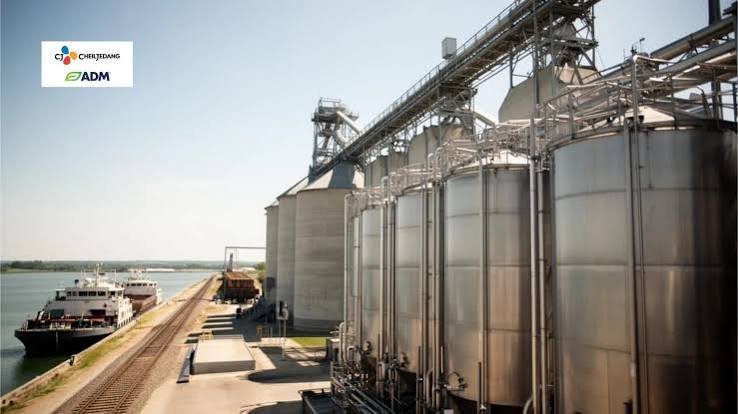
South Korea’s CJ CheilJedang and U.S. agribusiness major ADM have agreed to establish a new joint venture focused on feed-grade amino acids, combining CJ’s fermentation technology and amino-acid expertise with ADM’s U.S. manufacturing footprint, feedstock procurement and logistics capabilities.

Despite some early market descriptions positioning this as an Asia/Middle East amino-acid partnership, the announced transaction is actually centred on the Americas. The proposed JV will combine:

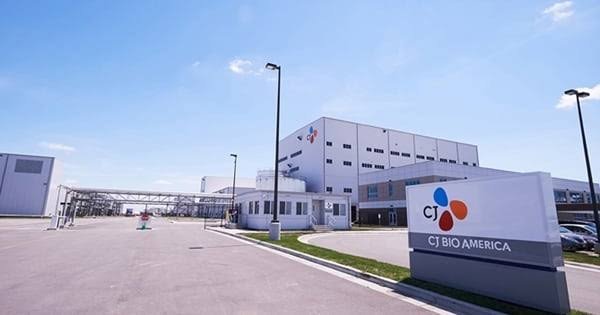
  • CJ’s Fort Dodge, Iowa facility

  • CJ’s Piracicaba, Brazil facility

  • ADM’s Decatur, Illinois amino-acid facility

  • CJ sales operations in the United States, Mexico and Brazil

  • CJ’s licensed feed-grade amino-acid intellectual property for the JV

The venture will have exclusive rights to manufacture and sell the covered feed-grade amino acids in North and South America. CJ will be the majority shareholder. Korean reporting indicates a proposed ownership structure of approximately 63% for CJ Bio America and 37% for ADM.
cj-cheiljedang-and-adm-form-feed-amino-acid-joint-venture

Why amino acids matter to poultry and swine

Feed-grade amino acids are fundamental to modern precision nutrition. The key concept is simple:

animals require amino acids—not crude protein itself.

Supplementation with individual essential amino acids allows nutritionists to formulate diets with lower crude-protein levels while still meeting the animal’s amino-acid requirements. For poultry and swine, this can improve:

  • feed conversion

  • nitrogen utilisation

  • protein efficiency

  • formulation flexibility

  • feed cost management

  • environmental performance

Lysine is particularly important in poultry and swine diets because it is commonly a limiting amino acid. Methionine is also fundamental, particularly in poultry nutrition.

Why CJ brings unusual capabilities

CJ CheilJedang’s competitive advantage is rooted in fermentation-based biotechnology. CJ Bio has developed a broad portfolio of feed amino acids and has highlighted its ability to produce L-methionine through innovative bioprocessing. Its R&D platform also covers amino acids including tryptophan, valine, arginine and histidine.

The company’s technology therefore extends beyond conventional commodity manufacturing. It is increasingly a precision-fermentation platform for animal nutrition.

Why ADM matters

ADM contributes a different set of advantages: feedstock + procurement + manufacturing + logistics + customer relationships.

The Decatur, Illinois facility gives the JV domestic U.S. amino-acid manufacturing capacity, while ADM’s broader agricultural infrastructure can potentially improve raw-material economics. The combination is strategically logical:

CJ = fermentation technology + amino-acid know-how

ADM = feedstocks + infrastructure + distribution
cj-cheiljedang-and-adm-form-feed-amino-acid-joint-venture

China is part of the strategic background

The JV is also emerging against a difficult global amino-acid market. China has become a major global producer of feed-grade lysine, contributing to periods of substantial international oversupply and depressed prices.

Recent U.S. trade actions against Chinese lysine imports have altered the competitive environment. ADM explicitly said that recent decisions by the U.S. Department of Commerce and U.S. International Trade Commission addressing unfair trade practices affecting Chinese lysine imports increased its confidence in establishing the partnership.

Why this matters for poultry and swine economics

Feed is typically the largest variable cost in commercial livestock production. Even small improvements in amino-acid formulation can have large economic consequences at industrial scale. The industry’s trajectory is therefore:

more precise amino-acid formulation → lower excess protein → improved feed efficiency → lower nitrogen excretion → potentially lower cost and environmental footprint

This is particularly relevant as poultry and swine producers face simultaneous pressure on: feed cost + productivity + emissions + animal performance.

Analyst view

The strategically important asset is not simply the three factories. It is the combination of:

fermentation IP + manufacturing + feedstock access + sales network + regional supply security.

The proposed JV effectively creates a more vertically coordinated amino-acid platform in the Americas. CJ retains ownership of its intellectual property and global fermentation businesses outside the JV’s scope, while ADM retains its other Decatur and global fermentation assets.

That means the transaction should be viewed as a targeted strategic combination, not a wholesale merger of the companies’ animal-nutrition businesses.

Implications for Asia and Middle East

Although the new JV itself is not an Asia/Middle East manufacturing partnership, its implications extend to those markets. CJ remains a major global amino-acid supplier, while Asia and the Middle East continue to represent structurally important poultry and swine feed markets.

A stronger Americas platform could allow CJ to optimise its global manufacturing and supply-chain footprint, while the competitive response from Asian producers—particularly Chinese amino-acid manufacturers—will be important to watch.

For feed companies in India, Southeast Asia and the Middle East, the development reinforces the strategic importance of multi-source amino-acid procurement.

Animal Health India Editorial Team
Animal Health India Editorial Teamhttps://animalhealthindia.com
Animal Health India (AHI) is an independent news and intelligence platform covering the global animal health, veterinary, livestock, poultry, companion animal and pet food sectors. Our editorial team comprises veterinary journalists, animal health professionals, regulatory affairs specialists and industry analysts with over 30 years of combined experience covering India, Asia, Europe and North America. AHI publishes news, regulatory updates, market intelligence and company news drawn from primary sources including DAHD, EMA, USDA, AVMA and leading veterinary publications worldwide.
RELATED ARTICLES