

HomeCorporateDinnissen Opens 2,000 m² D-Innocenter for Feed Processing

Dinnissen Opens 2,000 m² D-Innocenter for Feed Processing

Sevenum, Netherlands | 8 October 2026

Dutch process-equipment specialist Dinnissen has officially opened a new 2,000-square-metre D-Innocenter in Sevenum, giving customers in the feed, pet food, food and chemical industries a dedicated facility to test integrated production processes under conditions designed to approximate industrial operation.

Announced on 8 October 2026, the facility is intended to help customers validate process configurations before equipment is installed at their own sites. By testing how products behave across connected machinery rather than evaluating individual machines in isolation, Dinnissen aims to reduce technical uncertainty, shorten commissioning and limit production disruption during start-up.
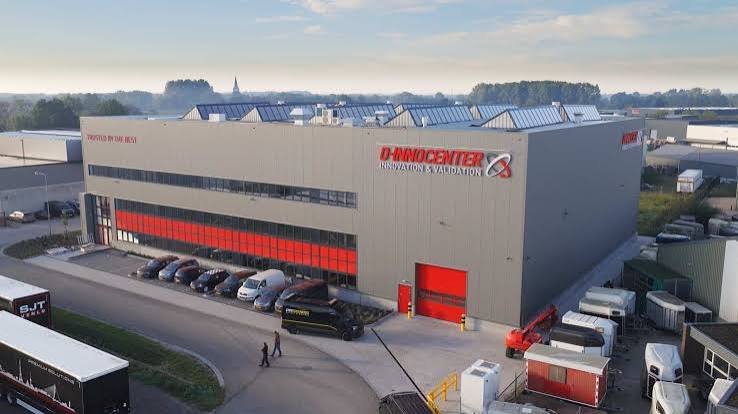
Dinnissen D-Innocenter

The investment reflects a wider trend in industrial equipment procurement: customers increasingly want evidence that a complete process will work with their actual raw materials before committing to final engineering, installation and capital expenditure.

From individual machines to complete-process validation

Production lines for animal feed and pet food often combine multiple stages, including bulk-bag emptying, conveying, lump breaking, screening, mixing and packaging. Performance at one stage can affect the next. A powder that flows well through one machine may bridge, segregate, generate dust or behave differently when moved through another component.

Dinnissen’s D-Innocenter allows customers to test integrated configurations under near-industrial conditions. Tests begin with a defined process question and are tailored to the customer’s product and intended application. The company records relevant process data, which can then inform equipment selection, engineering and operating settings.

The objective is to identify problems before the production line is installed. This may reduce the need for adjustments during commissioning, when delays can affect labour planning, production schedules and customer deliveries.

The facility is also intended for modifications to existing lines, not only entirely new installations. This could be relevant to feed mills upgrading capacity, pet-food manufacturers changing formulations or producers introducing new ingredients that behave differently during handling and processing.

Laboratory analysis adds another layer

The D-Innocenter includes a material-analysis laboratory. Depending on the product, the company can examine characteristics such as particle size, moisture, density, viscosity and flow behaviour.

These characteristics influence how materials move through industrial systems. For example, variations in moisture or particle size may affect flowability, screening efficiency, conveying performance and the consistency of subsequent processing stages.

The purpose of laboratory work is to complement process trials and improve the evidence available for equipment configuration. It does not remove the need for appropriate quality control at the customer’s own plant, but it can help engineering teams understand material behaviour before finalising a design.

Before the official opening, Dinnissen had already completed a factory acceptance test at the facility. The reported test combined a big-bag emptying station, lump breaker, vacuum-conveying system and rotary sifting equipment. The processed powder was then filled into a new big bag, allowing the company to assess the integrated sequence using the customer’s product.
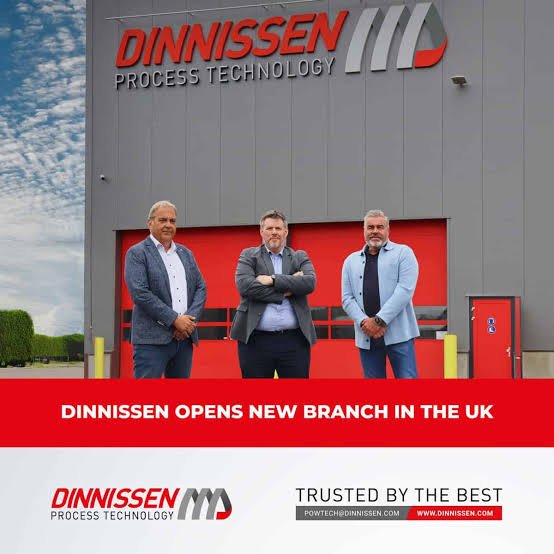
Dinnissen D-Innocenter

Why this matters for animal-feed manufacturers

Feed manufacturers operate under pressure to manage raw-material variability, maintain throughput and produce consistent formulations. Ingredient changes, alternative proteins, premixes and functional additives can create new handling challenges.

A process-testing facility can help manufacturers evaluate whether equipment settings and line configurations are suitable before production begins. For pet food, where product formats and ingredient systems can differ substantially, integrated testing may also support changes in handling, mixing and packaging.

The commercial value depends on the complexity of the line, the cost of a commissioning delay and the degree to which trial conditions reproduce actual operating conditions. Results from a test facility should therefore be treated as a basis for engineering decisions—not a guarantee that every site-specific variable has been eliminated.

Capital expenditure and commissioning risk

Industrial projects can experience delays when process assumptions prove incorrect after installation. Changes may require additional engineering, equipment modifications, contractor time or temporary production stoppages. These risks become more material when several machines must operate as a coordinated system.

By moving some of the testing work upstream, Dinnissen is seeking to resolve process questions before equipment reaches the customer’s facility. This can improve predictability, although the final outcome still depends on installation quality, utilities, operator training, raw-material consistency and site-specific conditions.

The approach also provides customers with an opportunity to refine their specifications. If trials reveal that a different machine sequence or configuration performs better, the design can potentially be adjusted before the final equipment is built and installed.

Implications for animal health and nutrition

The facility is not itself a veterinary-health intervention. Its relevance to animal health is indirect but commercially meaningful. Consistent processing can support reliable inclusion of feed ingredients, premixes and functional additives, while effective material handling can reduce operational variation.

For suppliers of enzymes, probiotics, vitamins, minerals and other specialty feed ingredients, successful scale-up depends not only on formulation performance but also on how ingredients behave during manufacturing. Appropriate processing, storage and quality controls remain essential to preserving product characteristics and achieving the intended inclusion rate.

For the animal-feed sector, pre-installation process validation is becoming an increasingly relevant tool for managing technical risk as formulations, ingredients and production requirements become more complex.

Animal Health India Editorial Team
Animal Health India Editorial Teamhttps://animalhealthindia.com
Animal Health India (AHI) is an independent news and intelligence platform covering the global animal health, veterinary, livestock, poultry, companion animal and pet food sectors. Our editorial team comprises veterinary journalists, animal health professionals, regulatory affairs specialists and industry analysts with over 30 years of combined experience covering India, Asia, Europe and North America. AHI publishes news, regulatory updates, market intelligence and company news drawn from primary sources including DAHD, EMA, USDA, AVMA and leading veterinary publications worldwide.
RELATED ARTICLES