

Dateline: Gombe State, Nigeria | 8 October 2026
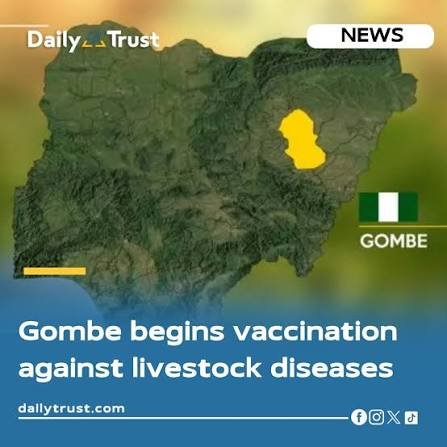
Gombe State has commenced its 2025/2026 annual livestock vaccination campaign, targeting three major livestock diseases: contagious bovine pleuropneumonia (CBPP), foot-and-mouth disease (FMD) and peste des petits ruminants (PPR). The campaign covers cattle, sheep and goats and is intended to protect livestock health, support food security and strengthen the livelihoods of livestock-dependent communities.
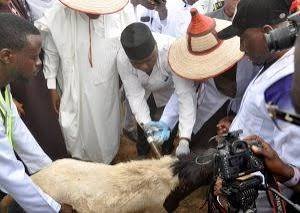
The campaign was formally launched by Deputy Governor Manassah Jatau at Tumfure Bashar along the Gombe–Biu bypass in Akko Local Government Area. State officials called on local governments, traditional leaders, livestock associations, farmers and other stakeholders to help ensure that animals are made available for vaccination.
The initiative is particularly relevant because livestock movement may increase around the harvest season, creating opportunities for disease transmission between herds and across administrative boundaries.
Three diseases with significant production consequences
CBPP is a contagious respiratory disease of cattle caused by Mycoplasma mycoides subsp. mycoides. It can cause severe respiratory illness, production losses and mortality, with consequences for livestock owners and cattle markets.
FMD is a highly contagious viral disease affecting cloven-hoofed animals, including cattle, sheep, goats and pigs. It can spread rapidly and disrupt animal movement and trade. Its impact varies by species, virus strain, immunity and production setting, but outbreaks can create substantial costs through lost productivity, movement controls and control measures.
PPR is a serious viral disease affecting sheep and goats. It can cause fever, respiratory and digestive signs, and high mortality in susceptible populations. For smallholder producers, an outbreak may threaten household income and the availability of animals for food and sale.
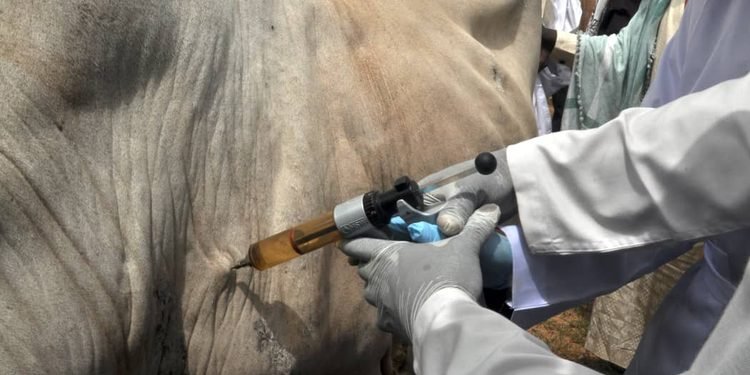
Vaccination is an important preventive tool against these diseases, but campaign effectiveness depends on using appropriate vaccines, maintaining product quality and cold-chain conditions, achieving adequate coverage and following disease-specific schedules.
Campaign implementation and veterinary infrastructure
State officials said Gombe has taken steps to strengthen animal-health services, including creating a Ministry of Livestock Development, renovating and equipping veterinary clinics, developing a veterinary diagnostic laboratory and establishing a solar-powered cold-chain facility.
These investments can support vaccination and disease surveillance by improving access to veterinary services and helping preserve vaccine quality. Cold-chain reliability is especially important for vaccines that require controlled storage conditions; a campaign’s nominal dose count alone does not establish that vaccine potency was maintained.
Officials also referred to livestock training facilities and ongoing vaccination activity as part of a broader preventive-health strategy.
The state government is developing an 184-hectare Special Livestock Development Zone, which is intended to include livestock production and processing infrastructure, an abattoir, a tannery, an international livestock market, a veterinary hospital, poultry facilities and an inland dry port. If implemented effectively, these facilities could support a more organised livestock value chain.