

HomePoultryBroiler Breeder Hatchability Decline Linked to Oxidative Stress: Polyphenols Identified as Targeted...

Broiler Breeder Hatchability Decline Linked to Oxidative Stress: Polyphenols Identified as Targeted Solution

DES MOINES, Iowa — October 10, 2026 — Decades of intensive genetic selection prioritizing rapid muscle deposition and feed conversion efficiency in broiler chickens have introduced an unintended metabolic cost: a persistent decline in hatchability across U.S. broiler breeder populations. A technical synthesis highlighted by Feedworks USA establishes a direct biological link between high metabolic demand in modern breeding hens and elevated systemic oxidative stress, identifying targeted dietary polyphenol supplementation as a viable nutritional intervention to restore embryonic viability.

Metabolic Cost of Genetic Selection

Modern broiler breeder hens are biologically selected to pass high growth velocity and feed efficiency to their offspring. However, sustaining this metabolic throughput generates significant levels of reactive oxygen species (ROS) within mitochondrial membranes:

  1. Systemic Oxidative Imbalance: Unchecked ROS production overwhelms endogenous antioxidant systems (such as superoxide dismutase and glutathione peroxidase) in high-producing breeding hens.

  2. Yolk Matrix Lipid Peroxidation: Systemic oxidative stress leads to lipid peroxidation within the egg yolk matrix, damaging vital long-chain polyunsaturated fatty acids (PUFAs).

  3. Embryonic Mortality: Damaged yolk lipids impair nutrient transfer to the developing embryo during incubation, leading to late-stage embryonic mortality and reduced chick vigor at hatch.
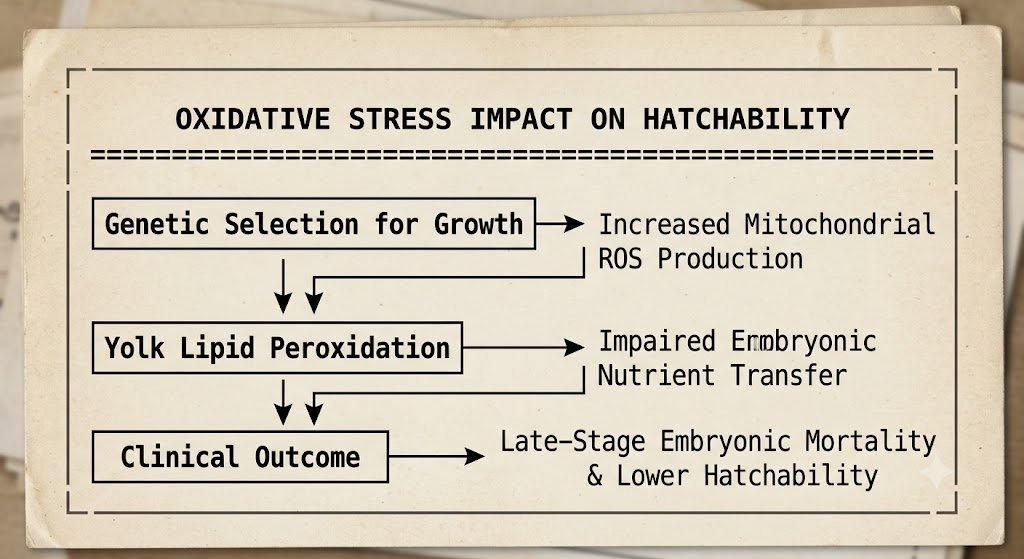
Impact of Oxidative Stress on Hatchability

Nutritional Mitigation via Plant Polyphenols

To combat metabolic cellular damage, the report outlines the inclusion of bioavailable plant-derived polyphenols in breeder rations. Unlike synthetic antioxidants, natural polyphenolic compounds cross cellular membranes to neutralize free radicals, upregulate endogenous antioxidant enzymes, and preserve yolk lipid integrity.

Commercial field trials demonstrate that targeted polyphenol supplementation mitigates embryonic oxidative damage, stabilizing hatchability rates and supporting early chick quality in commercial integration systems.

Animal Health India Editorial Team
Animal Health India Editorial Teamhttps://animalhealthindia.com
Animal Health India (AHI) is an independent news and intelligence platform covering the global animal health, veterinary, livestock, poultry, companion animal and pet food sectors. Our editorial team comprises veterinary journalists, animal health professionals, regulatory affairs specialists and industry analysts with over 30 years of combined experience covering India, Asia, Europe and North America. AHI publishes news, regulatory updates, market intelligence and company news drawn from primary sources including DAHD, EMA, USDA, AVMA and leading veterinary publications worldwide.
RELATED ARTICLES